
Metal dome storage conditions must protect both the spring metal and, for a dome array, its adhesive, carrier and release liner. Keep parts in their original protective packaging, away from condensation, contamination and pressure on the dome crowns. A shelf-life date is useful only when it belongs to the exact supplied construction and its specified storage conditions; an operating-temperature rating is not a warehouse instruction.
What Are Metal Dome Storage Conditions?
Storage conditions are the agreed temperature, humidity, packaging, handling and time limits that keep a supplied part usable until assembly. The purchase drawing or packaging instruction should identify the exact dome finish and, for an array, the PET carrier, pressure-sensitive adhesive and liner. Without that identification, one number cannot describe every product we manufacture.

| Supplied form | Main storage concern | Check before assembly |
|---|---|---|
| Loose metal domes | Surface contamination, corrosion, deformation and damage to the transition ring | Package integrity, dome shape and agreed force/contact checks |
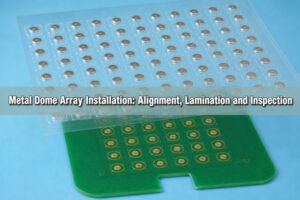
| Dome array sheet | Adhesive aging, liner lift, bending and unintended dome compression | Liner condition, positioning and adhesion on the intended surface |
| Dome tape on reel | Crushed pockets, excessive reel pressure or exposure after opening | Cover integrity, pocket condition and feeding behavior |
Do Loose Metal Domes and Dome Arrays Need the Same Controls?
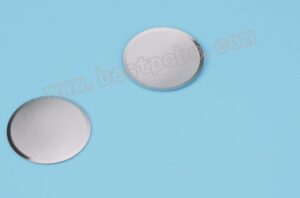
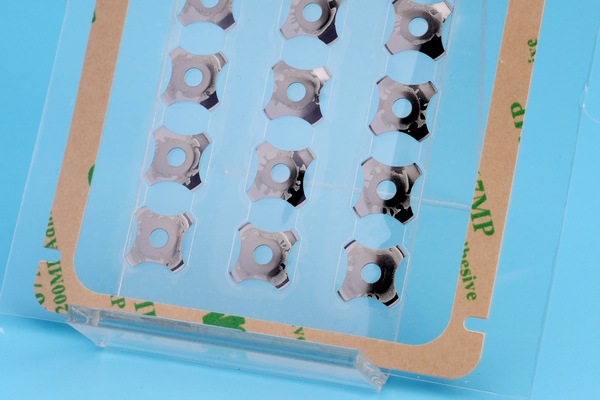
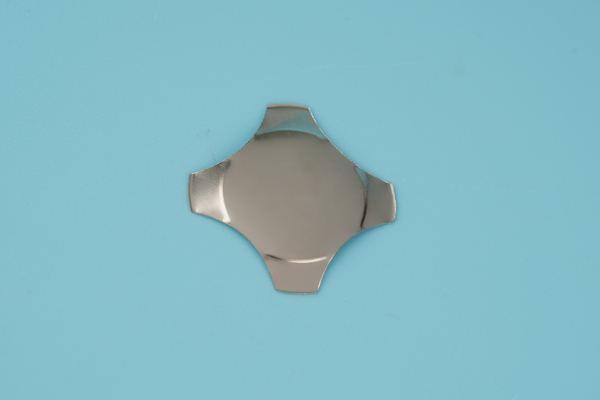
No. A loose round metal dome or four-leg metal dome primarily needs protection of its formed spring geometry and contact surface. A metal dome array adds a PET film, adhesive layer and release liner. The dome may still click after storage while the array no longer bonds or locates reliably on the PCB. Release checks therefore need to match the form supplied, not merely the metal part.
Why Keep Metal Domes in Their Original Packaging?
Original packaging preserves the lot identity and keeps the supplied support around each part. Do not pour loose domes into an unmarked bin, press a stack of array sheets under heavy stock, or leave a partially used reel uncovered. Our handling precautions note that damage to the dome transition ring can affect its force response; a storage container must not let parts rub, nest or bear weight on the crowns. Once a package is opened, reseal and relabel the remaining quantity under the agreed handling procedure.
What Storage Temperature Should a Dome Array Use?
Use the temperature range specified for the actual array construction, especially its adhesive and liner. We do not treat the metal dome’s operating-temperature entry as the shelf-storage limit for an adhesive assembly. Avoid hot shelving, direct sun and rapid transfers between cold and warm areas. If the purchase documents do not specify a range, ask us to confirm the chosen adhesive and packaging before assigning a warehouse limit; do not infer a universal number from a different tape supplier’s bulletin.
How Does Storage Humidity Affect Metal Domes and Arrays?
Dome array storage humidity matters because moisture can reach metal contact surfaces, film edges and adhesive interfaces. Keep cartons dry, off wet floors and away from leaks. For an opened package, protect the remaining parts as the agreed material instruction requires. Humidity alone does not establish that a lot has failed: inspect for staining, liner lift or adhesive change and test the actual assembly when exposure is uncertain.
Why Is Condensation a Separate Risk?
Condensation occurs when a cold part meets moist air below its dew point. A carton moved from a cool store into a warm assembly area may collect surface water even when the room’s average humidity looks acceptable. Leave the sealed package to equilibrate under the site’s approved procedure before opening it. If water is visible inside the packaging, isolate that lot and record the event rather than drying it and quietly returning it to normal stock.
How Long Is Metal Dome Shelf Life?
Metal dome shelf life is not one fixed number for all loose domes and assembled arrays. For an adhesive array, the limiting item may be the adhesive or liner, and the period may be defined from manufacture, conversion or shipment depending on the approved specification. Shelf life describes usability before application, not how long an installed switch will work. Ask for the lot’s documented start event, expiry rule and storage range; then manage stock by that record rather than applying an unrelated supplier’s tape-roll date to a converted dome array.
For comparison, 3M’s shelf-life bulletin explicitly distinguishes its unconverted adhesive products from converted items. It is useful evidence for why the exact construction must be specified, not a shelf-life claim for our arrays.
What Can Shorten Dome Array Shelf Life?
Heat, moisture, ultraviolet exposure, liner damage, contamination and prolonged bending can change how a pressure-sensitive adhesive transfers and bonds. A clean-looking liner is not proof that the adhesive is still suitable for the intended PCB finish. The practical question is whether the stored sheet or reel still locates each dome and bonds to the specified surface after the documented storage history. Do not substitute a finger tack test for the project’s actual adhesion and actuation checks.
How Should Reels and Sheets Be Stored?
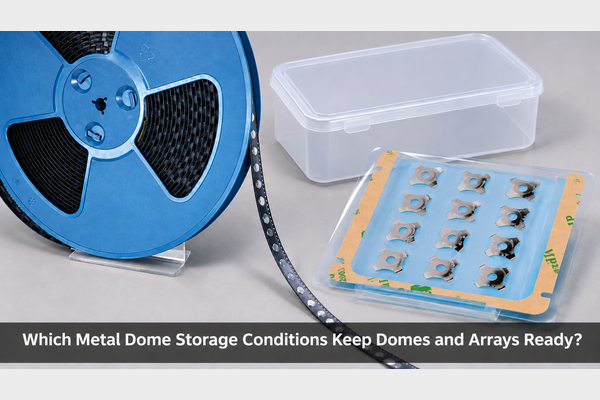
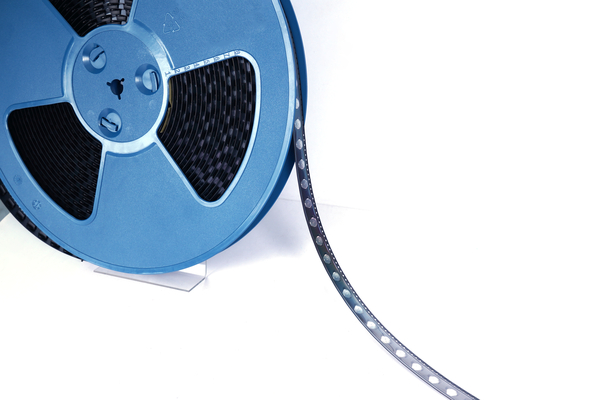
Support reels so the flanges and carrier are not crushed; keep cover tape and the product label intact. Store flat sheets on a suitable support without bending the array or loading the dome crowns. Our tape-and-reel packaging and peel-and-place arrays present different handling surfaces, so their packing instructions should travel with each order. Avoid stacking one format as though it were a rigid metal blank.
What Should Be Checked Before Using an Aged Lot?
First identify the lot, date basis, supplied form, original packaging and any recorded excursion. Keep a known-good lot for comparison where the project requires one. Inspect representative domes for distortion, discoloration or contamination; inspect array edges, carrier, liner and adhesive for lift or damage. Then run the drawing’s relevant tests on samples from that lot, such as dome force, electrical closure and adhesion to the intended board finish. Record the sample count and criteria rather than declaring a lot acceptable because one key still clicks.
| Finding | Immediate action | Evidence needed for disposition |
|---|---|---|
| Expired or unknown date, no visible damage | Hold the lot | Traceable date basis and approved sample tests |
| Wet carton or condensation | Keep the package isolated | Exposure record plus surface and functional assessment |
| Lifted liner or poor bond | Do not feed to production | Adhesion result on the specified substrate |
| Distorted dome or changed force | Stop use of affected stock | Comparison with drawing limits and control sample |
Can an Out-of-Condition Lot Be Released?
Only through a documented project-specific disposition. Quarantine the lot, preserve the packaging and exposure record, agree on sampling and test limits, and compare results with the original drawing and a suitable control. A visual pass cannot replace contact-closure or adhesion testing when those functions are at risk. If requirements are not met, reject or rework only under an approved plan; do not reset a shelf-life date by repacking the parts.
What Storage Details Should Be Agreed Before Ordering?
At EBest Circuit(Best Technology), we supply loose domes, peel-and-place sheets and reeled parts. Tell us the dome series, finish, force target, adhesive system, PCB finish, expected transit and warehouse duration, and the package-opening procedure. We can align the supplied form and lot documentation with your assembly flow. If the project requires a specific storage range or shelf-life statement, put it in the purchase specification so that the exact construction can be reviewed before release. Agreed metal dome storage conditions are more useful than one universal claim.
Metal Dome Storage FAQs
Can I refrigerate metal dome arrays to extend shelf life?
Not without an approved material-specific procedure. Cooling can create condensation when a sealed pack is opened in warm air; confirm the actual adhesive and equilibration instructions first.
Does a dome that still clicks prove the array is usable?
No. The metal spring can retain tactile feel while an aged carrier or adhesive fails to hold alignment on the PCB. Check the function that storage could have changed.