
Flexible dome array solutions have become a quiet backbone in modern electronic interfaces. From industrial control panels to compact handheld devices, the demand for consistent tactile feedback, durability, and efficient assembly continues to grow. Behind that tactile “click” is a carefully engineered structure—one that depends heavily on material selection, forming precision, and integration methods.
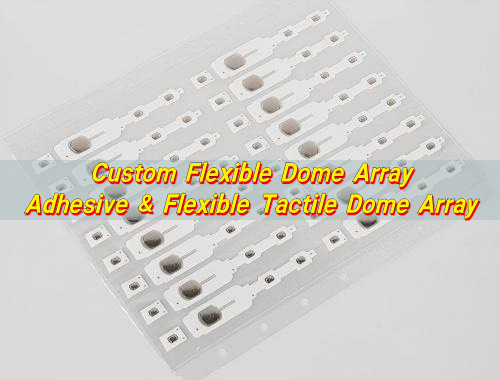
A flexible dome array is not just a simple grouping of metal domes. It is a layered, adhesive-backed system designed to streamline assembly while ensuring accurate alignment and long-term performance. When executed properly, it reduces labor, improves repeatability, and enhances user experience. In this article, we will walk through the core materials, manufacturing process, and practical considerations that define high-quality dome arrays, especially in demanding applications.
What is the main metal dome material for industrial switches?
Industrial switches require reliability under repeated actuation, environmental stress, and sometimes harsh operating conditions. For this reason, the base material used for metal domes is not arbitrary—it is selected based on mechanical properties, fatigue resistance, and corrosion performance.
The dominant material in industrial-grade metal dome arrays is stainless steel, particularly SUS301 and SUS304. These alloys offer a strong balance between elasticity and durability, which allows the dome to return to its original shape after millions of presses without permanent deformation.
SUS301 is often favored in high-cycle applications due to its superior spring characteristics. It provides a crisp tactile response and maintains structural integrity even after extended use. SUS304, on the other hand, is known for its enhanced corrosion resistance, making it suitable for environments exposed to humidity or mild chemicals.
Beyond stainless steel, some specialized applications may use alternative alloys, but these are far less common due to cost or performance trade-offs. The reason stainless steel dominates is simple: it consistently delivers predictable tactile force, long lifespan, and stable electrical conductivity when plated correctly.
In flexible dome array assemblies, this material choice becomes even more critical. Since the domes are pre-positioned on adhesive carriers, any inconsistency in material performance would affect the entire array, not just a single switch point. That’s why experienced manufacturers like EBest Circuit (Best Technology) prioritize controlled sourcing and strict material validation.
How to make a metal dome?
The creation of a metal dome is a precise process that blends mechanical forming with surface engineering. It may appear simple at a glance, but each step directly influences tactile feel, electrical performance, and longevity.
The process generally follows these stages:
- Material preparation
Stainless steel sheets are selected based on thickness, hardness, and grain orientation. These parameters define how the dome will behave under pressure. - Stamping and forming
High-speed precision dies shape the metal into a dome structure. This is where the tactile “snap” characteristic is established. The geometry—diameter, height, and leg design—determines actuation force and feedback. - Heat treatment
Controlled heat treatment enhances elasticity and stabilizes the dome structure. This step ensures that the dome can endure repeated cycles without fatigue failure. - Electroplating
A conductive layer, often nickel or gold, is applied to improve electrical contact reliability and prevent oxidation. This is especially important in low-voltage circuits. - Cleaning and inspection
Each dome is cleaned to remove residues and then inspected for dimensional accuracy and surface defects. - Array integration
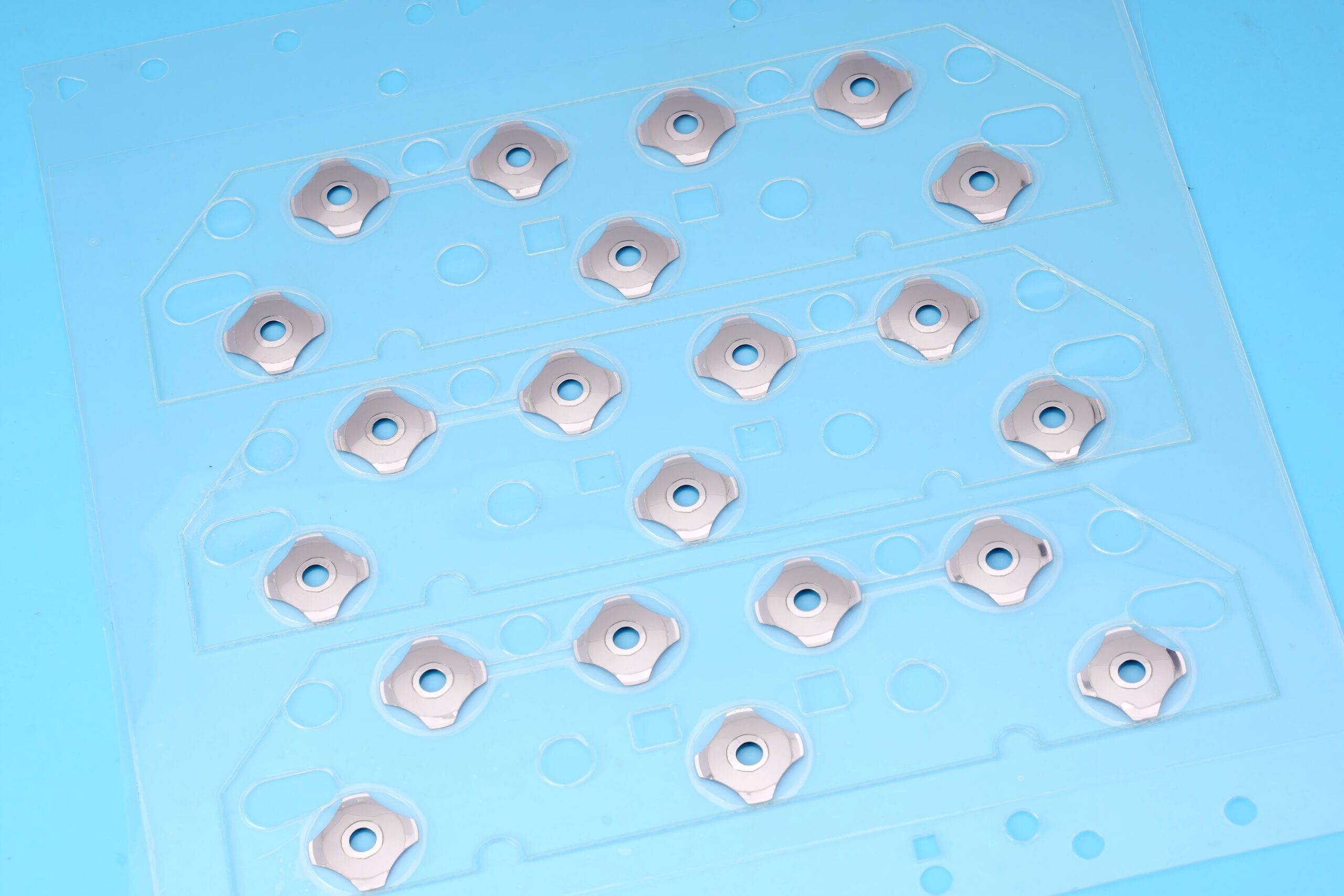
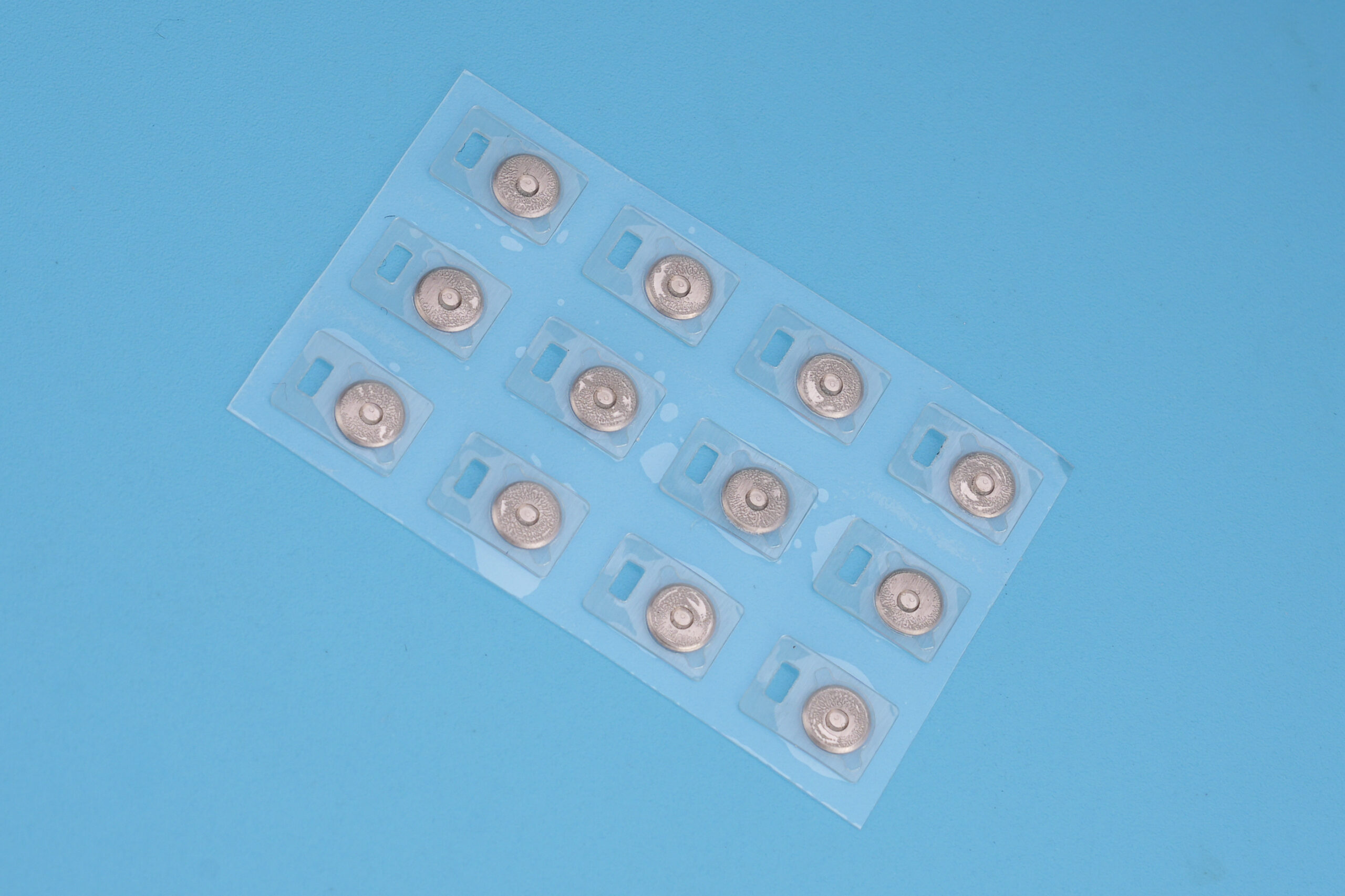
For flexible dome arrays, domes are placed into adhesive carriers or films, forming a pre-aligned sheet that can be directly applied during assembly.
The transition from individual domes to a flexible dome array is where efficiency gains become evident. Instead of placing domes one by one, manufacturers can install an entire array in a single step, ensuring alignment accuracy and reducing production time significantly.
At EBest Circuit (Best Technology), this process is optimized with automated equipment and strict quality checkpoints, allowing consistent production even at high volumes.
What is the complete material composition of the metal dome?
A metal dome is not just a single piece of metal. It is a combination of materials working together to deliver tactile response, electrical conductivity, and environmental stability.
The complete composition typically includes:
- Base metal (stainless steel)
This forms the structural backbone of the dome. It provides elasticity and mechanical strength. - Plating layer (nickel or gold)
This enhances conductivity and protects against oxidation. Gold plating is often used in high-reliability applications due to its superior resistance to corrosion. - Adhesive carrier (for dome arrays)
In flexible dome arrays, a polyester or polyimide film holds the domes in place. This layer ensures accurate positioning and simplifies assembly. - Spacer layer (in some designs)
This creates a defined gap between the dome and the PCB, ensuring consistent actuation behavior. - Protective overlay (optional)
In membrane dome switch systems, an additional layer may be used to shield the dome from dust, moisture, and mechanical damage.
This multi-layer structure transforms a simple mechanical component into a highly engineered switching element. Each layer contributes to performance, and even small variations can influence the final tactile experience.
Is stainless steel the most common metal dome base material?
Yes, stainless steel is by far the most widely used base material for metal domes, and for good reason. It offers a rare combination of properties that align perfectly with the demands of tactile switch applications.
To better understand its advantages, here is a comparison with other potential materials:
| Material | Elasticity | Corrosion Resistance | Cost Efficiency | Typical Use Case |
|---|---|---|---|---|
| Stainless Steel (SUS301/304) | Excellent | High | Moderate | Industrial and consumer electronics |
| Phosphor Bronze | Good | Moderate | Higher | Specialized applications |
| Beryllium Copper | Very High | Good | Expensive | High-end precision devices |
While alternatives like beryllium copper provide excellent elasticity, their cost and processing complexity limit widespread use. Stainless steel remains the preferred choice because it delivers reliable performance without excessive cost.
In flexible dome array applications, this consistency is especially valuable. When hundreds of domes are integrated into a single array, uniform behavior becomes essential. Stainless steel ensures that every dome responds predictably, maintaining a consistent user experience across the entire interface.
Which raw material improves the durability of metal dome switch?
Durability in a metal dome switch is not determined by a single factor. It is the result of material selection, surface treatment, and structural design working together.
Among all raw materials, high-grade stainless steel with optimized hardness stands out as the most influential factor in improving durability. However, additional enhancements also play a critical role:
- Gold plating
Improves contact reliability and prevents oxidation, especially in low-current applications. - Nickel plating
Provides a cost-effective protective layer with good conductivity. - Polyimide adhesive films
In flexible dome arrays, these films offer excellent thermal stability and mechanical strength. - Precision forming techniques
Ensure uniform stress distribution, reducing the risk of fatigue cracks.
Durability is often measured in actuation cycles. A well-designed dome using premium materials can exceed one million cycles without noticeable degradation. In high-end applications, this number can be even higher.
EBest Circuit (Best Technology) has refined its material selection and forming processes to achieve stable performance across extended lifecycles. Their focus on consistency ensures that durability is not just a specification, but a dependable reality in actual use.

What material options are available for custom metal dome button?
Customization is a key advantage of modern dome switch technology. Different applications require different tactile forces, environmental resistance, and electrical characteristics. As a result, material options are quite flexible.
Common customization options include:
- Base material variations
- SUS301 for high elasticity
- SUS304 for enhanced corrosion resistance
- Plating options
- Gold plating for high reliability
- Nickel plating for cost efficiency
- Adhesive carrier materials
- Polyester (PET) for standard applications
- Polyimide (PI) for high-temperature environments
- Dome geometry
- Four-leg domes for stability
- Triangle domes for compact layouts
- Round domes for uniform force distribution
- Thickness selection
Adjusting thickness changes actuation force and tactile feedback.
These options allow engineers to fine-tune performance based on specific requirements. For example, a medical device may prioritize corrosion resistance and reliability, while a consumer product may focus on cost and tactile feel.
Flexible dome arrays take this customization further by integrating multiple dome types into a single sheet, enabling complex interface designs without increasing assembly complexity.
Does different metal dome material change service lifespan?
Material choice has a direct and measurable impact on service lifespan. While design and usage conditions also matter, the base material and surface treatment are primary determinants of how long a dome will perform reliably.
For instance, domes made from SUS301 typically exhibit longer lifespans in high-cycle applications due to their ???????? spring properties. In contrast, lower-grade materials may lose elasticity more quickly, leading to reduced tactile feedback over time.
Plating also plays a role. Gold-plated domes tend to maintain consistent electrical performance over extended periods, especially in environments where oxidation could be an issue.
Here’s a simplified comparison:
| Factor | Impact on Lifespan |
|---|---|
| Base material quality | High |
| Plating type | Medium to High |
| Forming precision | High |
| Operating environment | Medium |
In flexible dome arrays, lifespan consistency becomes even more critical. Since all domes are integrated into a single assembly, the failure of one can affect the overall system performance. This is why uniform material quality and precise manufacturing are essential.
How to choose suitable metal dome material for long-term use?
Selecting the right material for long-term use requires a balance between performance, environment, and cost. It’s not about choosing the “best” material universally, but the most appropriate one for the specific application.
A practical approach includes evaluating the following factors:
- Application environment
High humidity or exposure to chemicals calls for corrosion-resistant materials like SUS304 with gold plating. - Actuation frequency
High-cycle applications benefit from SUS301 due to its ???????? elasticity. - Electrical requirements
Low-current circuits often require gold plating to ensure stable ??????. - Temperature conditions
High-temperature environments may require polyimide-based flexible dome arrays. - Assembly method
If efficiency and alignment are priorities, flexible dome arrays with adhesive backing provide significant advantages.
Choosing the right combination ensures not only performance but also cost efficiency over the product lifecycle. A well-matched material reduces maintenance, minimizes failure rates, and enhances user satisfaction.
EBest Circuit (Best Technology) integrates these considerations into its design and manufacturing processes. By offering tailored solutions and fast response times, they help clients achieve optimal results without unnecessary complexity.
Conclusion:
Flexible dome arrays represent a refined evolution of tactile switch technology. They combine precision-engineered metal domes with advanced adhesive systems, delivering both performance and efficiency. From material selection to manufacturing and customization, every detail contributes to the final user experience.
In summary, stainless steel remains the foundation of reliable dome performance, while plating and structural design enhance durability and functionality. Flexible dome arrays further elevate these benefits by simplifying assembly and ensuring consistent alignment. When carefully designed, they provide long-lasting, responsive, and cost-effective solutions for a wide range of applications.
For more information or to discuss your project requirements, feel free to reach out: sales@metal-domes.com