
What makes dome array special for automotive keypad use?
Dome array for automotive keypad applications is not just a simple input component. It is a carefully engineered interface that connects human touch with electronic control in demanding environments. Unlike standard consumer-grade switches, automotive dome arrays are designed with durability, stability, and precision in mind, ensuring consistent performance across years of use.
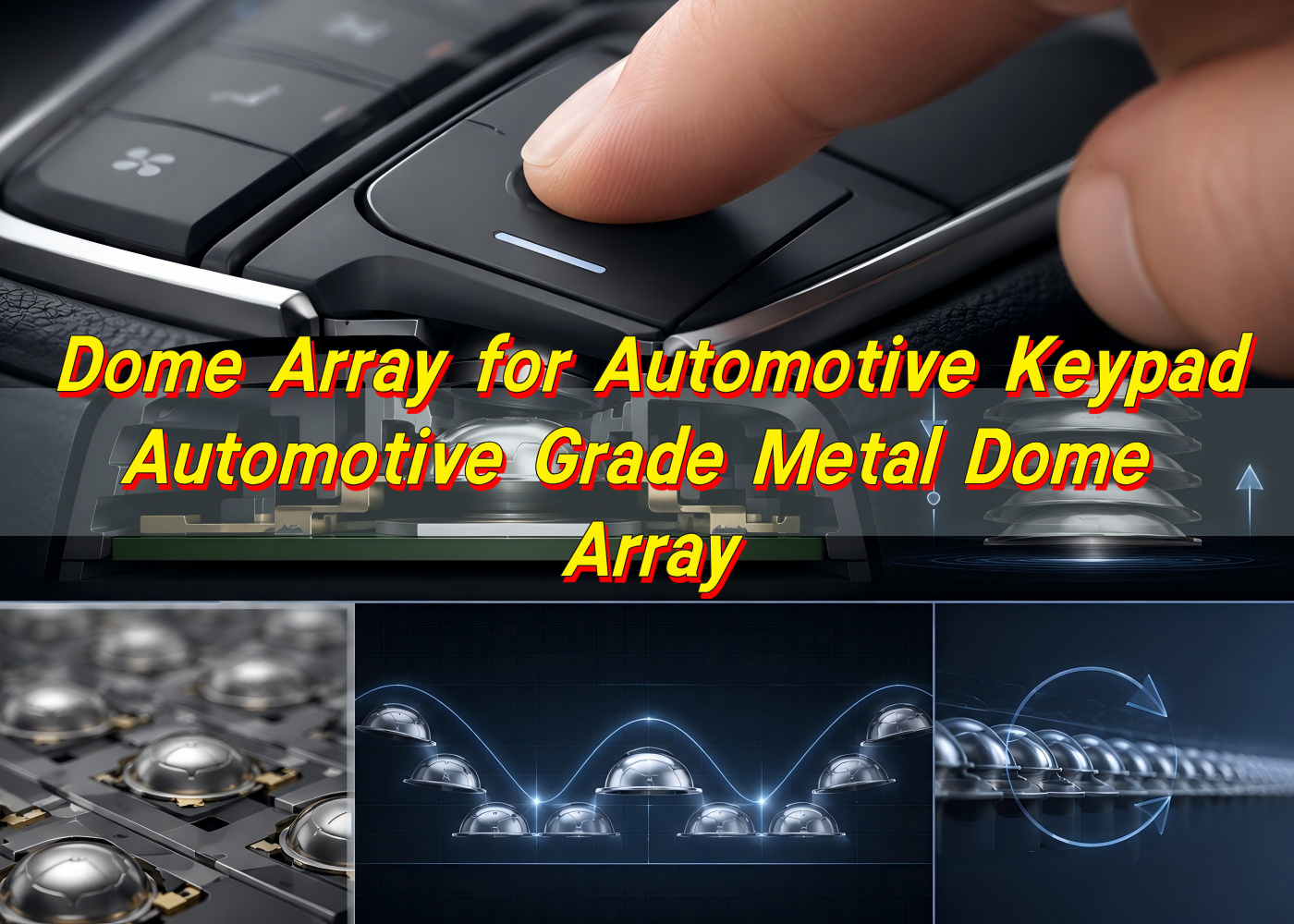
One key advantage is the integration of multiple metal domes into a single aligned structure. This array format improves placement accuracy during assembly and ensures uniform tactile response across all keys. In automotive systems, where driver interaction must feel consistent and reliable, this uniformity plays a crucial role.
Another defining feature is the optimized actuation force. Automotive dome arrays are engineered to deliver a balanced tactile feel that is neither too soft nor too stiff. This balance allows drivers to operate controls without distraction, even while focusing on the road. The tactile response provides a clear confirmation of input, reducing the need for visual checks.
In addition, dome arrays used in vehicles often support compact and complex layouts. Modern dashboards and control panels require efficient use of space. Dome arrays can be customized into different shapes and sizes, making them suitable for steering wheel controls, infotainment systems, climate panels, and center consoles.
Manufacturers like Best Technology have refined dome array production to ensure high precision and reliability. With advanced tooling and strict quality control, they deliver arrays that maintain consistent dome height, force, and electrical performance, which is essential for automotive applications.
What performance standards do automotive dome arrays need to meet?
Automotive environments demand strict performance standards. Dome arrays used in this sector must comply with a range of electrical, mechanical, and environmental requirements to ensure long-term reliability.
First, electrical performance must remain stable over millions of actuations. Contact resistance needs to stay within a controlled range to ensure accurate signal transmission. Any fluctuation could affect system responsiveness, which is unacceptable in automotive control systems.
Mechanical durability is another critical factor. Automotive dome arrays are expected to withstand repeated use over many years. This means the domes must retain their elasticity and snap ratio without deformation or fatigue.
Environmental resistance is equally important. Automotive components must function under extreme conditions, including temperature fluctuations, humidity, dust, and vibration. Dome arrays must maintain their structural integrity and performance despite these challenges.
Typical standards include:
- High cycle life, often exceeding 1 million actuations
- Stable contact resistance under repeated use
- Resistance to vibration and mechanical shock
- Compliance with automotive environmental testing protocols
Best Technology ensures that their dome arrays meet these requirements by using high-grade materials and precision manufacturing processes. Their experience in supplying industrial and automotive clients helps guarantee that each product aligns with industry expectations.
Can automotive keypad dome array withstand high in-car temperatures?
Yes, automotive dome arrays are specifically designed to handle high in-car temperatures. Vehicles can experience extreme heat, especially when parked under direct sunlight. Interior temperatures can rise significantly, which places stress on electronic components.
Metal dome arrays typically use stainless steel materials that maintain their mechanical properties under heat. This ensures that the dome retains its snap force and does not soften or deform. The adhesive layers and carrier films used in the array are also selected for thermal stability.
Temperature resistance is usually validated through testing. Dome arrays are exposed to both high and low temperature cycles to simulate real-world conditions. These tests confirm that the dome maintains consistent performance across a wide temperature range.
For example, automotive dome arrays often operate reliably between -40°C and +85°C, with some designs capable of handling even higher peaks. This range ensures that the keypad functions correctly in both cold winter mornings and hot summer afternoons.
By using carefully selected materials and proven design techniques, manufacturers like Best Technology ensure that their products maintain stable tactile feedback and electrical performance, even under harsh thermal conditions.
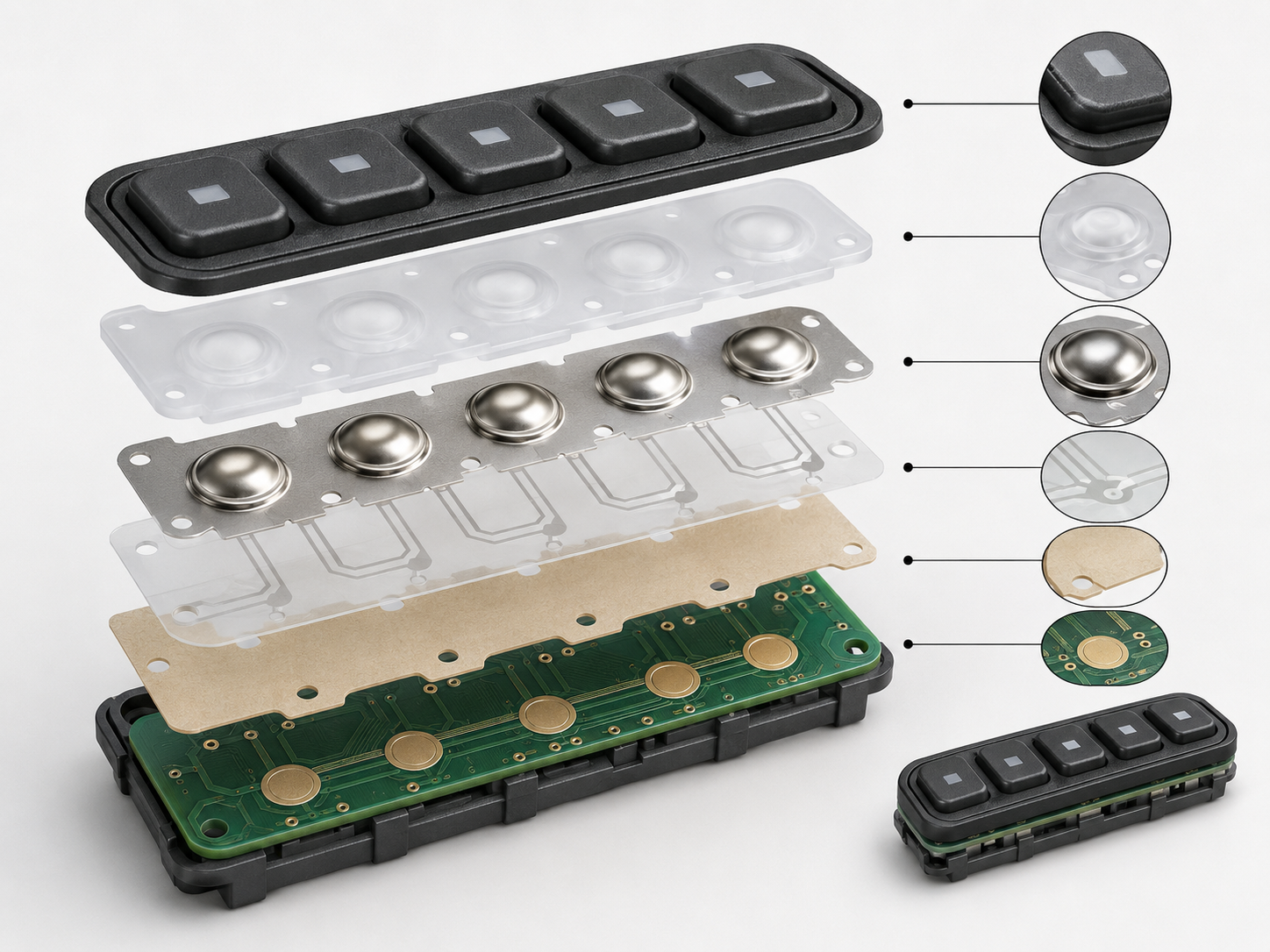
Is waterproof design necessary for vehicle keypad dome array?
Waterproof design is highly important for automotive dome arrays. Vehicle interiors are not completely protected from moisture. Spills, humidity, condensation, and even external environmental exposure can affect electronic components.
A well-designed dome array often includes sealing layers that protect the metal domes and contact points. These layers prevent moisture from entering the switch structure, reducing the risk of corrosion or electrical failure.
Waterproofing also improves long-term reliability. Even small amounts of moisture can gradually degrade performance if not properly managed. By integrating protective films and adhesives, the dome array can maintain stable operation over time.
In many automotive applications, dome arrays are combined with membrane switch layers. This combination creates a sealed interface that enhances both durability and user experience.
Key benefits of waterproof design include:
- Protection against accidental liquid spills
- Resistance to humidity and condensation
- Prevention of corrosion on metal contacts
- Extended product lifespan
Best Technology provides customizable sealing solutions for dome arrays, allowing clients to achieve different levels of water resistance based on their specific application needs.
What tactile feedback does automotive grade dome array deliver?
Tactile feedback is one of the most important aspects of an automotive dome array. It directly affects how users interact with the vehicle’s controls. A well-designed dome array provides a crisp and responsive feel that enhances user confidence.
The tactile response comes from the snap action of the metal dome. When pressed, the dome collapses and then quickly returns to its original shape. This creates a distinct “click” sensation that signals successful input.
Automotive-grade dome arrays are carefully tuned to achieve the right balance of force and feedback. The actuation force is selected to prevent accidental presses while still allowing comfortable operation.
Typical tactile characteristics include:
- Clear snap feeling with defined feedback
- Consistent force across all keys
- Fast recovery after actuation
- Minimal variation between cycles
This consistent tactile experience is essential for driver safety. It allows users to operate controls without taking their eyes off the road.
Best Technology focuses on precise dome forming and strict quality control to ensure uniform tactile performance across every array. This attention to detail helps create a premium user experience in automotive applications.
How long is the service life of automotive metal dome array?
The service life of an automotive metal dome array is one of its strongest advantages. These components are designed for long-term use, often lasting for the entire lifespan of the vehicle.
High-quality metal domes can typically withstand over 1 million actuations. Some advanced designs can reach even higher cycle counts, depending on the application and operating conditions.
Several factors influence service life:
- Material quality of the metal dome
- Precision of the forming process
- Stability of the contact surface
- Environmental protection measures
A well-designed dome array maintains its tactile response and electrical performance throughout its life cycle. This reliability is critical in automotive systems, where component failure can affect user experience and safety.
Best Technology uses high-grade stainless steel and advanced forming techniques to produce domes with excellent fatigue resistance. Their manufacturing process ensures consistent quality, which directly contributes to extended service life.
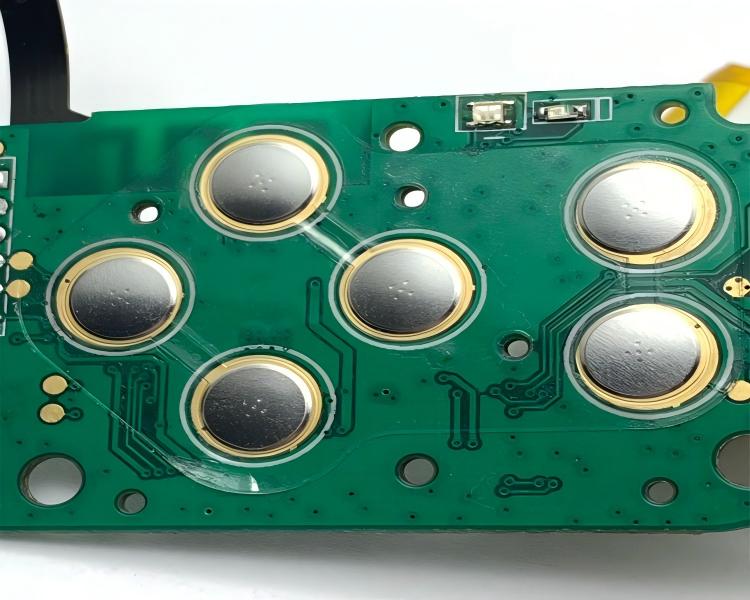
What material is best for flexible automotive dome array?
Material selection plays a key role in the performance of flexible automotive dome arrays. The goal is to achieve a balance between flexibility, durability, and reliability.
Stainless steel is the most commonly used material for metal domes. It offers excellent elasticity, corrosion resistance, and long-term stability. This makes it ideal for automotive environments.
For the carrier layer, polyester (PET) films are widely used. These films provide flexibility while maintaining structural integrity. They also support precise alignment of the domes within the array.
Adhesive materials are equally important. They must provide strong bonding while resisting temperature changes and moisture. High-performance adhesives ensure that the dome array remains securely attached during operation.
Here is a simple comparison of common materials:
| Component | Common Material | Key Advantages |
|---|---|---|
| Dome | Stainless Steel | High durability, stable force |
| Carrier Film | PET | ??? flexibility, good insulation |
| Adhesive Layer | Acrylic-based | Strong bonding, heat resistance |
Best Technology carefully selects and tests these materials to ensure optimal performance. Their expertise allows them to provide customized solutions for different automotive applications.
What environmental tests do automotive dome arrays pass?
Automotive dome arrays must pass a range of environmental tests to ensure reliability. These tests simulate real-world conditions and verify that the product can perform under stress.
Common tests include temperature cycling, humidity exposure, vibration testing, and mechanical shock. Each test targets a specific aspect of performance.
For example, temperature cycling checks whether the dome array can handle repeated changes between extreme temperatures. Humidity testing evaluates resistance to moisture. Vibration testing ensures that the dome remains stable under constant movement.
Typical environmental tests include:
- High and low temperature storage
- Thermal shock testing
- Humidity resistance testing
- Vibration and shock testing
- Salt spray testing for corrosion resistance
Passing these tests confirms that the dome array can operate reliably in automotive environments.
Best Technology conducts strict testing procedures to ensure compliance with industry standards. Their commitment to quality helps clients reduce risk and improve product performance.
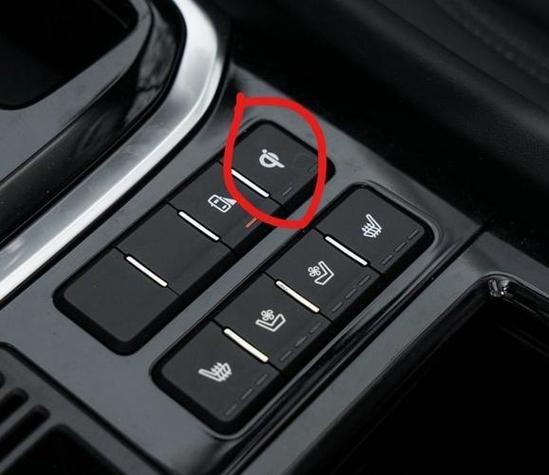
How to match dome array size with automotive control panel layout?
Matching the dome array size with the control panel layout is a critical design step. It ensures that the keypad functions correctly and provides a comfortable user experience.
The process starts with understanding the layout of the control panel. Designers must consider the spacing between keys, the overall dimensions, and the required functionality.
Next, the dome size and spacing are selected to align with the PCB or circuit design. Proper alignment ensures accurate signal transmission and consistent tactile response.
Important considerations include:
- Key spacing and pitch
- Dome diameter and height
- Alignment with PCB contact pads
- Overall array dimensions
Customization is often required to achieve the best results. Dome arrays can be designed in different shapes to fit complex layouts, such as curved or irregular panels.
Best Technology offers flexible customization options, allowing clients to tailor dome arrays to their specific design requirements. Their engineering support helps ensure a precise match between the dome array and the control panel.
Summary:
Dome array for automotive keypad applications delivers reliable performance, clear tactile feedback, and long service life. It is designed to handle extreme temperatures, moisture, and continuous use while maintaining consistent operation. With the right materials and proper design, it enhances both functionality and user experience in modern vehicles.
Best Technology provides high-quality dome arrays with precise engineering and strong customization capabilities. Their solutions are built to meet demanding automotive standards and support long-term reliability.
For more information or inquiries, please contact: sales@metal-domes.com