
Tape and reel vs cut tape is a packaging decision that affects how metal domes, SMD dome switches and peel-and-place dome arrays move from incoming inspection to assembly. Tape and reel packaging is usually the better choice for automated placement and consistent orientation, while cut tape is practical for samples, engineering checks and small orders that do not justify a full reel.
For metal domes, the packaging choice is not only about convenience. A thin stainless steel dome can lose value if it is bent, mixed with the wrong force rating, contaminated by handling or presented to the assembly line in the wrong direction. This guide compares the two formats by assembly method, order quantity, protection level and RFQ requirements.

What Do Tape and Reel and Cut Tape Mean for Metal Domes?
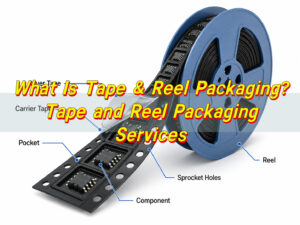
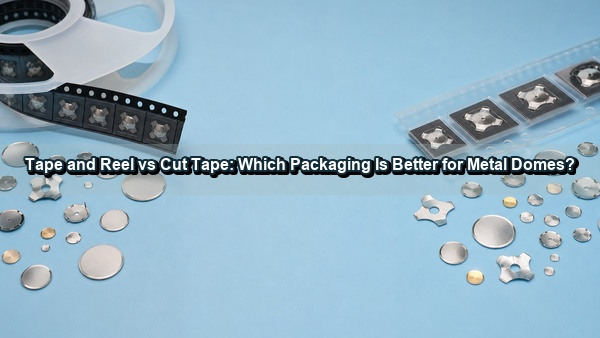
Tape and reel means metal dome parts or SMD dome switches are held in a continuous carrier tape and wound onto a reel. The carrier pocket, cover tape, sprocket holes and reel format keep the parts in repeatable positions so feeders and pick-and-place machines can advance them predictably.
Cut tape is a shorter length cut from a reel or supplied as a small carrier strip. It keeps several parts organized, but it is normally handled manually or semi-manually. It is useful when an engineer needs samples for touch-force evaluation, footprint checking or prototype assembly before placing a production order.
Metal dome projects may also use Peel & Place Metal Dome, Tape & Reel, Pick & Place and tube packing. The right format depends on whether the order is for loose metal domes, SMD dome switches, standard single-key arrays or a custom dome sheet.
How Does Tape and Reel Packaging Support Automatic Assembly?
Tape and reel packaging supports automatic assembly by presenting each metal dome switch in a fixed pitch, fixed orientation and protected pocket. The machine does not need an operator to sort domes or align each part by hand, which reduces placement variation during repeated production runs.
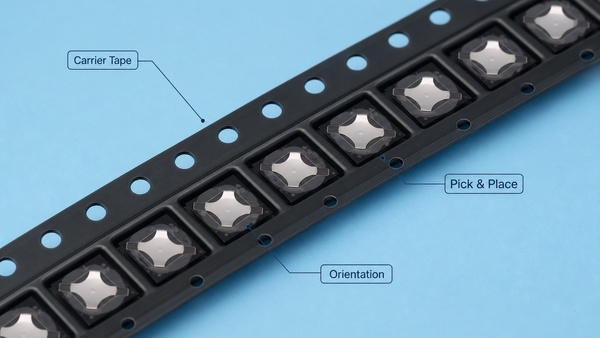
For an SMD dome switch, tape and reel is especially useful because the part is designed to be picked, placed and reflow soldered like other surface-mount components. For non-soldered metal domes, a custom carrier tape can still help automated handling when the dome geometry and orientation are stable enough for the equipment.
The important engineering checks are pocket size, tape width, pitch, cover tape peel force, reel quantity and pickup surface. A dome with legs, center hole or asymmetric shape needs stricter orientation control than a simple round dome because an incorrect angle can change the contact position or mechanical feel.
When Is Cut Tape Better for Samples or Small Orders?
Cut tape is better when the order is mainly for evaluation, small prototype builds or manual placement. It avoids the cost and minimum quantity of a full reel while still keeping the parts cleaner and easier to count than loose bulk packing.

In a metal dome project, cut tape can be used to compare dome size, trip force, rebound force, plating and tactile response before the customer confirms the final drawing. It is also practical when the design team wants to test several dome options on a PCB, FPC or membrane switch without committing to one reel format.
The limitation is that cut tape does not solve high-volume feeding by itself. A short strip can be used for first-article trials or feeder setup checks, but repeated manual loading will slow the line. Once the part number, direction and order quantity are stable, a full tape and reel format is usually easier to manage.
Tape and Reel vs Cut Tape: What Are the Practical Differences?
The most useful comparison is not which format is universally better, but which one fits the current project stage. Tape and reel favors production efficiency; cut tape favors sampling flexibility.
| Decision Point | Tape and Reel | Cut Tape |
|---|---|---|
| Typical use | Automated assembly, repeat orders and mass production | Samples, prototypes and small manual builds |
| Placement method | Best for feeder-based pick and place | Best for manual or short-run handling |
| Orientation control | Strong when pocket design is validated | Acceptable for inspection, but operator handling still matters |
| MOQ impact | Usually needs a reel quantity or packaging setup quantity | Lower entry quantity for engineering validation |
| Protection | Good for consistent pocket protection and line feeding | Good for short strips, but less robust for repeated handling |
If the project is still comparing force options, cut tape is usually enough. If the part is approved and the assembly method is fixed, tape and reel is normally the more stable production format.
How Do MOQ and Order Quantity Affect the Packaging Choice?
Order quantity affects packaging because tape and reel needs setup work, carrier compatibility and reel-level packing control. A small sample request may not justify those steps, while a repeat production order often benefits from the labor savings and lower placement risk.
For early sampling, ask for a small quantity of the exact dome shape, force and plating you want to evaluate. For pilot production, ask whether cut tape or a partial reel can be supplied for line trial. For mass production, define reel quantity, packing direction, label requirements and whether the parts will be used by manual placement, feeder-based placement or a dome-array lamination process.
EBest Circuit(Best Technology) supports bulk, tube, tape-and-reel and peel-and-place packaging formats, so the quotation can be matched to the order stage instead of forcing one format across every project.
How Does Packaging Protect Metal Domes During Transport?
Packaging protects metal domes by reducing uncontrolled contact, deformation, contamination and mixing. This matters because a dome is both an electrical contact and a tactile spring, so scratches, bending or wrong placement can affect click feel and contact reliability.
Tape and reel protects each part in a pocket, which helps keep domes separated and oriented. Cut tape protects a smaller quantity in a strip, but the strip still needs an anti-static bag, rigid support or suitable outer packing if the shipment may be compressed. Loose domes in bulk packing need more care during counting and transfer, especially for high-force or shaped domes.
For production parts, confirm whether the shipment needs anti-static protection, moisture control, lot labels, force labels, drawing revision labels or special tray support. These details make receiving inspection faster and reduce confusion when several dome forces or sizes arrive together.
Which Packaging Works Better for Peel & Place Dome Arrays?
Peel & Place is often better than tape and reel when the project uses multiple metal domes positioned as a set on a PCB, FPC or membrane switch. Instead of placing one dome at a time, the customer peels the carrier and applies the entire dome array to the prepared contact layout.
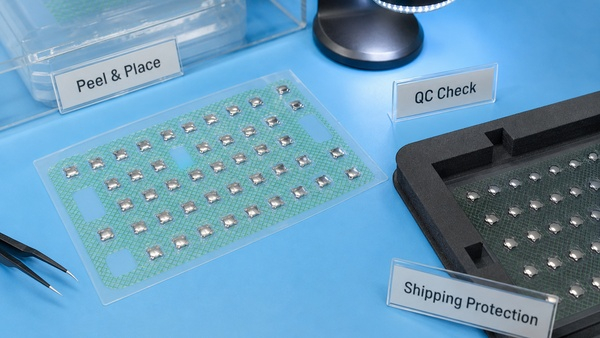
A custom dome array can combine different dome sizes, shapes and forces on one sheet. This is useful when the product has many keys, different tactile zones or tight alignment requirements. Standard single-key arrays are also useful for prototypes and small-quantity builds because each key can be applied individually without designing a full custom sheet.
Tape and reel remains relevant for surface-mount dome switches and automated component placement. Peel & Place is usually better when the main requirement is accurate dome-to-pad registration across a switch panel or keypad.
What Information Should Be Confirmed Before Ordering?
Before ordering tape and reel, cut tape or peel-and-place packing, confirm the part geometry, assembly process and order stage. The packaging supplier needs enough detail to avoid making a reel or sheet that looks correct but does not fit the actual line or keypad layout.
- Dome type, series, diameter or custom drawing
- Trip force, rebound force, travel and click ratio requirement
- Plating or contact resistance requirement, if applicable
- PCB, FPC or membrane contact layout
- Manual placement, pick-and-place, reflow soldering or peel-and-place assembly method
- Preferred tape width, pocket pitch, reel quantity and feeding direction
- Sample quantity, pilot quantity and expected mass-production quantity
- Labeling, lot traceability and shipping protection requirements
If the project is not yet fixed, share drawings, Gerber files, CAD files, photos of the existing part or a sample. EBest Circuit(Best Technology) can review the dome shape, packaging method and assembly route before quoting.
FAQ About Tape and Reel vs Cut Tape?
1. What is cut tape vs tape and reel?
Cut tape is a short strip of carrier tape supplied for samples or low quantities. Tape and reel is a continuous carrier tape wound on a reel for automated feeding and higher-volume assembly.
2. Is tape and reel always better for metal domes?
No. Tape and reel is better for stable production and automatic placement, but cut tape is often better for sample evaluation, small builds and early design comparison.
3. Can all metal domes be supplied in tape and reel?
Not automatically. The dome shape, pickup surface, orientation requirement and carrier pocket design must be checked. SMD dome switches are more naturally suited to tape and reel than loose domes with unusual geometry.
4. When should a project use Peel & Place instead?
Use Peel & Place when multiple domes must be aligned to a PCB, FPC or membrane switch as a group. It reduces one-by-one placement work and helps maintain dome-to-pad registration.
5. What should be sent for an RFQ?
Send the dome drawing or part number, force requirement, assembly method, required packaging format, order quantity, receiving label requirement and any PCB/FPC/membrane layout that affects positioning.
Conclusion
Tape and reel vs cut tape is mainly a question of project stage and assembly method. Use cut tape for samples, early checks and small manual builds. Use tape and reel when the part is approved, orientation matters and the assembly line needs repeatable automatic feeding. Use Peel & Place when several domes must be positioned together on a keypad, FPC or membrane switch.
For metal dome packaging advice, send your drawing, sample request, force requirement and expected order quantity to sales@metal-domes.com, or request a quotation through contact EBest Circuit(Best Technology).