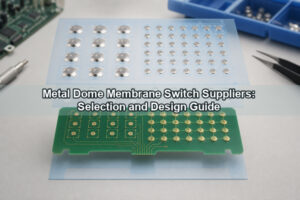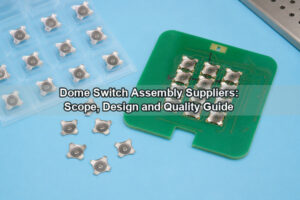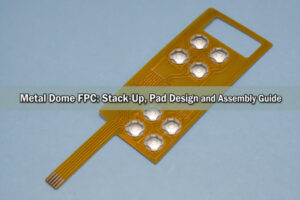

Dome Switch for EV Charging Station refers to the tactile metal dome, dome array or membrane-keypad switching structure used behind an EV charger control panel. In this application, the dome switch gives the user a clear click, closes the PCB or FPC contact circuit, and supports reliable operation for start, stop, menu, payment, reset and service-control keys.
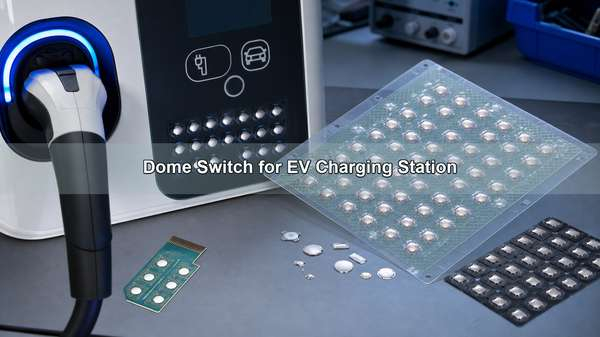
EV charging stations are different from indoor consumer keypads because the control interface may face rain, dust, UV exposure, temperature changes, cleaning, glove operation and frequent public use. A suitable metal dome switch design should therefore be selected together with the overlay, spacer, adhesive, PCB or FPC contact pads, sealing path and production test plan.
What Does a Dome Switch Do in an EV Charging Station?
A dome switch provides tactile feedback and electrical contact for physical keys on an EV charger keypad or HMI panel. When the user presses a key, the metal dome collapses with a snap action and connects the center and outer contact pads on the circuit layer.
In an EV charging station, these keys may control charging start, emergency stop confirmation, language selection, receipt printing, payment navigation, service menus or reset functions. The dome is normally hidden under a graphic overlay, silicone key, plastic actuator or membrane keypad, so the end user feels the click but does not touch the metal part directly.
Why Use a Metal Dome Switch Instead of Only a Touchscreen?
A metal dome switch is useful when the charger needs a physical confirmation point that is easy to feel without looking closely at the display. Touchscreens are common on EV chargers, but physical keys still help in outdoor, public and service environments where gloves, rain, glare or screen contamination can reduce touch accuracy.
Designers often keep a small number of tactile keys for high-confidence actions. A metal dome can provide a repeatable click ratio, compact height and low current switching function without adding a bulky mechanical pushbutton behind every position.
Where Is the Dome Switch Placed in the Keypad Stack-Up?
The dome switch is usually placed between the top overlay or actuator layer and the PCB or FPC contact-pad layer. The exact stack-up depends on whether the charger panel uses a membrane keypad, plastic front panel, silicone keypad, FPC tail or rigid PCB.
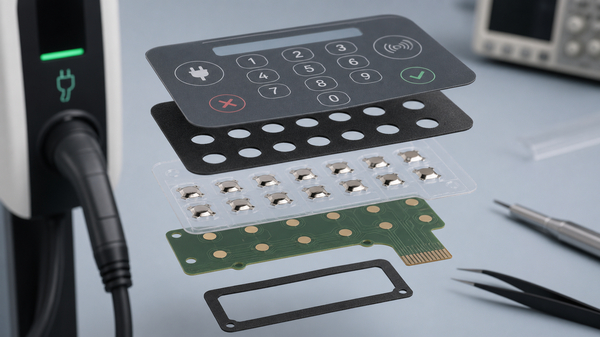
A practical EV charger keypad stack-up may include a printed polyester or polycarbonate overlay, adhesive layer, spacer with vent paths, metal dome array, PCB or FPC contact pads, gasket and enclosure. The spacer thickness, venting path and actuator geometry affect both the force curve and the long-term stability of the tactile feel.
Should an EV Charger Use Loose Metal Domes or a Dome Array?
A multi-key EV charger keypad usually benefits from a custom dome array because it fixes all domes in their designed positions and speeds assembly. Loose domes can work for simple structures or repair tasks, but they require precise placement and stronger process control.
The decision is mainly about assembly stability, key count and alignment tolerance:
| Option | Best Use | Engineering Consideration |
|---|---|---|
| Loose metal dome | Single key, low-volume repair or simple fixture placement | Requires accurate dome positioning and handling control |
| Single-key dome array | Prototype, small batch or one-button module | Improves placement repeatability while keeping structure simple |
| Custom dome array | Multi-key EV charger keypad or production HMI panel | Controls dome position, adhesive layout, vent path and assembly speed |
| SMD dome switch | PCB-mounted low-profile switch where SMT assembly is preferred | Requires footprint, reflow and package-series verification |
For most charger front panels with several keys, a custom dome array is easier to scale because the dome positions, carrier outline and adhesive areas can be matched to the real keypad drawing.
Which Dome Shape Works Best for EV Charging Keypads?
The dome shape should match the key size, contact-pad geometry, operating force and available height. Round domes suit many compact keys, four-leg domes are common for stable tactile response on PCB or FPC pads, triangle domes can support higher force requirements, and oblong domes fit narrow or elongated key positions.
For EV charger panels, the key pitch and actuator position matter as much as the dome series. If the actuator presses off-center, a larger dome or a different shape may feel inconsistent. If the overlay is thick or stiff, the selected force may need to be higher than a bare-dome bench test suggests.
What Force, Travel and Click Ratio Should Be Reviewed?
Force, travel and click ratio should be reviewed as a complete tactile system, not as isolated dome catalog numbers. The same metal dome can feel different after it is placed under an overlay, spacer, actuator and gasket.
For an EV charging station keypad, the design team should define the target operating force, rebound force, travel, total height, click ratio and expected lifecycle before ordering samples. A public charger may need a firmer click than a small handheld product, especially when users operate the panel with gloves or through a protective front layer.
How Should Sealing and Outdoor Exposure Be Considered?
Sealing is handled by the keypad structure, gasket, adhesive and enclosure design; the metal dome alone does not make the panel waterproof. The dome needs an air path for stable tactile action, while the outer panel must prevent liquid, dust and cleaning residue from entering the circuit area.
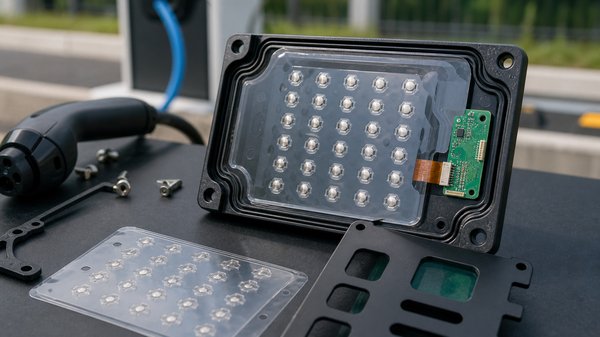
Important checks include overlay material, adhesive aging, gasket compression, enclosure flatness, key venting, drain direction and cleaning chemical exposure. If the charger is installed outdoors, the customer should also review UV resistance, low-temperature flexibility and whether the keypad can keep a stable click after environmental cycling.
How Do PCB and FPC Contact Pads Affect Reliability?
The PCB or FPC contact pad pattern must match the metal dome size, shape and movement. A common structure uses an outer ring and center contact so the dome bridges the circuit when pressed.
Pad finish, carbon ink, gold plating, surface cleanliness, solder mask clearance and contact spacing can affect contact resistance and bounce. The contact area should not be too small, and the dome edge should not scrape solder mask, adhesive residue or raised copper features during repeated operation.
What Problems Can Occur if the Dome Switch Is Poorly Matched?
A poorly matched dome switch can cause weak tactile feedback, double triggering, unstable contact, high operating force, low rebound, misalignment or early fatigue. In a charger keypad, these problems can create service calls even when the main power electronics are functioning correctly.
Typical root causes include a dome that is too small for the actuator, a spacer that traps air, an overlay that is too stiff, adhesive that interferes with dome travel, a PCB pad pattern that does not match the dome, or a carrier sheet that shifts during assembly.
What Tests Should Be Checked Before Mass Production?
Testing should confirm both tactile performance and electrical stability before tooling or mass production is locked. Bench samples should be tested in the real stack-up whenever possible because a bare dome test does not represent the final keypad feel.

Useful checks include trip force, rebound force, click ratio, travel, contact resistance, contact bounce, life-cycle testing, dimensional inspection, adhesive position, dome alignment and environmental samples when the project requires outdoor validation. The test plan should match the charger location, usage frequency and required service life.
What Information Is Needed for a Custom Dome Array RFQ?
A useful RFQ should include enough mechanical, electrical and production information for the supplier to check fit, feel and assembly feasibility. Sending only a photo or a target force usually causes extra rounds of clarification.
For a Dome Switch for EV Charging Station project, prepare these details where available:
- Keypad layout, dome quantity, key pitch and active area dimensions
- PCB, FPC or membrane contact-pad drawing
- Target force, travel, click feel and lifecycle requirement
- Overlay, spacer, adhesive, gasket and actuator information
- Operating temperature, sealing target and cleaning/environment requirements
- Prototype quantity, production forecast and preferred packaging method
- CAD, PDF, Gerber, PCB/CAM files or a physical sample for review
EBest Circuit(Best Technology) can review standard metal domes, metal dome array structures, SMD dome switch options and production packaging based on the charger keypad design.
FAQ About Dome Switch for EV Charging Station?
1. What is a metal dome switch?
A metal dome switch is a thin stamped metal contact spring that gives tactile feedback and closes an electrical circuit when pressed. It is commonly used under membrane keypads, PCB keypads and compact control panels.
2. Can a dome switch be used in an outdoor EV charger?
Yes, but the outdoor protection comes from the full keypad and enclosure structure. The overlay, adhesive, spacer, gasket, PCB/FPC protection and venting design must be reviewed together.
3. Is a dome array better than loose domes for EV charger keypads?
For multi-key charger panels, a dome array is usually more practical because it holds the domes in fixed positions and improves assembly repeatability. Loose domes may still be suitable for simple one-key structures or service repair.
4. Which dome shape is most common for charger keypads?
Four-leg and round domes are common because they fit many keypad layouts and PCB/FPC contact patterns. The final shape should be selected according to key size, actuator position, target force and available height.
5. What should be tested before approving mass production?
Trip force, rebound force, travel, click ratio, contact resistance, contact bounce, life cycle, dimensional fit, adhesive position and final stack-up feel should be checked before mass production approval.
Conclusion
A dome switch for an EV charging station should be selected as part of the complete keypad system, not as a standalone metal part. The most important checks are dome shape, force, travel, carrier design, PCB/FPC contact pads, sealing structure, environmental exposure and production test method.
For a new charger keypad, send the layout drawing, contact-pad design, target tactile feel, sealing requirements and expected production quantity. EBest Circuit(Best Technology) can help review metal dome and dome array options for prototype and production. For technical discussion or quotation, contact sales@metal-domes.com.