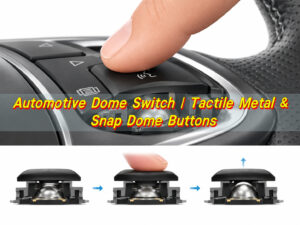

An automotive keypad switch is a button control used inside vehicles to send electrical signals through a compact switch structure. It is found in steering wheels, dashboards, center consoles, door panels, smart keys, seat controls, and other vehicle control areas. In many designs, an automotive metal dome is used under the key surface to create tactile feedback and complete the circuit when pressed.
EBest Circuit supports custom metal domes, metal dome arrays, keypad switch structures, and assembly design review for automotive electronics projects. The goal is to help customers build reliable, comfortable, and production-ready switch solutions.

What Is a Keypad Switch?
A keypad switch is an electrical switch activated by pressing a defined key area. When the user presses the button, the internal contact closes the circuit and sends a signal to the electronic control system. When the button is released, the switch returns to its original state.
In vehicles, keypad switches are used for functions such as audio control, HVAC control, window adjustment, seat memory, cruise control, lighting, smart key operation, and infotainment control. The visible part may be a plastic keycap, rubber keypad, printed overlay, or decorated panel. The hidden structure usually includes a circuit layer, contact area, adhesive spacer, actuator, and tactile element.
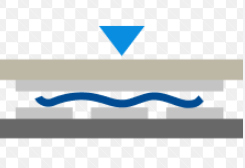
A metal dome keypad switch uses a stainless steel dome as both the spring element and conductive contact. The dome collapses when pressed, touches the circuit pad, and returns after release. This structure provides a clear tactile response and stable contact in a thin assembly.
| Keypad Switch Type | Typical Feel | Common Automotive Use | Main Advantage |
|---|---|---|---|
| Metal dome keypad | Crisp tactile snap | Steering wheel, dashboard, control panel | Precise feedback |
| Rubber keypad | Soft press feel | HVAC, smart key, interior control | Comfortable touch |
| Membrane keypad | Thin and flat | Auxiliary control panels | Compact structure |
| Plastic key switch assembly | Guided mechanical feel | Console and dashboard panels | Refined appearance |
An automotive keypad switch is not only a basic on-off component. It connects user experience, mechanical design, circuit performance, and production stability.
What Is a Steering Wheel Dome Switch?
A steering wheel dome switch is a tactile switch structure used in steering wheel control modules. It often includes a plastic keycap, actuator, metal dome, circuit board or flexible circuit, adhesive layer, and connector. The metal dome creates the tactile snap and closes the circuit when pressed.
These switches are commonly used for audio volume, phone control, cruise control, menu navigation, voice command, and driver assistance functions. Since the driver often operates these buttons without looking down, the tactile point should be clear and consistent.
The metal dome sits above the circuit contact pads. When the driver presses the key, the actuator transfers force to the dome. The dome flexes downward, touches the center pad, and completes the circuit. After release, the dome returns to its original shape.
A steering wheel dome switch usually needs balanced actuation force, short travel, reliable rebound, and stable electrical contact. The button should feel controlled without being difficult to press. Keycap movement, actuator position, dome size, and circuit pad layout must work together.
EBest Circuit can support steering wheel dome switch projects by helping customers select dome force, dome diameter, plating type, adhesive carrier, and contact pad structure.
Where Are Keypad Switches Used in Cars?
Keypad switches are used throughout vehicle interiors because they allow multiple control functions to fit into compact spaces. They are suitable for both frequently used controls and occasional-use functions.

Common automotive keypad switch applications include:
- Steering wheel controls: audio, phone, cruise control, voice command, menu navigation, and driver assistance.
- Dashboard and center console panels: HVAC, hazard light, drive mode, infotainment shortcuts, and parking assist.
- Door and seat modules: window switches, mirror control, lock control, seat adjustment, and memory settings.
- Smart keys and remote controls: lock, unlock, trunk release, panic button, and remote start.
- EV-related controls: charging cover release, energy mode selection, and interior charging indicators.
A car dashboard tactile switch may focus on appearance, backlighting, and clean movement. A steering wheel dome switch needs clear feedback during driving. A smart key button needs compact size, strong return, and stable contact.
Because each location has different size, force, and durability requirements, the automotive keypad switch should be designed according to its real application instead of using one standard structure for all buttons.
How Does an Automotive Metal Dome Improve Button Feel?
An automotive metal dome improves button feel by creating a defined tactile snap. This snap tells the user that the switch has been activated. Compared with a soft conductive contact, a metal dome provides clearer feedback, faster rebound, and more consistent actuation.
The dome is usually made from stainless steel and formed into a shallow curved shape. When pressure is applied, the dome flexes downward and contacts the circuit pad. The shape, thickness, diameter, material hardness, and plating affect force, travel, sound, and lifecycle.
Key tactile parameters include actuation force, travel, click ratio, and rebound force.
| Parameter | Meaning | Design Impact |
| Actuation force | Force needed to trigger the switch | Defines light, medium, or firm feel |
| Travel | Distance moved during pressing | Affects comfort and response |
| Click ratio | Difference between peak and return force | Controls tactile sharpness |
| Rebound force | Return energy after release | Supports reset speed |
| Dome diameter | Dome size | Influences layout, force, and travel |
A well-selected dome helps each key in a car switch panel feel consistent. This is important when several buttons are placed close together, such as on steering wheel controls or center console modules.
For automotive metal dome projects, EBest Circuit can help match dome force, dome shape, dome array adhesive, and circuit pad design to the target tactile feel.
What Materials Are Used in Automotive Keypad Switches?
Automotive keypad switches use materials that support tactile feel, electrical contact, appearance, and durability. The main materials include metal domes, circuit layers, actuators, surface key materials, adhesives, and backlighting components.
The metal dome is commonly made from stainless steel. It may be nickel-plated, silver-plated, or gold-plated depending on conductivity, contact resistance, and environmental requirements. The circuit layer may use a rigid PCB, flexible printed circuit, PET membrane, or hybrid structure.
Surface materials depend on the vehicle interior design. Silicone rubber provides a soft touch and flexible sealing. Plastic keycaps offer defined movement and a refined appearance. Printed overlays support thin panels and icon graphics.
| Material Area | Common Options | Function |
| Metal dome | Stainless steel, plated stainless steel | Tactile spring and conductive contact |
| Circuit layer | PCB, FPC, PET circuit | Electrical signal path |
| Actuator | Silicone rubber, plastic plunger | Transfers force to the dome |
| Surface layer | Plastic keycap, rubber keypad, printed overlay | User touch and visual design |
| Adhesive layer | PET adhesive, acrylic adhesive | Fixes dome position and stack-up |
| Backlight parts | LED, light guide, translucent ink | Improves icon visibility |
Adhesive design is important in metal dome arrays. It must hold the dome accurately while allowing free dome movement. Poor positioning can change the tactile response and contact stability.
EBest Circuit supports custom metal dome arrays with suitable dome material, plating, adhesive sheet design, and circuit compatibility for automotive keypad switch applications.
How Are Metal Domes Used in Automotive Keypad Switches?
Metal domes are placed between the actuator and the circuit contact pads. When the key is pressed, the actuator pushes the dome downward. The dome contacts the center pad and closes the circuit. When pressure is released, the dome returns to its original position.
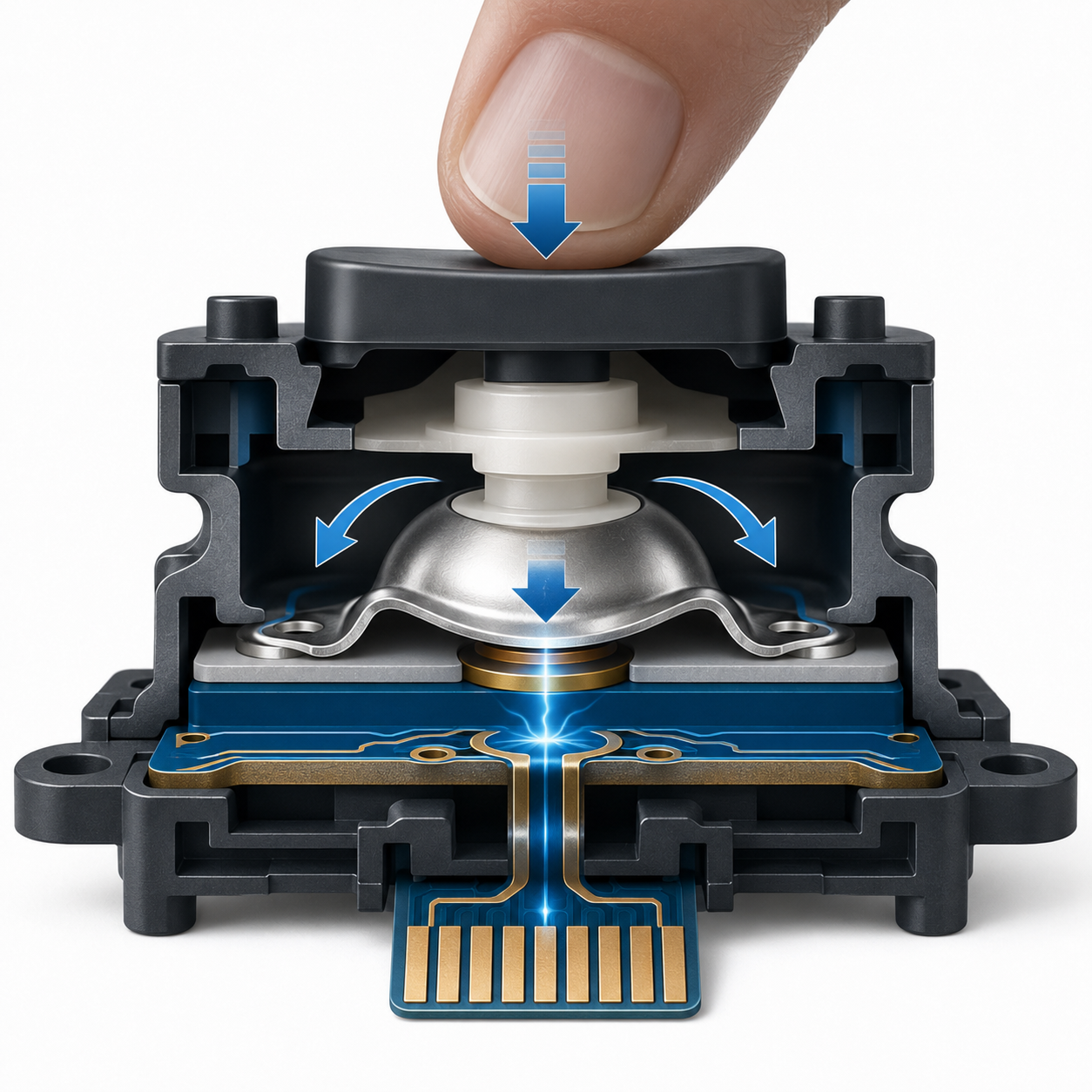
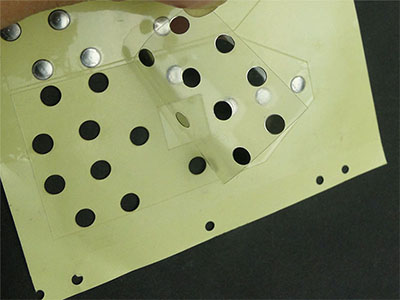
In production, metal domes are often supplied as dome arrays. A dome array places multiple domes on an adhesive sheet according to the keypad layout. This improves placement accuracy and assembly efficiency compared with placing individual domes one by one.
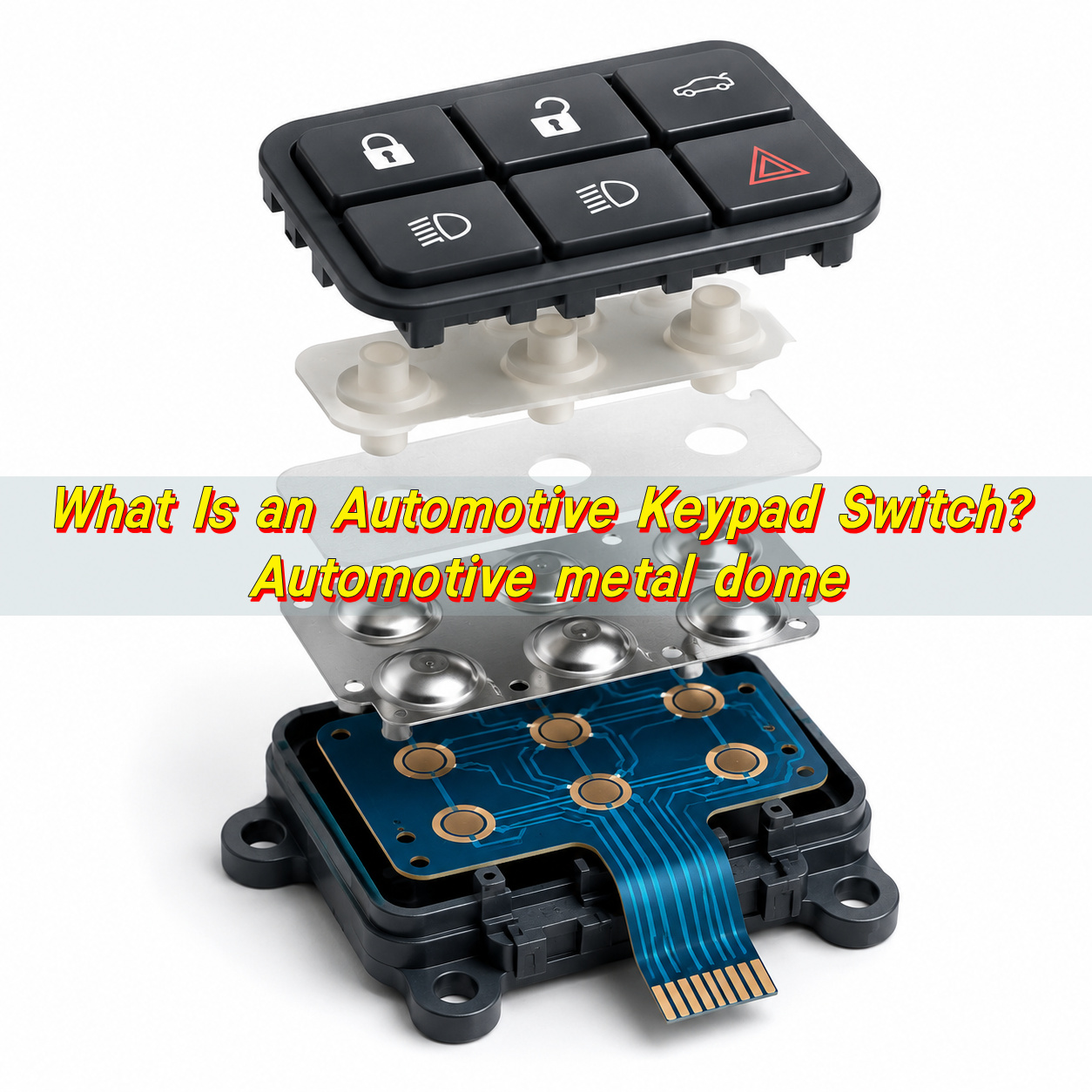
A typical automotive keypad switch stack-up may include:
- Surface keycap or rubber keypad
- Actuator or plunger
- Spacer or adhesive layer
- Metal dome array
- PCB, FPC, or membrane circuit
- Connector or tail circuit
The circuit pad under the dome usually includes an outer contact and a center contact. The dome rests on the outer contact and touches the center contact when pressed. Pad geometry, surface finish, solder mask clearance, and dome alignment all affect contact performance.
Metal domes are used in single-button switches, multi-key dome arrays, backlit keypads, rubber-over-dome structures, and flexible circuit switch assemblies. These formats are common in steering wheel controls, dashboard panels, center console controls, and automotive key switch products.
For stable performance, the dome, actuator, adhesive thickness, spacer height, and circuit pad design should be reviewed as one stack-up. EBest Circuit can assist with dome array layout and structure optimization before sampling and mass production.
What Design Factors Affect Automotive Keypad Performance?
Automotive keypad performance depends on tactile design, electrical contact, mechanical alignment, material selection, and assembly tolerance. A reliable keypad should provide consistent force, stable signal output, smooth movement, and suitable durability for the application.
Actuation force is one of the most important factors. The force should match the button function and user environment. A steering wheel button should be easy to operate while still giving clear feedback. A smart key button may require firmer force to avoid accidental activation.
Actuator geometry also matters. The actuator should press the center of the dome evenly. Off-center pressure can affect tactile feel and lifecycle. Keycap movement should be guided, and the housing should keep the press direction stable.
Electrical contact is another key factor. The circuit pad design should match the dome size and material. Contact resistance should remain stable during use. Surface finish should be selected according to reliability and cost requirements.
Backlighting can affect the mechanical structure. LEDs, light guides, painted icons, and translucent materials must be arranged without interfering with the press path. The switch should maintain both visual clarity and tactile consistency.
Important design factors include dome force, dome diameter, actuator shape, circuit pad layout, adhesive thickness, spacer clearance, keycap material, backlighting design, and production tolerance.
How Do You Choose the Right Actuation Force?
The right actuation force depends on button location, key size, surface material, user operation, and product positioning. For automotive keypad switch design, force selection should be tested in the actual stack-up instead of judging the bare metal dome alone.
Many small metal dome switches use actuation force in the range of 160 gf to 500 gf, though custom values are also possible. Light force supports fast operation. Medium force offers balanced feedback. Firmer force is useful for buttons that require a more deliberate press.
| Application Area | Common Force Direction | Reason |
| Steering wheel control | Medium | Clear feedback during driving |
| Dashboard tactile switch | Light to medium | Comfortable frequent use |
| Center console keypad | Medium | Controlled press feel |
| Smart key button | Medium to firm | Helps prevent accidental pressing |
| Seat or door control | Medium to firm | Strong tactile confirmation |
Click ratio should also be considered. A higher click ratio gives a sharper tactile snap, while a lower click ratio feels smoother. The best choice depends on the vehicle interior style and switch function.
Surface materials change how force feels. Plastic keycaps transfer force directly. Silicone rubber softens the press. Thick overlays may reduce tactile sharpness. For this reason, sample testing should use the real keycap, actuator, adhesive, dome, and circuit structure.
EBest Circuit can provide dome force options and sample dome arrays to help customers compare tactile response before finalizing the automotive keypad design.
How Long Should an Automotive Keypad Switch Last?
An automotive keypad switch should be designed for long-term use across daily operation and changing vehicle interior conditions. The expected lifecycle depends on switch location, usage frequency, dome specification, material stack-up, and customer requirements.
Many automotive metal dome switch projects target 100,000 to 1,000,000 cycles or more. High-use buttons, such as steering wheel audio and menu controls, often need higher cycle targets. Occasional-use buttons may use lower targets when suitable for the application.
| Use Case | Use Frequency | Typical Life Target Direction |
| Steering wheel audio/menu key | High | 500,000 to 1,000,000+ cycles |
| Dashboard HVAC key | Medium to high | 300,000 to 1,000,000 cycles |
| Center console mode key | Medium | 200,000 to 500,000+ cycles |
| Smart key button | Medium | 100,000 to 500,000+ cycles |
| Auxiliary control | Low to medium | 100,000 to 300,000+ cycles |
Switch life is affected by dome material, dome geometry, actuator alignment, operating force, contact pad finish, adhesive stability, and environmental exposure. The design should also consider heat, cold, humidity, vibration, dust, cleaning agents, and repeated touch.
During lifecycle testing, engineers usually monitor force change, contact resistance, travel, rebound, sound, and visual condition. These checks help confirm whether the keypad can maintain stable performance after repeated use.
EBest Circuit supports long-life automotive keypad switch projects through dome selection, dome array design, plating review, adhesive structure, and circuit pad compatibility review.
How Are Automotive Keypad Switches Tested?
Automotive keypad switches are tested to verify tactile feel, electrical function, durability, appearance, and environmental stability. Testing helps confirm that the keypad performs consistently before mass production.
Mechanical testing measures actuation force, travel, click ratio, and return force. A force-displacement curve shows how the switch behaves during press and release. This curve is useful for comparing dome options and checking production consistency.
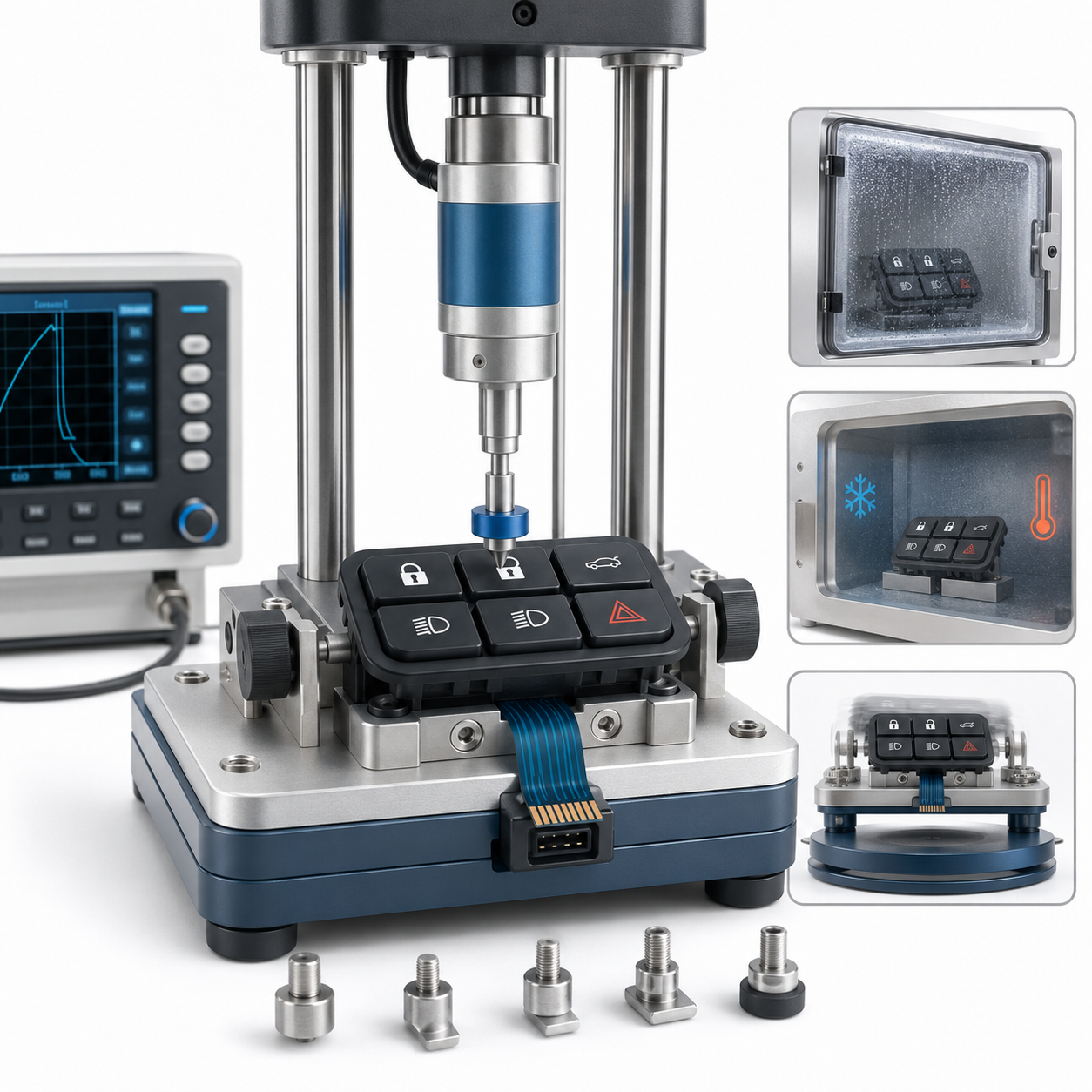
Electrical testing checks continuity, contact resistance, insulation, and signal output. For PCB or FPC-based keypads, functional testing through the connector can confirm every key position.
Common automotive keypad switch tests include:
- Tactile force test: measures force, travel, return force, and click ratio.
- Lifecycle test: presses the key for a defined number of cycles.
- Contact resistance test: checks electrical stability after actuation.
- Temperature and humidity test: verifies material and contact performance.
- Thermal cycling test: checks performance under temperature changes.
- Vibration test: supports automotive operating reliability.
- Backlight inspection: checks icon brightness and light uniformity.
- Assembly inspection: verifies dome alignment, adhesive position, and key movement.
Lifecycle testing may check performance at 100,000, 300,000, 500,000, or 1,000,000 cycles, depending on the project target. The test results help evaluate force stability, electrical contact, return behavior, and surface condition.
Production inspection should also cover dome dimensions, plating quality, adhesive sheet accuracy, circuit pad finish, dome placement, and final functional testing. These controls help maintain consistent quality across production batches.
An automotive keypad switch combines tactile design, electrical contact, materials, and assembly control. The automotive metal dome plays a central role in button feel and signal response. With suitable dome force, correct stack-up design, proper material selection, and complete testing, the finished switch can provide clear feedback and stable long-term performance.
For custom automotive metal dome arrays, steering wheel dome switch solutions, car dashboard tactile switch structures, car switch panel components, and automotive keypad switch support, contact EBest Circuit at sales@metal-domes.com