
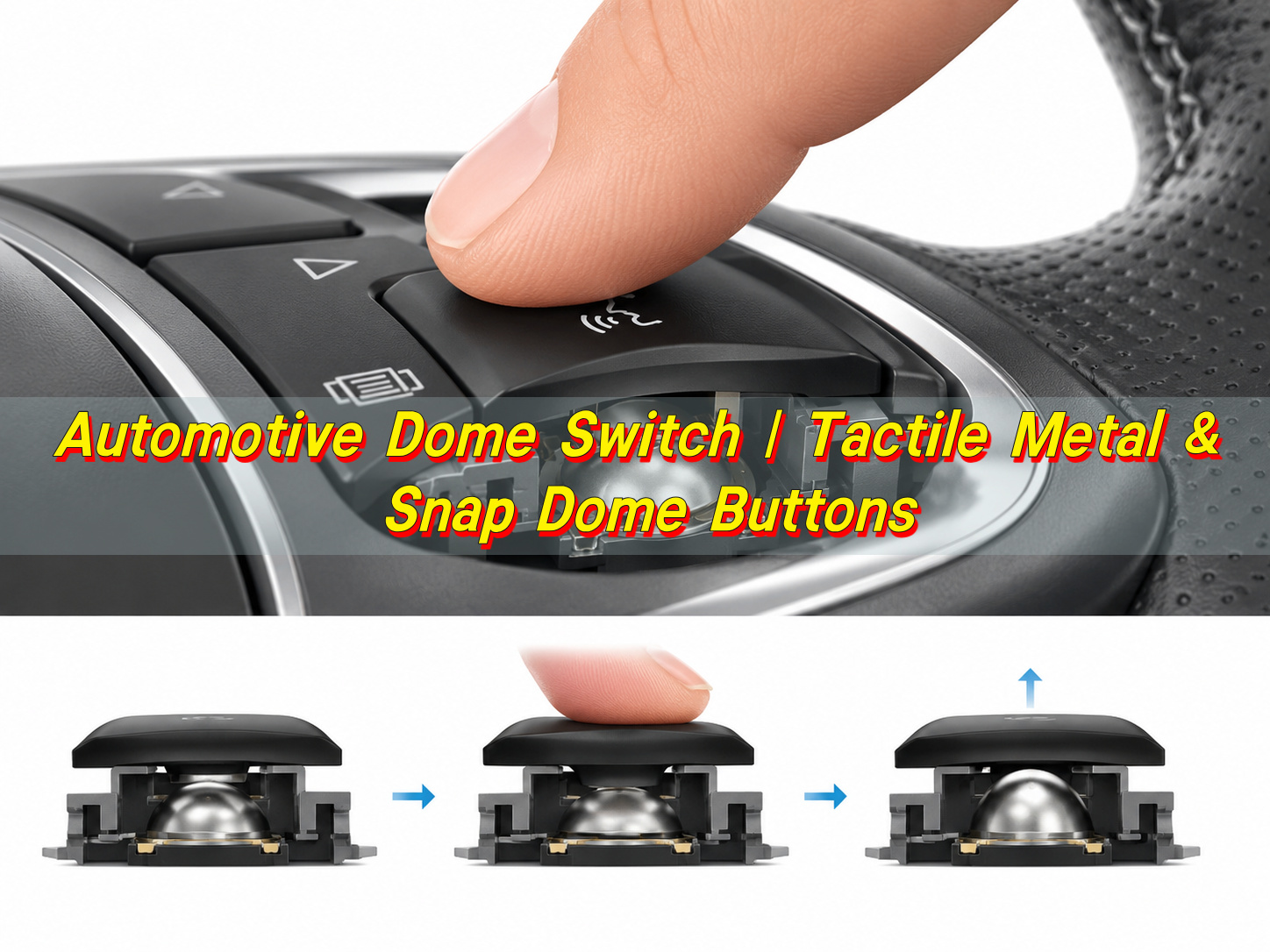
An automotive dome switch is a compact tactile switch structure used in vehicle buttons, control panels, keypads, and electronic modules. It uses a metal dome to provide electrical contact and a clear press feel when the button is activated.
In automotive interiors, button feel, contact reliability, temperature resistance, and long service life all matter. A dome switch button must fit the PCB layout, match the key travel, and remain stable under heat, humidity, vibration, and repeated use.

EBest Circuit provides custom metal dome switches, tactile dome switch arrays, snap dome buttons, adhesive dome sheets, and dome switch PCB matching for automotive and industrial control applications.
What is an automotive dome switch used for?
An automotive dome switch is used to create tactile feedback and electrical contact inside vehicle buttons. When the user presses the button, the metal dome collapses, touches the PCB contact pad, and closes the circuit. When the pressure is released, the dome returns to its original shape and opens the circuit.
This structure is common in steering wheel controls, HVAC panels, window switches, mirror controls, seat adjustment buttons, lighting controls, start-stop panels, roof modules, and center console keypads. It is also used in smart cockpit modules and electronic control interfaces where compact button construction is required.
The main function is not only switching. The dome also defines the press feel. A well-matched tactile dome switch gives the user a clear response, so the button does not feel loose, delayed, or uncertain.
Automotive dome switch designs can be used under plastic keycaps, rubber keypads, membrane overlays, decorative panels, or adhesive dome arrays. This makes the structure flexible for different interior designs and assembly methods.
Why choose tactile dome switch for automotive interiors?
A tactile dome switch is suitable for automotive interiors because it offers a clear press point in a thin structure. It helps buttons feel responsive while keeping the control module compact.
Compared with many bulky mechanical switch structures, a metal dome switch requires less vertical space. This is useful for steering wheel buttons, slim dashboard panels, and center console controls where space is limited.
Another benefit is repeatability. When the dome size, actuation force, PCB pad, and adhesive film are controlled correctly, buttons in the same panel can maintain similar touch feel. This is important for user experience and production consistency.
Main advantages include:
- Clear tactile feedback for vehicle buttons
- Thin structure for compact control panels
- Stable contact when matched with the correct PCB pad
- Custom force options for different button functions
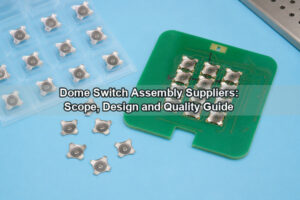
- Efficient assembly through adhesive dome arrays
- Compatibility with keycaps, overlays, rubber keypads, and PCB modules
For automotive projects, EBest Circuit reviews the dome, PCB contact pad, adhesive carrier, key travel, and assembly structure together. This helps customers avoid mismatch between the switch component and the final button design.
How to match dome switch with automotive dome switch PCB?
Matching a dome switch with an automotive dome switch PCB starts with the contact pad. The PCB normally needs a center contact area and an outer support area. When pressed, the dome should touch the center pad reliably while staying stable on the outer contact area.
The PCB surface finish affects contact performance. Common options include ENIG, hard gold, immersion silver, or carbon contact printing. The choice depends on cost, lifecycle target, environmental condition, and customer specification.
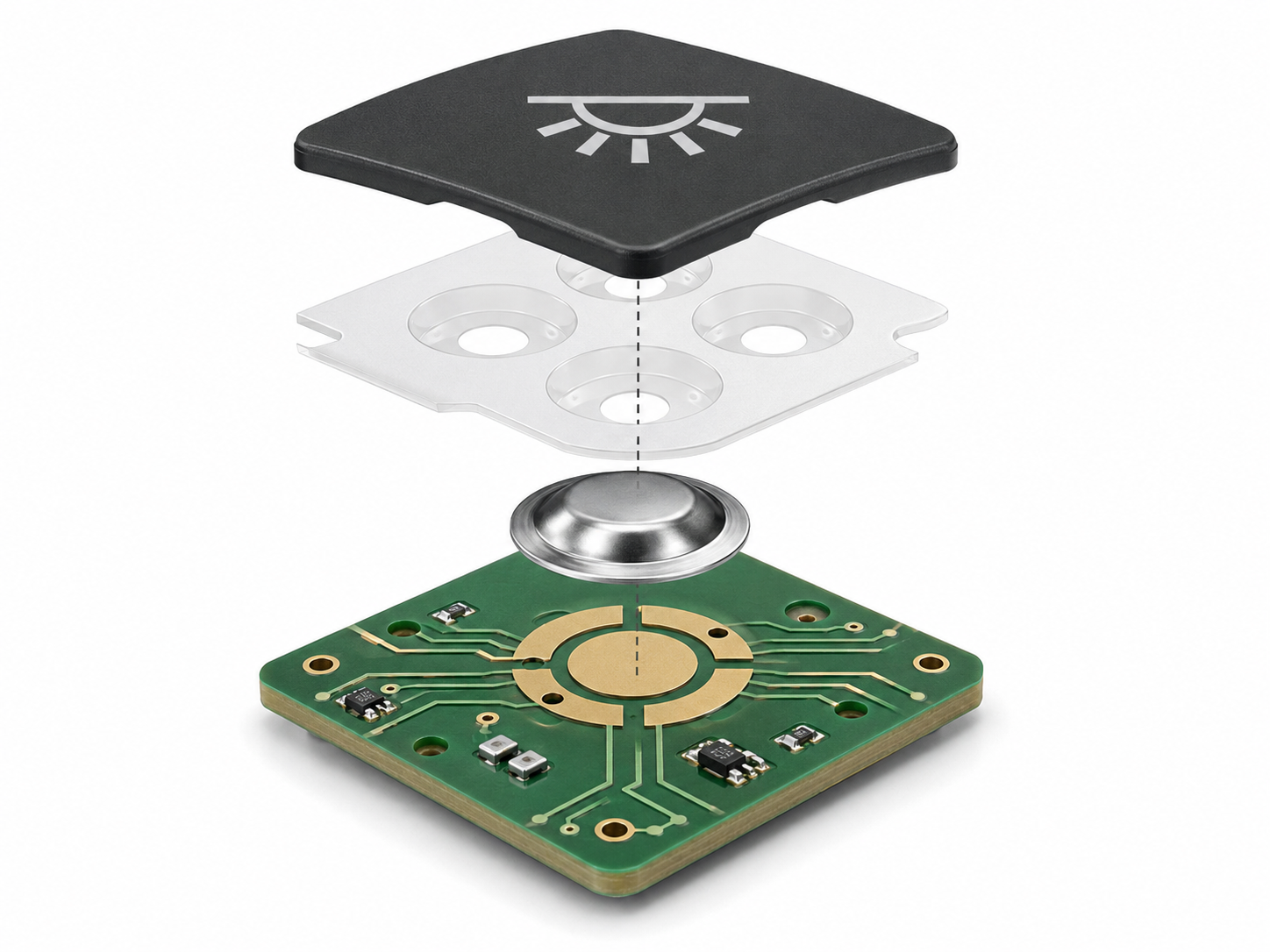
The dome diameter must match the PCB space and button size. A larger dome can provide a wider contact area and stronger tactile feel. A smaller dome is suitable for compact keypads and dense button layouts.
Key travel also needs attention. If the key travel is too short, the dome may feel compressed. If it is too long, the button may feel delayed. The mechanical structure should allow the dome to collapse and return within its designed travel range.
| Matching Item | Design Purpose | Key Consideration |
|---|---|---|
| Dome diameter | Defines contact area and feel | Match with button size and PCB space |
| Actuation force | Controls press strength | Select according to button function |
| PCB pad design | Supports stable switching | Use correct center and outer contacts |
| Surface finish | Affects contact stability | ENIG, gold, silver, or carbon options |
| Adhesive film | Holds dome position | Ensure accurate alignment |
| Key travel | Affects button response | Match with dome movement |
| Venting path | Releases trapped air | Prevent unstable press feel |
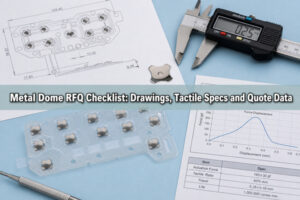
Before production, EBest Circuit can review customer PCB files, dome drawings, adhesive film design, and button stack-up. This helps improve alignment, contact stability, and press consistency before mass production.
What lifespan standard for vehicle dome switch button?
The lifespan of a vehicle dome switch button depends on dome material, dome shape, actuation force, PCB surface finish, key travel, and assembly pressure. For many automotive interior buttons, common lifespan targets range from 100,000 cycles to more than 1,000,000 cycles.
High-use buttons require stronger lifecycle planning. Steering wheel controls, window switches, volume buttons, and HVAC keys are pressed frequently. Seat adjustment buttons, lighting controls, and mode buttons may have lower cycle requirements, depending on the vehicle design.
A dome switch button lasts longer when it is not overstressed. The plastic key, overlay, adhesive film, and PCB must allow the dome to move correctly. Excessive compression or poor stack-up control may change the force curve and reduce stable performance.
Lifecycle testing should be performed on the complete button assembly, not only the loose dome. The final structure includes the keycap, housing, adhesive layer, PCB, and contact area. Testing the full assembly gives a more accurate result.
| Button Type | Use Frequency | Common Life Target |
| Steering wheel button | High | 500,000–1,000,000+ cycles |
| Window lift switch | High | 300,000–1,000,000 cycles |
| HVAC button | Medium to high | 200,000–500,000+ cycles |
| Seat adjustment button | Medium | 100,000–300,000+ cycles |
| Lighting control button | Low to medium | 100,000–300,000 cycles |
Final lifespan requirements should follow the customer’s vehicle program, OEM standard, and test plan. EBest Circuit can support sample testing, force matching, and custom dome array production during the validation stage.
Can automotive dome switch withstand high temperature inside cars?
Yes. An automotive dome switch can withstand high temperature inside cars when the metal dome, adhesive film, PET layer, overlay, and PCB finish are selected for the required temperature range.
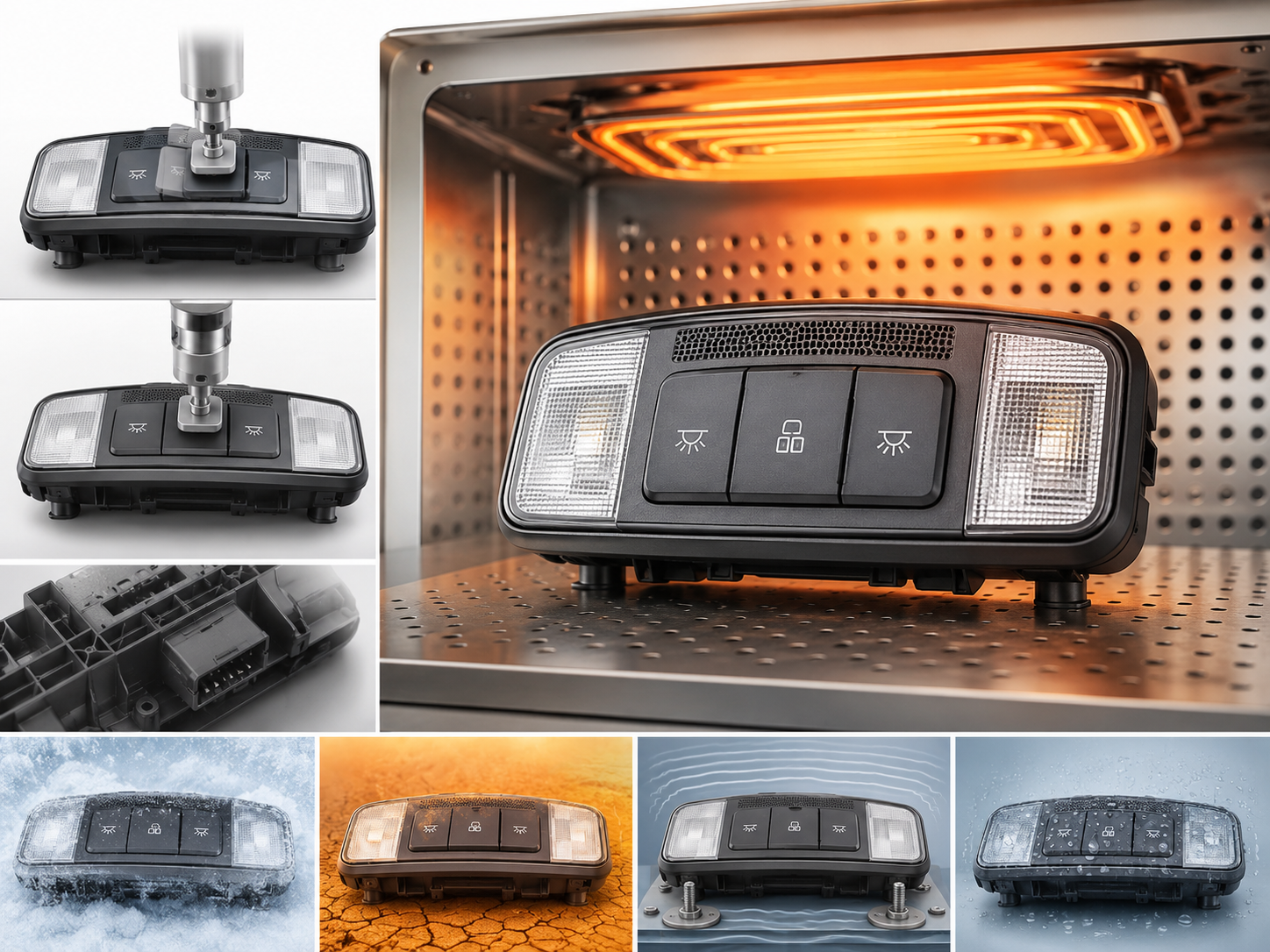
Vehicle interiors can become hot under direct sunlight, especially around dashboards, roof modules, and center consoles. Many automotive interior components are evaluated under ranges such as -40°C to 85°C or -40°C to 105°C, depending on the installation area and customer requirement.
The metal dome itself usually has good temperature stability because it is commonly made from stainless steel. The surrounding materials need equal attention. Adhesive films, PET carriers, plastic housings, rubber keypads, printed overlays, and PCB finishes must remain stable after heat exposure.
High-temperature storage, thermal cycling, and humidity tests are often used to check material stability. After testing, engineers usually review actuation force, contact resistance, dome rebound, adhesive bonding, and visual condition.
For adhesive dome arrays, the adhesive must keep the dome in position after heat aging. The PET film should also maintain shape and alignment. If the button includes backlighting, the cutouts, printed layers, and transparent areas need to remain dimensionally stable.
EBest Circuit can help select suitable dome materials, adhesive films, and dome array structures according to the expected automotive environment.
What layout rules apply to automotive dome switch keyboard?
An automotive dome switch keyboard is a group of dome switches arranged on a PCB, flex circuit, or adhesive dome sheet under a keypad or control panel. The layout must support reliable contact, accurate alignment, stable tactile feel, and easy assembly.
Each dome needs enough space for the contact pad, adhesive support area, and movement clearance. If domes are placed too close together, assembly becomes harder and the button feel may become inconsistent.
The PCB contact pattern should remain consistent for buttons using the same dome type. Consistent pad geometry helps maintain similar force, sound, and response across the whole keypad.
Routing should avoid the main dome contact area. Traces and vias should not interfere with the center contact or outer support ring. Solder mask openings also need control so the dome sits evenly on the PCB.
For backlit automotive keypads, LED placement and light guide design should be considered at the same time as the dome layout. The switch should not block light paths, and the lighting structure should not limit dome movement.
Useful layout rules include:
- Keep pad dimensions consistent for similar buttons
- Leave enough adhesive area around each dome
- Avoid routing through the dome contact zone
- Match keycap travel with dome travel
- Plan LED position and light guide space early
- Add venting paths when the overlay traps air
- Check tolerance across PCB, adhesive, keycap, and housing
A sample build is recommended before tooling. It allows engineers to test real button feel, force, rebound, and alignment. EBest Circuit can provide dome samples and custom dome arrays for layout verification.
How does dome switch vs membrane switch perform in vehicles?
A dome switch and a membrane switch can both be used in vehicles, but they serve different design needs. A dome switch uses a metal dome to create tactile snap and electrical contact. A membrane switch uses printed conductive layers, spacer layers, and flexible materials to create a thin switch panel.
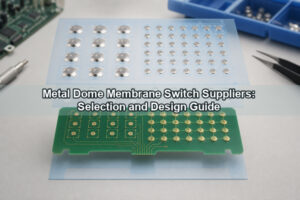
In many automotive designs, the two structures are combined. A metal dome may be placed under a membrane overlay. In this case, the dome provides tactile feedback, while the membrane layer provides graphics, sealing, and surface structure.
A dome switch is usually selected when clear tactile feedback is important. It is suitable for steering wheel buttons, HVAC controls, window switches, and console keys.
A membrane switch is suitable for flat panels, printed graphics, sealed surfaces, and low-profile control interfaces. When combined with metal domes, it can provide both a clean surface and tactile response.
| Comparison Item | Dome Switch | Membrane Switch |
| Main structure | Metal dome over PCB or flex contact | Printed conductive layers with spacer |
| Tactile feel | Clear snap feedback | Softer feel unless combined with dome |
| Thickness | Thin and compact | Very thin and panel-friendly |
| Surface graphics | Usually added by overlay or keycap | Printed graphics can be integrated |
| Sealing | Available through film and overlay design | Strong sealing potential |
| Lifecycle | Strong with correct dome and pad design | Strong with suitable material stack |
| Best use | Buttons needing clear feedback | Flat panels and sealed keypads |
| Automotive use | Steering, HVAC, console, window controls | Control panels and graphic interfaces |
The choice depends on button feel, sealing requirement, panel thickness, appearance, cost target, and production method. For many vehicle interiors, a metal dome plus membrane overlay is an efficient structure.
What actuation force options for automotive metal dome switch?
Actuation force is the pressure required to collapse the metal dome and activate the switch. For an automotive metal dome switch, the force should match the button function, key size, and user operation.
Common force options range from about 100 gf to 600 gf or higher. Light force is suitable for small control keys. Medium force is common for steering wheel and HVAC buttons. Higher force is used for larger buttons or functions that require a firmer press.
The perceived force is affected by the full button structure. A long plastic key may feel lighter because of leverage. A small rigid key may feel stronger even when the dome force is the same. For this reason, force selection should be tested with the actual keycap, housing, adhesive layer, and PCB.
| Actuation Force Range | Typical Feel | Common Automotive Use |
| 100–180 gf | Light press | Small control keys, infotainment buttons |
| 180–280 gf | Balanced tactile feel | Steering wheel buttons, HVAC keys |
| 280–400 gf | Firm press | Window switches, console buttons |
| 400–600 gf+ | Strong press | Seat controls, large buttons, special functions |
Tactile ratio is also important. It describes the difference between peak force and return force. A higher tactile ratio gives a sharper snap. A lower ratio gives a softer press feel.
EBest Circuit can provide different metal dome switch force options and support sample comparison before final selection. Custom dome shape, diameter, plating, and adhesive array design are also available for specific automotive requirements.
Is waterproof treatment available for automotive dome switch?
Yes. Waterproof treatment is available for automotive dome switch designs. The protection method depends on the button location, sealing requirement, and product structure.
Waterproofing is usually achieved through the complete switch structure, not the metal dome alone. Common methods include PET adhesive film, sealed overlays, spacer layers, rubber keypads, gasket design, housing sealing, and selective PCB protection.
Interior automotive buttons often need protection against humidity, dust, sweat, cleaning liquid, and accidental splashes. Door switches, window buttons, steering wheel keys, and center console controls may all require some level of sealing.
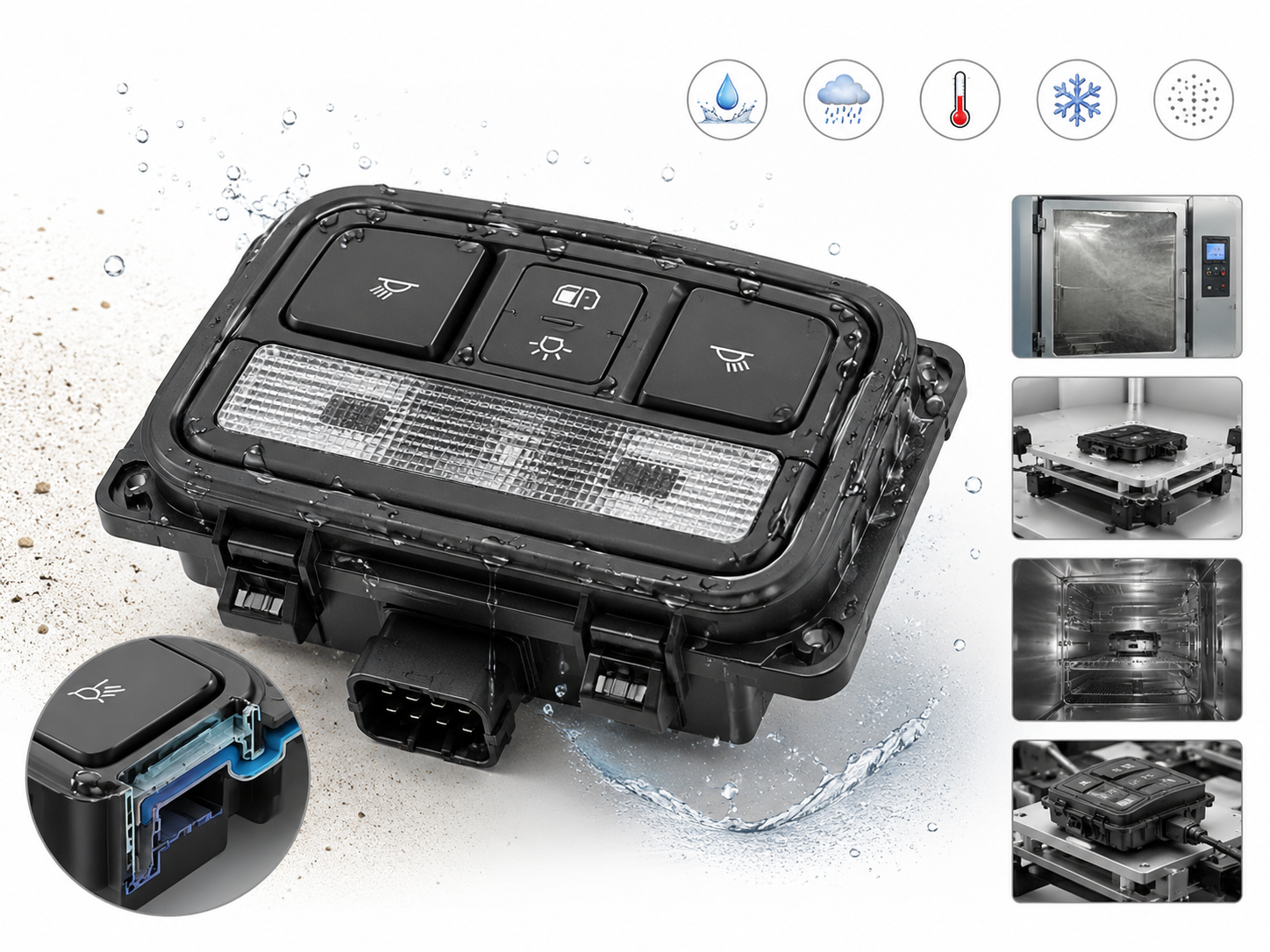
The design must still allow the dome to move correctly. If the adhesive or overlay traps air, the button may feel unstable. A venting path can help release pressure while keeping the structure protected.
The PCB contact area also needs protection through proper surface finish, clean assembly, and controlled storage. If stronger protection is required, coating or sealing can be applied around selected areas without blocking the dome contact function.
Waterproof planning should begin during layout design. It is easier to define adhesive cutouts, sealing edges, vent channels, and overlay structures before tooling. EBest Circuit can support custom adhesive dome arrays for automotive switches that require environmental protection and stable tactile response.
What environmental tests do car dome switches need to pass?
Car dome switches need environmental and functional tests to confirm performance under vehicle conditions. The exact test plan depends on the vehicle program, installation location, and customer specification.
Common tests include lifecycle pressing, contact resistance testing, actuation force measurement, high-temperature storage, low-temperature storage, thermal cycling, humidity exposure, vibration testing, splash testing, chemical resistance, and visual inspection.
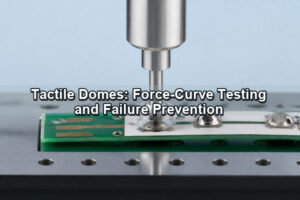
Lifecycle testing checks whether the button maintains stable force and rebound after repeated pressing. Contact resistance testing checks electrical stability. Force testing confirms that the tactile feel remains within the required range.
Temperature and humidity testing review the stability of the metal dome, adhesive film, PET layer, overlay, PCB finish, and housing. Vibration testing checks whether the dome remains aligned during vehicle movement.
| Test Item | Purpose | Inspection Focus |
| Life cycle test | Checks long-term durability | Force curve, rebound, contact stability |
| Contact resistance test | Confirms electrical performance | Resistance before and after cycling |
| High-temperature test | Reviews heat resistance | Adhesive, PET film, dome, PCB finish |
| Low-temperature test | Reviews cold performance | Tactile response and material condition |
| Thermal cycling | Simulates temperature changes | Dimensional stability and button feel |
| Humidity test | Checks moisture resistance | Contact quality and adhesive stability |
| Vibration test | Simulates vehicle movement | Dome alignment and assembly security |
| Splash test | Checks liquid protection | Sealing and switch response |
| Chemical resistance test | Reviews cleaning exposure | Overlay, adhesive, and surface durability |
Testing should be performed on the complete button assembly whenever possible. This gives a more accurate result than testing only loose domes, because the final performance depends on the combined structure.
An automotive dome switch is a reliable solution for vehicle buttons that require clear tactile feedback, compact structure, and stable contact performance. The final result depends on correct matching between the metal dome, PCB pad, adhesive film, key travel, overlay, sealing design, and validation test plan.
EBest Circuit supports custom metal dome switches, tactile dome switch arrays, snap dome switch buttons, and dome switch PCB matching for automotive interior control projects. For samples, technical review, or quotation support, contact sales@metal-domes.com