
Tactile switch for medical device applications must do more than create a simple click. It must support safe operation, clear user feedback, compact product design, reliable signal control, and stable performance after repeated use. In medical equipment, even a small button can affect user confidence, device response, cleaning performance, and long-term reliability.
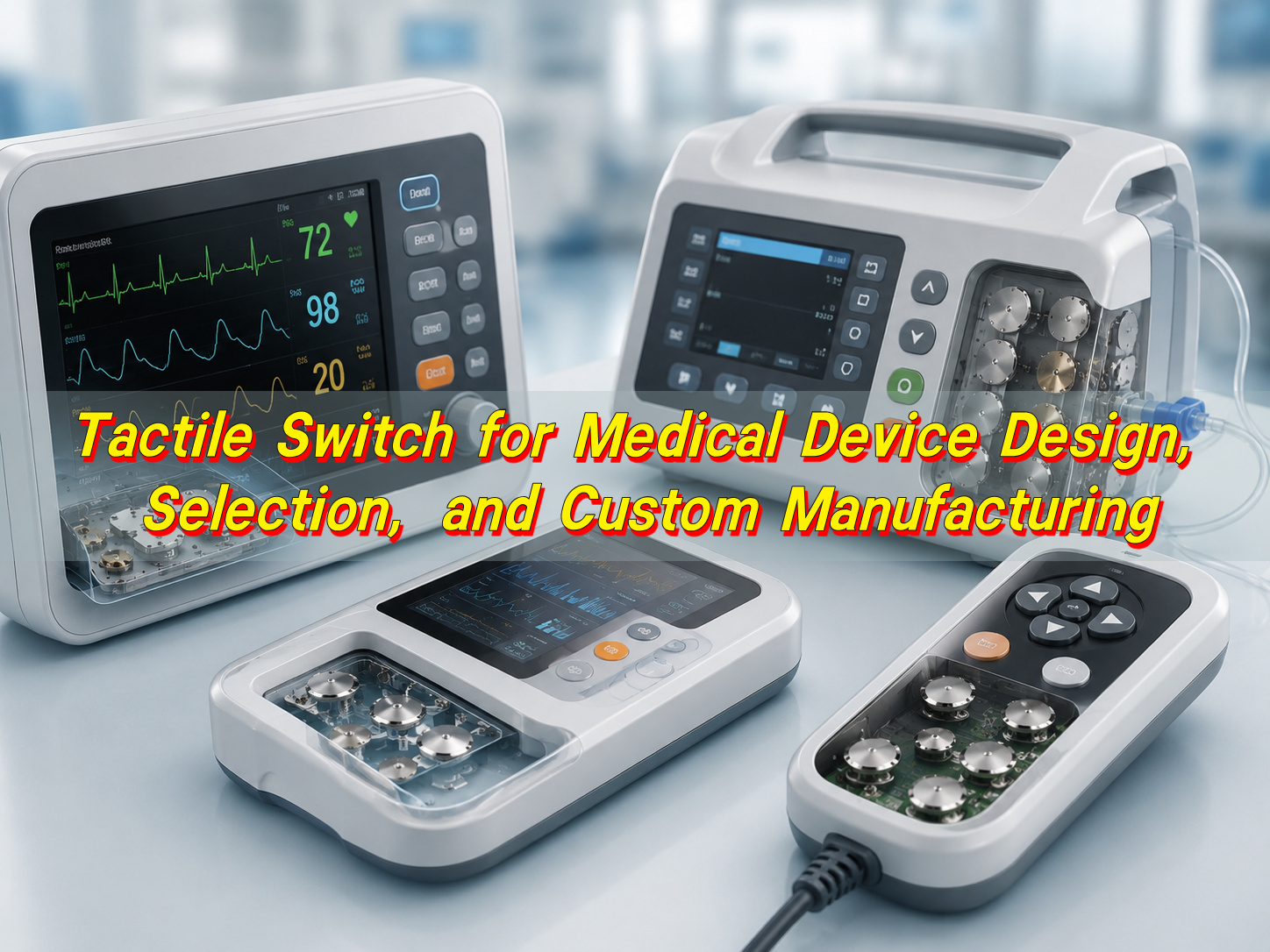
Medical device engineers usually focus on actuation force, tactile ratio, switch life, sealing performance, material safety, PCB compatibility, cleaning resistance, and supplier quality control. For buyers, the key concern is whether the switch can be customized, tested, delivered consistently, and used in OEM or ODM production without hidden reliability risks.
What Is a Tactile Switch for Medical Device Applications?
A tactile switch is a momentary switch that provides a physical “click” or tactile feedback when pressed. In medical devices, it is commonly used for control buttons, function keys, reset keys, mode selection, alarm silence buttons, handheld controllers, diagnostic equipment, and patient monitoring interfaces.
Most tactile switches use a metal dome, spring contact, or internal contact structure to complete a circuit when pressure is applied. When the user releases the button, the switch returns to its original state. This makes it suitable for short command inputs rather than continuous on/off control.
For medical use, the switch must be selected more carefully than a general consumer switch. Medical devices often require stable force, low contact resistance, reliable rebound, sealed protection, compact structure, and cleanable interface design. Some sealed tactile switches are designed for medical, industrial, and wearable applications where moisture resistance and long-term reliability are important.
Why Is Tactile Feedback Important in Medical Devices?
Tactile feedback helps users confirm that a button has been pressed. This is important in medical environments because operators may wear gloves, work under pressure, or need to control equipment without looking directly at every button.
A clear tactile response reduces repeated pressing, wrong input, and uncertainty during operation. For example, a nurse using a bedside monitor or a technician operating a diagnostic instrument needs a button response that feels consistent every time.
In many medical devices, visual confirmation alone is not enough. Screens may be busy, alarms may be active, and users may need fast physical confirmation. A well-designed tactile switch improves human-machine interaction, especially in handheld, portable, and high-frequency-use equipment.
How Does a Medical Tactile Switch Work?
A medical tactile switch works by converting mechanical pressure into an electrical signal. When the actuator is pressed, the internal contact element moves downward and closes the circuit. When pressure is released, the contact returns and opens the circuit.
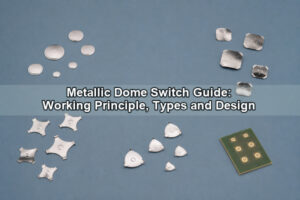
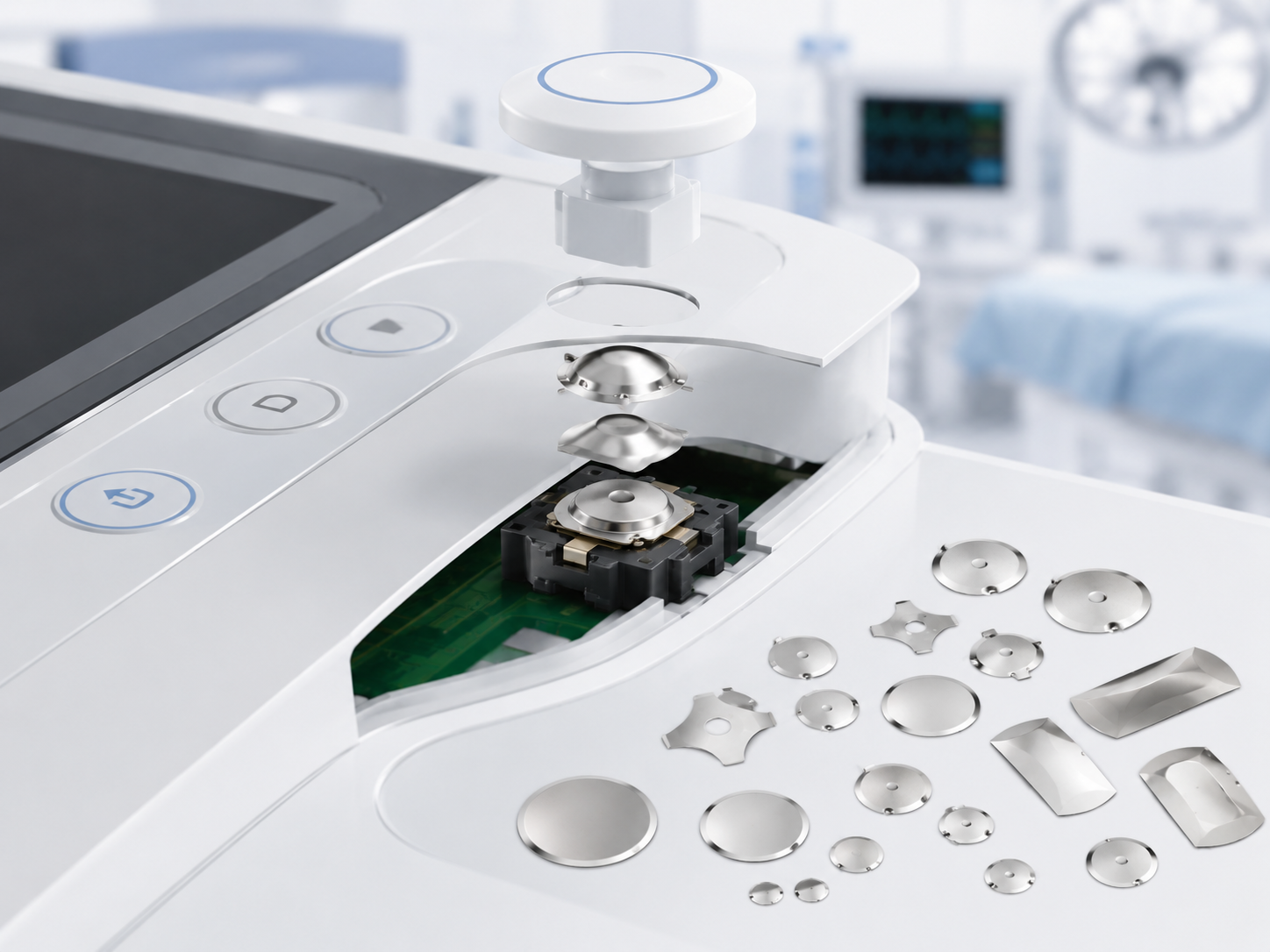
In metal dome-based designs, the dome collapses under force and creates a snap feeling. This gives users a crisp tactile response. In sealed or soft actuator designs, the switch may use additional sealing layers, rubber structures, or membrane overlays to protect the contact area.
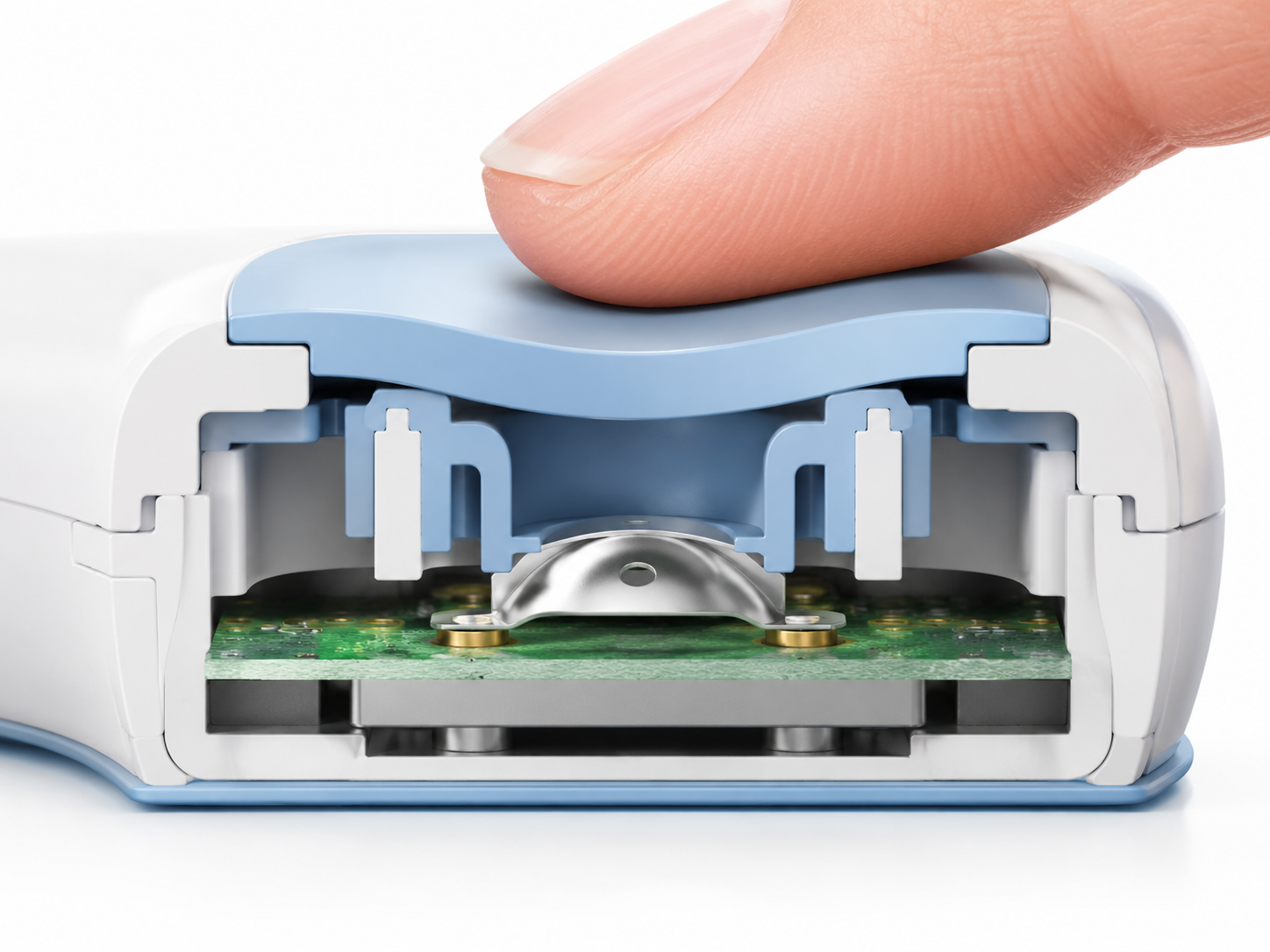
The most important working factors are operating force, travel distance, rebound force, tactile ratio, contact resistance, and electrical life. If these values are not stable, the button may feel weak, become intermittent, or fail earlier than expected.
| Working Factor | Why It Matters in Medical Devices |
|---|---|
| Operating force | Controls how hard the user must press |
| Tactile ratio | Affects click sharpness and user confirmation |
| Travel distance | Influences button feel and enclosure design |
| Contact resistance | Affects signal stability |
| Rebound force | Helps avoid sticking or poor return |
| Electrical life | Determines long-term button durability |
| Sealing structure | Protects against moisture, dust, and cleaning exposure |
What Types of Tactile Switches Are Used in Medical Devices?
Medical device projects may use several tactile switch types depending on structure, available space, usage frequency, and cleaning requirements. The right choice depends on the product design rather than one universal solution.
| Type | Typical Use | Main Advantage | Selection Note |
| SMT tactile switch | PCB-mounted medical electronics | Compact and assembly-friendly | Check reflow compatibility |
| Sealed tactile switch | Cleanable or portable devices | Better moisture and dust protection | Confirm IP rating and test method |
| Metal dome switch | Membrane keypad and thin interface | Crisp click and low profile | Suitable for custom layouts |
| Side-actuated switch | Compact handheld devices | Saves top-side space | Confirm actuator alignment |
| Illuminated tactile switch | Equipment with visual status needs | Combines feedback and indication | Check LED brightness and heat |
| Custom tactile keypad | Medical control panel | Integrated overlay and sealing | Best for OEM interface design |
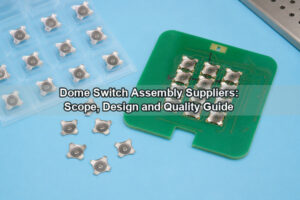
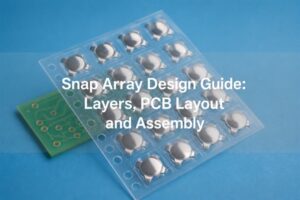
Sealed tactile switches are often selected for medical equipment because they help protect the internal contact area from contamination and moisture. For devices that require a thin structure, custom layout, or integrated surface protection, a metal dome array or membrane switch structure may also be a practical solution.
What Materials Are Commonly Used in Medical Tactile Switches?
Material selection affects contact stability, tactile feel, corrosion resistance, solderability, and cleaning durability. In medical device projects, material choice should be reviewed together with electrical requirements and environmental exposure.
Common contact materials include stainless steel, copper alloy, phosphor bronze, brass, silver plating, gold plating, and nickel plating. Stainless steel is often used for dome structures because it provides good elasticity and fatigue resistance. Silver and gold plating are often considered when conductivity and signal stability are important.
For custom medical interfaces, additional materials may include PET films, adhesive layers, silicone rubber, printed circuits, flexible circuits, graphic overlays, and sealing gaskets. These materials must be chosen based on biocompatibility needs, cleaning agents, wear resistance, and device enclosure design.
| Material | Common Function | Medical Device Consideration |
| Stainless steel dome | Tactile click and rebound | Stable force and long fatigue life |
| Silver plating | Conductive contact layer | Good conductivity, requires corrosion review |
| Gold plating | High-reliability contact surface | Better for low-current signal stability |
| PET film | Dome array carrier or insulation | Thin, stable, and suitable for overlays |
| Silicone rubber | Button cover or keypad layer | Soft touch and sealing support |
| Acrylic adhesive | Layer bonding | Must match temperature and cleaning exposure |
| Flexible circuit | Custom keypad connection | Useful for compact medical equipment |
What Key Specifications Should Engineers Check First?
Engineers should not select a tactile switch only by size. A switch that fits the PCB may still fail if force, life cycle, sealing, or cleaning resistance is not suitable.
| Specification | Typical Review Point | Why It Matters |
| Operating force | Light, medium, or heavy press | Affects user comfort and false-touch risk |
| Life cycles | 100,000 to 1,000,000+ depending on design | Impacts long-term device reliability |
| Contact resistance | Low and stable value | Supports clean signal transmission |
| Insulation resistance | High resistance between circuits | Prevents leakage issues |
| Rated voltage/current | Match circuit requirements | Avoids overload and unstable operation |
| Actuator height | Match enclosure button stack-up | Prevents poor pressing feel |
| IP rating | IP54, IP67, or higher if needed | Protects from liquid and dust ingress |
| Operating temperature | Match storage and use conditions | Supports reliability in real environments |
| Soldering method | SMT, through-hole, or custom assembly | Affects PCBA process selection |
For medical devices, force consistency across production lots is especially important. If the same model feels different from batch to batch, users may lose confidence in the interface, and device manufacturers may face assembly or quality complaints.
What Are the Advantages of Using Tactile Switches in Medical Devices?
Tactile switches are widely used because they combine compact size, clear feedback, and simple circuit control. They are easy to integrate into PCB assemblies, membrane keypads, handheld devices, and compact medical control panels.
Their main advantage is physical confirmation. Compared with a flat touch surface, a tactile switch gives users a press-and-response feeling. This is helpful when users wear gloves or operate equipment in busy clinical settings.
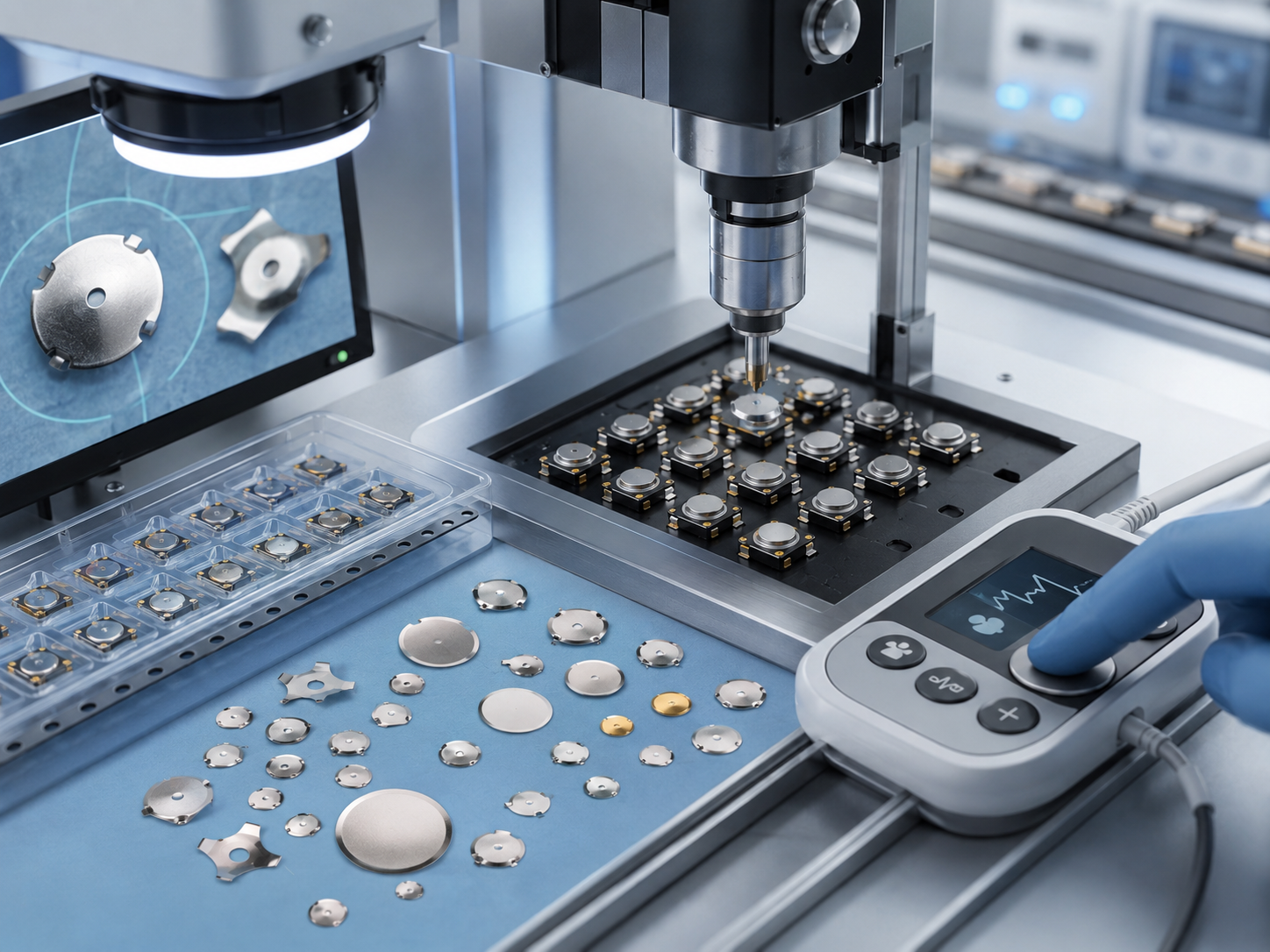
Tactile switches also support flexible product design. Engineers can choose different actuator heights, operating forces, footprints, sealing levels, terminal types, and custom dome structures. This makes them suitable for both standard PCB buttons and custom medical HMI designs.
What Are the Limitations of Tactile Switches in Medical Equipment?
Tactile switches are not suitable for every medical interface. If the device requires a completely flat, fully sealed, and easy-wipe surface, a membrane switch panel, capacitive switch, or piezo switch may be a better choice.
Mechanical tactile switches also have a defined life cycle. Heavy use, incorrect actuator alignment, excessive force, dust, moisture, and poor soldering can shorten service life. In medical equipment, the switch must be tested under real use conditions, not only under standard laboratory conditions.
Another limitation is cleaning exposure. Some hospital disinfectants may affect overlays, adhesives, rubber covers, or sealing materials. A tactile switch used under a medical keypad should be evaluated with the actual cleaning method, fluid exposure, and enclosure structure.
How Do Tactile Switches Compare with Membrane, Capacitive, and Piezo Switches?
Different medical interfaces use different switch technologies. The correct choice depends on tactile feel, sealing, cleaning requirements, cost, size, and user operation style.
| Switch Type | Feedback | Sealing Ability | Cleaning Suitability | Typical Medical Use |
| Tactile switch | Strong physical click | Medium to high if sealed | Good with proper overlay | PCB buttons, handheld controls |
| Metal dome array | Crisp tactile snap | High with membrane structure | Good for sealed keypads | Custom medical keypads |
| Membrane switch | Moderate to strong feedback | High | Very good | Control panels, diagnostic devices |
| Capacitive switch | No mechanical click | High | Excellent | Smooth front panels |
| Piezo switch | Firm solid feedback | Very high | Excellent | Harsh or washdown environments |
| Mechanical pushbutton | Strong travel feedback | Depends on model | Medium to high | Larger medical equipment |
For many medical products, the best solution is not a single switch component but a complete interface structure. Engineers should consider the button surface, sealing method, PCB layout, user feedback, cleaning process, and long-term reliability together.
How Should You Choose the Right Tactile Switch for a Medical Device?
Start with the user environment. A handheld home-care device may need a small, light-force switch, while a hospital diagnostic instrument may need stronger feedback and better cleaning protection.
Next, define the mechanical structure. Engineers should confirm PCB layout, actuator height, keycap structure, enclosure tolerance, pressing direction, and button travel. Poor stack-up design can make a good switch feel unstable after assembly.
Then check the electrical and reliability requirements. The switch should match circuit voltage, current, contact resistance, operating temperature, soldering process, and life cycle. For medical device projects, suppliers should provide samples, drawings, test data, material details, and production consistency support.
Recommended selection flow:
- Confirm device type and use environment.
- Define button function and expected pressing frequency.
- Choose the switch structure: SMT, sealed, side-actuated, dome array, or custom keypad.
- Set force, travel, tactile ratio, and sound requirements.
- Review cleaning exposure and sealing requirements.
- Confirm PCB footprint and assembly process.
- Test samples inside the real enclosure.
- Validate life cycle, contact resistance, and force consistency.
- Approve supplier quality documents and mass production controls.
Where Are Tactile Switches Used in Medical Devices?
Tactile switches are used in medical equipment where compact control, reliable input, and user feedback are needed. They are especially common in portable and handheld devices because they require limited space and can be integrated directly onto the PCB.
| Medical Device Area | Common Button Function |
| Patient monitors | Alarm silence, menu, parameter selection |
| Diagnostic instruments | Start, reset, mode, confirm |
| Infusion pumps | Dose setting, navigation, confirmation |
| Portable therapy devices | Power, mode, intensity adjustment |
| Hearing aids | Volume, program selection |
| Wearable health monitors | Wake, confirm, function control |
| Laboratory equipment | Start, stop, calibration, menu input |
| Dental devices | Speed, mode, water control |
| Home-care devices | Simple control and user confirmation |
Ultra-miniature tactile switches are also used in hearing aids, health monitoring devices, wearables, and compact electronic products where space is limited and reliability is important.
What Design Mistakes Should Be Avoided?
One common mistake is choosing the switch before confirming the enclosure structure. If the button cap, actuator, PCB, and housing are not aligned, the switch may feel weak, jammed, noisy, or unstable.
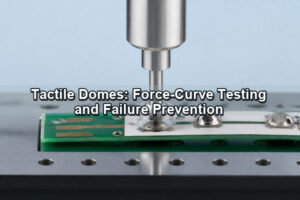
Another mistake is ignoring force tolerance. A switch marked as 3N may not feel exactly the same across different suppliers or batches. Engineers should request force-displacement curves and test several samples in the real product assembly.
Cleaning exposure is also often underestimated. Medical devices may face alcohol wipes, disinfectant sprays, moisture, sweat, skin oil, and repeated cleaning cycles. If the overlay, adhesive, or sealing layer is not compatible, the button area may lift, crack, discolor, or lose tactile performance.
Key design checks:
- Confirm actuator position and pressing direction.
- Avoid side loading on the switch stem.
- Keep enough clearance around keycaps.
- Match switch height with enclosure stack-up.
- Control adhesive thickness in dome array designs.
- Avoid excessive pressing force from rigid button structures.
- Test with gloves if the device will be used in clinical settings.
- Validate cleaning resistance with real disinfectants.
- Review solder paste volume for SMT tactile switches.
- Confirm switch placement does not interfere with nearby components.
What Manufacturing Process Is Used for Medical Tactile Switch Assemblies?
The manufacturing process depends on whether the project uses standard PCB tactile switches, metal dome arrays, membrane keypads, or complete custom HMI assemblies.
For SMT tactile switches, the process usually includes incoming material inspection, solder paste printing, pick-and-place assembly, reflow soldering, AOI inspection, functional testing, and packaging. For dome array or keypad assemblies, the process includes film cutting, dome placement, adhesive lamination, circuit alignment, overlay bonding, force testing, and final inspection.
Typical process for a custom medical tactile switch assembly:
- Review drawings, force requirements, and interface structure.
- Confirm materials such as dome, PET, adhesive, overlay, and circuit layer.
- Produce prototypes for mechanical and electrical testing.
- Test tactile force, rebound, contact resistance, and alignment.
- Adjust dome size, force, adhesive thickness, or button structure if needed.
- Start pilot production after sample approval.
- Inspect force consistency, visual quality, dimensions, and electrical function.
- Package parts to protect domes, adhesive surfaces, and flexible circuits.
- Provide batch records, inspection data, and shipping documents when required.
What Tests and Quality Controls Are Needed?
Medical tactile switches should be tested from both component and assembly perspectives. A switch may pass basic electrical testing but still fail after enclosure assembly if the mechanical design is not verified.
| Test Item | Purpose |
| Operating force test | Confirms press feel and batch consistency |
| Contact resistance test | Checks electrical signal stability |
| Life cycle test | Verifies long-term durability |
| Return force test | Prevents sticking or weak rebound |
| Dimensional inspection | Ensures PCB and enclosure fit |
| Visual inspection | Finds cracks, contamination, or deformation |
| Sealing test | Confirms protection against moisture or dust |
| Temperature test | Reviews performance under storage and use conditions |
| Cleaning resistance test | Checks exposure to alcohol or disinfectants |
| Functional assembly test | Confirms real device operation |
For medical device suppliers, quality control should include incoming inspection, in-process control, sample retention, traceability, final inspection, and clear packaging standards. Stable production is often more important than a single good prototype.
What Common Failures Happen in Medical Tactile Switches?
Tactile switch failures usually come from poor material selection, incorrect design, harsh use environments, or unstable assembly. The failure mode should be analyzed before changing suppliers or redesigning the whole interface.
| Failure Mode | Possible Cause | Practical Solution |
| Weak click feeling | Low tactile ratio, poor stack-up, dome fatigue | Adjust force, dome type, or actuator height |
| Intermittent signal | Contamination, oxidation, poor soldering | Improve sealing, plating, and process control |
| Button sticking | Misaligned keycap or excessive side force | Optimize mechanical guidance |
| Short life | Wrong switch rating or high usage frequency | Select a higher life-cycle switch |
| High contact resistance | Contact wear or surface contamination | Use better plating and clean assembly |
| Poor rebound | Dome deformation or adhesive pressure | Control lamination and storage |
| Water damage | Inadequate sealing | Use a sealed switch or membrane structure |
| Surface lifting | Adhesive incompatible with cleaning fluid | Test adhesive with real cleaning agents |
| Force variation | Supplier batch instability | Add force testing and tolerance control |
| Solder joint issue | Wrong reflow profile or pad design | Review SMT process and footprint |
A practical failure analysis should include returned samples, force curve comparison, contact resistance data, cleaning history, assembly photos, and cross-section review if needed. This helps separate design problems from supplier quality issues.
What Factors Affect the Cost of a Medical Tactile Switch Project?
Cost is influenced by structure, customization level, material choice, sealing, testing, and production volume. A standard SMT tactile switch is usually lower in cost than a custom sealed keypad or dome array assembly.
However, the cheapest switch is not always the lowest-cost solution. If the selected part causes field complaints, difficult assembly, unstable pressing feel, or short service life, the total project cost will increase.
| Cost Factor | Impact on Price |
| Switch size and structure | Miniature or sealed designs may cost more |
| Operating life requirement | Higher life cycles need better structure and materials |
| IP rating | Sealing increases material and process cost |
| Contact plating | Gold or special plating increases cost |
| Custom force | Requires tooling or material adjustment |
| Overlay and adhesive | Affects keypad assembly cost |
| Testing level | More tests increase inspection time |
| Order quantity | Larger volume reduces unit cost |
| Packaging method | Tape and reel or protective packaging affects cost |
| Engineering support | Custom design review adds value and reduces risk |
For OEM projects, the best approach is to calculate cost together with reliability, assembly yield, and after-sales risk. A slightly higher-quality tactile switch can reduce rework and protect the final medical device reputation.
How Should Buyers Evaluate a Tactile Switch Supplier?
A qualified supplier should understand both component performance and real assembly conditions. Buyers should check whether the supplier can support standard tactile switches, custom dome arrays, membrane keypads, or complete medical interface assemblies.
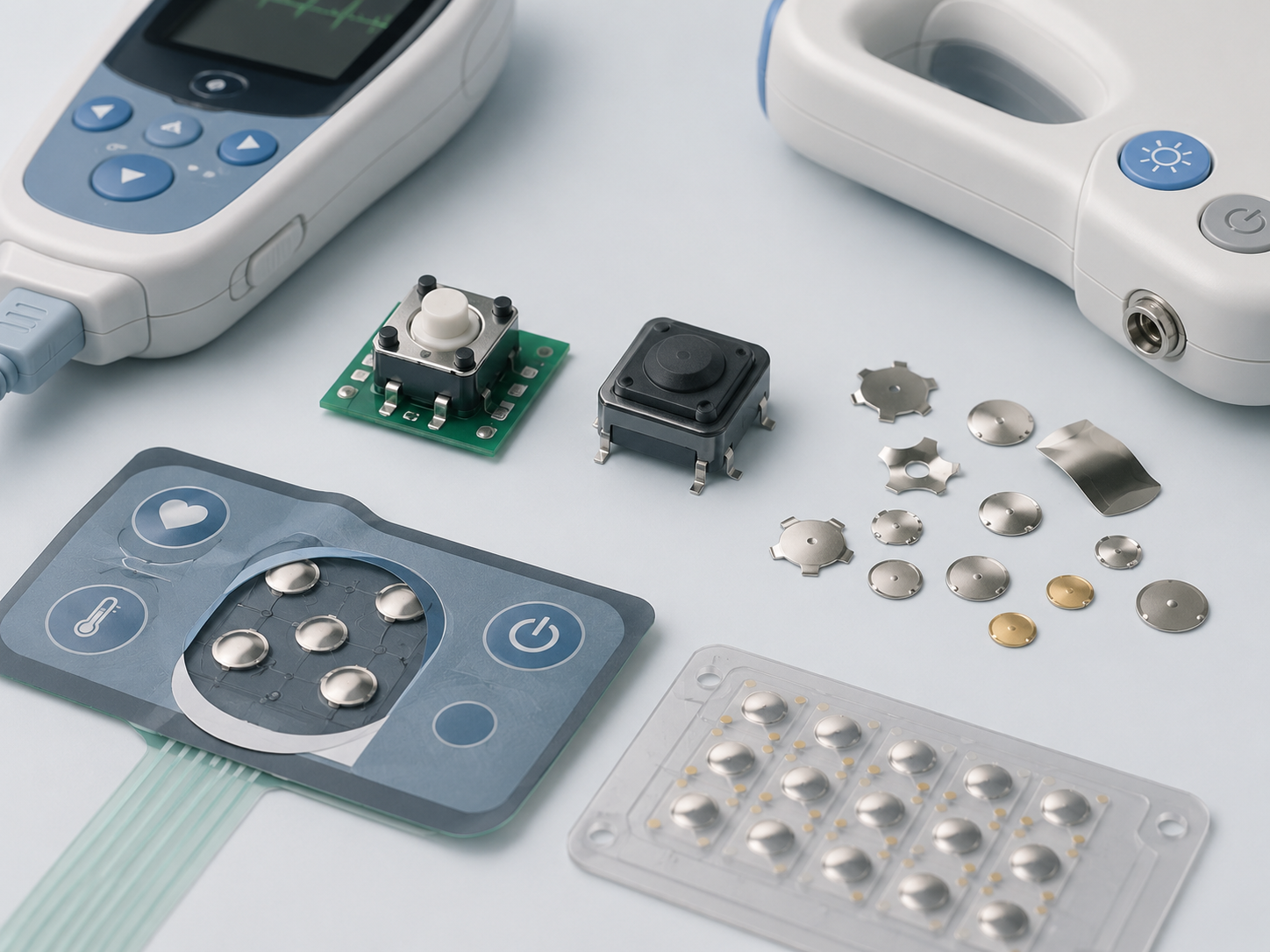
The supplier should provide clear drawings, material options, test data, samples, and quality control documents. For custom medical device projects, the supplier should also help review force requirements, enclosure fit, cleaning exposure, and mass production consistency.
Supplier evaluation checklist:
- Does the supplier support OEM and ODM customization?
- Can they provide samples before mass production?
- Do they control operating force and contact resistance?
- Can they support sealed or cleanable interface designs?
- Do they provide drawings, material details, and inspection reports?
- Can they handle small pilot runs and bulk production?
- Do they understand medical device interface requirements?
- Can they maintain consistent quality across batches?
- Do they offer engineering feedback before tooling?
- Can they support global delivery without false local claims?
What Should You Confirm Before Placing an Order?
Before placing an order, confirm the device use environment, button function, force preference, size limit, sealing requirement, electrical rating, life cycle target, cleaning exposure, and expected production volume.
For custom projects, share drawings, 3D structure files, PCB layout, overlay artwork, button travel requirements, and any existing failure problems. This allows the supplier to recommend a standard switch, custom metal dome, sealed keypad, or integrated switch assembly.
Order confirmation list:
| Item | What to Confirm |
| Application | Medical device type and button function |
| Quantity | Prototype, pilot run, or mass production |
| Force | Light, medium, heavy, or custom value |
| Structure | SMT switch, dome array, keypad, or full assembly |
| Environment | Indoor, portable, cleanable, or sealed use |
| Cleaning | Alcohol wipe, disinfectant, moisture exposure |
| Electrical rating | Voltage, current, contact resistance |
| Life cycle | Expected number of presses |
| Certification needs | RoHS, REACH, ISO-related supplier documents |
| Packaging | Bulk, tray, tape and reel, or custom protection |
Why Choose a China OEM Manufacturer for Medical Tactile Switch Solutions?
A China OEM manufacturer can support flexible customization, prototype development, volume production, and cost-controlled global supply. For medical tactile switch projects, this is useful when engineers need more than an off-the-shelf part.
Custom support may include force adjustment, dome selection, adhesive structure, flexible circuit design, membrane overlay integration, sealing improvement, sample testing, and batch quality control. This helps medical device brands reduce design risk and shorten the path from prototype to production.
A reliable source factory should not claim fake overseas warehouses, local factories, or local branches. Instead, it should provide honest global supply support, clear documentation, engineering communication, and stable manufacturing capability.
FAQs About Tactile Switch for Medical Device Projects
Q1: What is the best tactile switch for a medical device?
A1: The best tactile switch depends on the device structure, button function, cleaning exposure, and expected life cycle. For compact PCB devices, SMT tactile switches are common. For cleanable panels, sealed tactile switches or metal dome arrays under membrane overlays may be better. Engineers should test force, travel, sealing, and contact resistance before approval.
Q2: Can tactile switches be used in wearable medical devices?
A2: Yes. Miniature tactile switches are often used in wearable health devices, hearing aids, and portable monitors. The switch should be compact, low-current compatible, stable under repeated pressing, and protected from sweat or moisture. For wearable use, actuator height, sealing, and user comfort are especially important.
Q3: What operating force is suitable for medical tactile switches?
A3: Many medical devices use medium operating force to balance comfort and false-touch prevention. A light force may be easier for patients, while a higher force may be better for critical controls. The final value should be tested with gloves, enclosure buttons, and real users when possible.
Q4: Do medical tactile switches need to be waterproof?
A4: Not every medical tactile switch needs waterproof protection, but many devices benefit from sealed construction. If the device may face cleaning fluids, sweat, moisture, or dust, an IP-rated switch or sealed keypad structure should be considered. The full device assembly should be tested, not only the switch component.
Q5: What is the difference between a tactile switch and a metal dome switch?
A5: A tactile switch is usually a packaged component mounted on a PCB. A metal dome switch uses a thin metal dome that creates tactile feedback and closes the circuit. Metal domes are often used in membrane keypads, thin control panels, and custom medical interfaces where low profile and custom layout are needed.
Q6: Are tactile switches safe for medical equipment?
A6: Tactile switches can be used in medical equipment when selected and tested correctly. Safety depends on the full device design, including electrical circuit, enclosure, sealing, cleaning resistance, and quality control. Suppliers should provide consistent production, proper materials, and reliable test data for engineering review.
Q7: How long can a medical tactile switch last?
A7: Service life depends on switch design, force, material, environment, and pressing frequency. Some tactile switches are rated for hundreds of thousands of cycles, while custom dome designs may be optimized for higher durability. Engineers should choose the life cycle based on real device usage, not only catalog data.
Q8: Can tactile switches work under a silicone rubber keypad?
A8: Yes. Tactile switches can be used under silicone keypads if the actuator height, travel, force, and alignment are correct. The silicone button must press vertically and avoid side loading. Poor mechanical design may reduce tactile feel or damage the switch during repeated use.
Q9: What causes tactile switch failure in medical devices?
A9: Common causes include moisture ingress, cleaning chemical exposure, contact contamination, poor soldering, excessive force, actuator misalignment, and wrong switch selection. Failure analysis should review the switch, PCB, enclosure, cleaning method, and user operation together before deciding the corrective action.
Q10: Should I choose a sealed tactile switch or membrane switch panel?
A10: Choose a sealed tactile switch when you need compact PCB control with clear click feedback. Choose a membrane switch panel when you need a wider sealed surface, printed graphics, and easy cleaning. For custom medical devices, a metal dome membrane keypad can combine tactile feedback with sealed panel design.
Q11: Can tactile switches be customized for OEM medical devices?
A11: Yes. Custom options may include force, size, dome shape, actuator structure, circuit layout, adhesive layer, overlay design, connector type, and packaging. OEM customization is useful when standard switches cannot meet the enclosure, user feel, cleaning, or production requirements of the medical device.
Q12: What documents should buyers request from a supplier?
A12: Buyers should request drawings, specifications, material information, RoHS/REACH documents if needed, inspection reports, sample test data, packaging details, and production capability information. For custom medical projects, force test data, contact resistance data, and prototype validation support are also important.
Q13: Can a China manufacturer supply medical tactile switches globally?
A13: Yes. A China source factory can support global medical device customers through OEM design, ODM development, sample production, bulk manufacturing, and export delivery. The supplier should be honest about its manufacturing location and provide reliable engineering support instead of making false local factory claims.
Q14: How do I reduce cost without reducing switch quality?
A14: Start by standardizing the footprint, selecting proven materials, avoiding unnecessary over-design, and confirming the correct life cycle target. For custom assemblies, optimize dome force, adhesive structure, and packaging early. Good engineering review can reduce rework, improve assembly yield, and lower total procurement cost.
Q15: What should be tested before mass production?
A15: Before mass production, test operating force, tactile feel, contact resistance, life cycle, soldering results, sealing, cleaning resistance, and final assembly performance. The switch should be tested inside the real medical device structure because enclosure tolerance and button design can change the actual user experience.
Conclusion
A tactile switch for medical device projects should be selected through a complete engineering process, not only by size or price. The most important points are stable tactile feedback, reliable contact performance, proper sealing, suitable materials, cleaning resistance, and consistent mass production quality.
If you need custom tactile switches, metal dome arrays, membrane keypad solutions, or complete OEM/ODM switch assemblies for medical devices, you are welcome to contact our engineering team. We can support sample development, technical evaluation, mass production, and global delivery for your project. Email: sales@metal-domes.com