
What is a round metal dome?
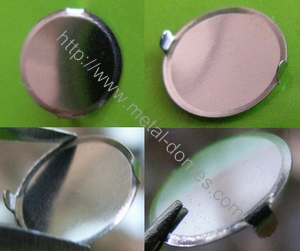
A round metal dome is a precision-formed, snap-action component used in tactile switch systems. It is typically made from stainless steel and designed to collapse under a defined force, creating a reliable electrical contact and a distinct tactile response. This simple structure sits at the heart of many membrane switches, keypad interfaces, and compact electronic devices where consistent user feedback is required.

From an engineering perspective, the round metal dome functions as both a mechanical spring and an electrical bridge. When pressure is applied to the top of the dome, it inverts rapidly, closing a circuit between conductive traces on a PCB. Once the force is released, the dome returns to its original shape, breaking the circuit and resetting the switch.
The geometry of a round metal dome is not arbitrary. Its curvature, diameter, thickness, and material hardness are all carefully calibrated to achieve a specific actuation force and lifecycle performance. Compared to other switch technologies, round domes offer a compact footprint, long service life, and a clean tactile signal that is easy for users to recognize.
What sizes are available for round metal domes?
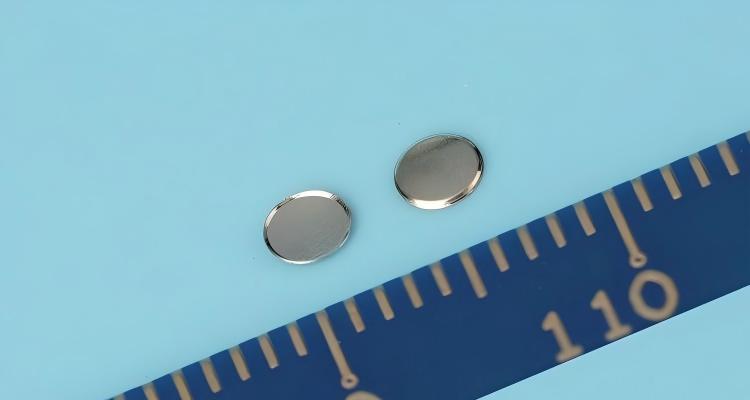
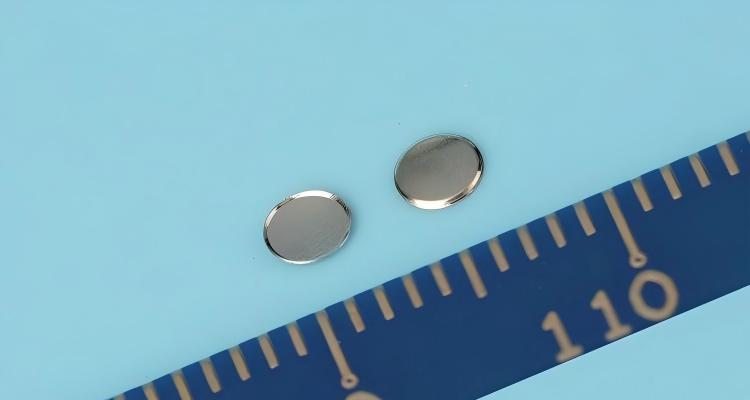
Round metal domes are available in a wide range of diameters to suit different device requirements, from ultra-compact wearable electronics to larger industrial control panels. The size directly influences tactile feel, force characteristics, and layout flexibility on the PCB.
Typical diameter ranges include:
- Small sizes (3mm – 5mm)
Suitable for compact devices such as earbuds, smartwatches, and medical handheld tools where space is extremely limited. - Medium sizes (6mm – 10mm)
Widely used in consumer electronics like remote controls, handheld instruments, and automotive interfaces. - Large sizes (10mm – 16mm+)
Common in industrial equipment, control panels, and applications requiring stronger tactile feedback.
Beyond diameter, dome height and thickness also vary depending on design needs. A taller dome generally provides a more pronounced click feel, while a thinner dome reduces actuation force but may require tighter process control during assembly.
In practical PCB layout, engineers often balance size selection with pad design and spacing constraints. A smaller dome enables higher button density, while a larger dome improves usability and tactile clarity, especially for gloved operation or harsh environments.
Manufacturers like EBest Circuit (Best Technology) typically support standard size ranges while also offering custom dimensions to align with specific product designs, ensuring optimal integration with both electrical and mechanical requirements.
How to choose the right force for round domes?
Selecting the correct actuation force is one of the most critical decisions when designing with round metal domes. The force determines how the switch feels to the end user and directly impacts usability, fatigue, and perceived product quality.
Actuation force is usually measured in grams-force (gf), with common ranges between 100gf and 500gf. Choosing the right value depends on the application context:
- Low force (100–180gf)
Ideal for light-touch applications such as wearable devices or handheld electronics where minimal effort is preferred. - Medium force (180–300gf)
Suitable for general consumer products, offering a balanced tactile response without requiring excessive pressure. - High force (300–500gf+)
Designed for industrial or automotive environments where accidental activation must be avoided.
When selecting force, engineers should consider:
- User interaction frequency
- Operating environment (cleanroom vs. outdoor)
- Input precision requirements
- Mechanical constraints of the enclosure
A well-chosen force enhances user confidence. If the force is too low, the switch may feel vague or lead to unintended presses. If too high, it can cause discomfort over repeated use.
In advanced applications, force curves are analyzed to ensure a sharp tactile ratio, which reflects the difference between peak force and return force. A higher tactile ratio results in a clearer “click” sensation, improving user feedback.
EBest Circuit (Best Technology) often assists customers by recommending force profiles based on real-world usage scenarios, helping ensure that the final product delivers both reliability and a refined user experience.
Are round metal domes suitable for SMT assembly?
Round metal domes can be integrated into SMT (Surface Mount Technology) assembly processes, but the approach differs from standard electronic components. Instead of direct soldering like ICs or resistors, domes are typically applied after reflow using specialized placement methods.
There are two common integration approaches:
- Loose dome placement
Domes are manually or automatically placed onto PCB contact pads after SMT assembly. - Carrier tape or PET film integration
Domes are pre-mounted on adhesive films, allowing for faster and more accurate placement during production.
The second method is increasingly preferred in high-volume manufacturing because it improves consistency and reduces handling errors.
When considering SMT compatibility, engineers should evaluate:
- Reflow temperature impact on nearby materials
- Alignment tolerance requirements
- Automation capability for dome placement
- Cleanliness of contact surfaces
Round domes themselves are not exposed to reflow soldering temperatures in most cases, which helps preserve their mechanical properties and ensures consistent performance.
EBest Circuit (Best Technology) supports dome integration within full PCBA workflows, combining PCB fabrication, SMT assembly, and dome placement into a streamlined process. This approach reduces lead time and ensures better alignment between electrical design and mechanical implementation.
Can round domes be used in small buttons?
Round metal domes are highly suitable for small button designs, particularly in compact electronic devices where space efficiency is critical. Their low profile and precise actuation characteristics make them ideal for dense layouts without compromising performance.
In small-button applications, the following factors become especially important:
- Dome diameter vs. button size
The dome must align precisely with the actuator to ensure consistent triggering. - Travel distance
Limited space requires careful control of dome deflection to maintain tactile clarity. - Tolerance stack-up
Mechanical tolerances in the enclosure, PCB, and dome placement must be tightly controlled.
For ultra-small buttons, designers often select domes in the 3mm–5mm range and combine them with optimized PCB pad geometries. This ensures reliable electrical contact while maintaining a responsive feel.
Applications where small domes excel include:
- Wearable health devices
- Compact remote controls
- Portable test instruments
- Medical diagnostic tools
Despite their small size, these domes can still deliver a crisp tactile response when properly designed. EBest Circuit (Best Technology) frequently works with customers on miniaturized designs, ensuring that even the smallest interfaces maintain high reliability and user satisfaction.
Do round metal domes provide clear tactile feedback?
One of the defining advantages of a round metal dome is its distinct tactile feedback. The snap-action behavior creates a sharp transition between open and closed states, which users perceive as a clear “click.”
This tactile clarity comes from the dome’s mechanical design. When force reaches a specific threshold, the dome collapses rapidly, generating both a physical sensation and, in some cases, a subtle audible response.
Key factors influencing tactile feedback include:
- Dome geometry (height and curvature)
- Material elasticity
- Actuation force and return force
- Contact surface design
A well-designed dome achieves a high tactile ratio, meaning the difference between peak force and return force is significant. This creates a noticeable drop in resistance after activation, enhancing user perception.
Compared to other switch types, round domes offer:
- Faster response time
- Clearer feedback
- Consistent performance over millions of cycles
This makes them particularly valuable in applications where precise input is essential, such as medical equipment, automotive controls, and professional instruments.
EBest Circuit (Best Technology) ensures that dome specifications align with application requirements, helping customers achieve a tactile experience that feels both responsive and reliable.

Can we get custom sizes for round metal domes?
Customization is a key advantage of round metal dome solutions. While standard sizes cover most applications, many designs require tailored dimensions to meet specific mechanical or electrical constraints.
Custom options typically include:
- Diameter and height adjustments
- Actuation force tuning
- Material thickness selection
- Surface treatment (e.g., gold plating, nickel plating)
- Packaging format (loose, tape, or PET carrier)
Customization allows engineers to optimize:
- Button feel and responsiveness
- PCB layout efficiency
- Integration with enclosure design
- Long-term durability under specific conditions
For example, a medical device may require a lower force dome with enhanced corrosion resistance, while an industrial controller may need a higher force dome with reinforced durability.
EBest Circuit (Best Technology) provides engineering support during the customization process, ensuring that each parameter is aligned with real-world usage. This collaborative approach reduces development cycles and helps achieve a more refined final product.
What devices use round metal domes most?
Round metal domes are widely used across multiple industries due to their versatility, compact size, and reliable performance. Their ability to deliver consistent tactile feedback makes them suitable for both consumer and industrial applications.
Common applications include:
- Consumer electronics
Remote controls, game controllers, and portable devices rely on domes for responsive input. - Medical devices
Diagnostic equipment and handheld instruments require precise and reliable switching. - Automotive systems
Dashboard controls, key fobs, and infotainment interfaces benefit from durable tactile switches. - Industrial equipment
Control panels and measurement tools use domes for consistent operation in demanding environments. - Wearable technology
Smart devices require compact, low-force domes for user-friendly interaction.
The adaptability of round domes allows them to function in both low-power and high-reliability systems. Their long lifecycle, often exceeding one million cycles, ensures dependable performance over time.
EBest Circuit (Best Technology) supports a wide range of industries by offering dome solutions that meet strict quality and reliability standards, including applications in regulated sectors.
How does a round dome compare to other shapes?
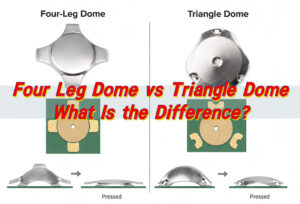
Round metal domes are one of several dome geometries available, with alternatives including four-leg domes, triangle domes, and oblong designs. Each shape has distinct characteristics, but round domes remain the most widely used due to their balanced performance.
Round domes are known for uniform force distribution and predictable actuation behavior. In contrast, other shapes may offer directional flexibility or specific mounting advantages.
Below is a comparison for clarity:
| Feature | Round Metal Dome | Four-Leg Dome | Triangle Dome |
|---|---|---|---|
| Force Distribution | Uniform | Directional | Moderate |
| Tactile Feel | Consistent and smooth | Strong and sharp | Balanced |
| Placement Flexibility | Moderate | High | Moderate |
| Stability | High | Very high | Medium |
| Common Use | General electronics | Keypads | Specialized layouts |
Round domes are often chosen when:
- Consistent tactile response is required
- Design simplicity is preferred
- Cost efficiency is important
Other shapes may be selected for specific mechanical constraints or alignment needs, but round domes provide a reliable baseline solution for most applications.
EBest Circuit (Best Technology) helps customers evaluate dome shapes based on application requirements, ensuring the chosen design delivers optimal performance.
Summary:
Round metal domes offer a reliable and efficient solution for tactile switch design. Their simple structure delivers consistent electrical contact and a clear tactile response, making them suitable for a wide range of applications from consumer electronics to industrial systems.
With flexible size options, customizable force profiles, and compatibility with modern assembly processes, round domes continue to play a key role in interface design. Their durability and performance stability ensure long-term reliability, even in demanding environments.
For high-quality round metal dome solutions and engineering support, feel free to reach out or explore more at: www.metal-domes.com