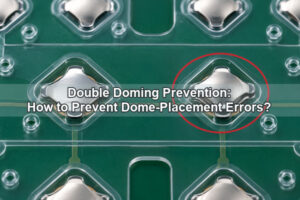

Anti stacking metal domes are selected to keep thin snap domes from nesting or sticking together before a single part reaches each switch position. The risk can be addressed in two different ways: a dome design that separates adjacent parts, or a supply format that presents them individually. Neither choice should be accepted from a product name alone; the actual package, pickup method and assembled-switch test must show that one dome, not a hidden pair, reaches the circuit.
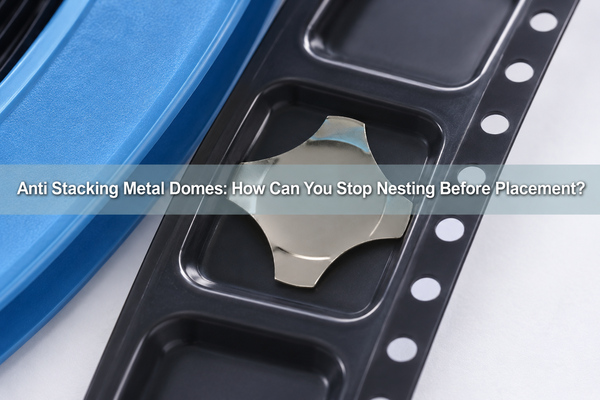
What Are Anti-Stacking Metal Domes?
The term describes a dome and handling objective, not one universal metal-dome specification. When loose domes share a similar shallow profile, one can sit inside another. A pickup tool may lift the pair as if it were one part. The result is accidental double dome placement at one key and possibly a missing dome at another.
Some dome profiles are shaped to keep neighboring parts apart. Separately, single-pocket reels, single-key adhesive units and pre-positioned arrays can separate ordinary domes before assembly. These are different solutions to the same pickup problem. For our four-leg metal domes, compare the exact shell profile and part sample in the intended package; the number of legs by itself cannot tell you how readily two pieces will separate.
Why Do Loose Metal Domes Nest?
Two thin shells can overlap when their crowns and outer contours fit closely. In a bulk pile, vibration and repeated handling can bring compatible faces together. A top-view inspection may still show only one circular outline. The problem is not that all domes are defective; it is that the supply and pickup sequence has not made a single part count observable.
Suspect nesting when a loose-part pickup occasionally carries an unexpectedly thick edge, when two parts separate at the nozzle, or when a placed key sits higher than adjacent keys. Those observations are reasons to stop and inspect. They are not a substitute for checking the exact dome and assembly stack.
How Can Dome Geometry Reduce Nesting?
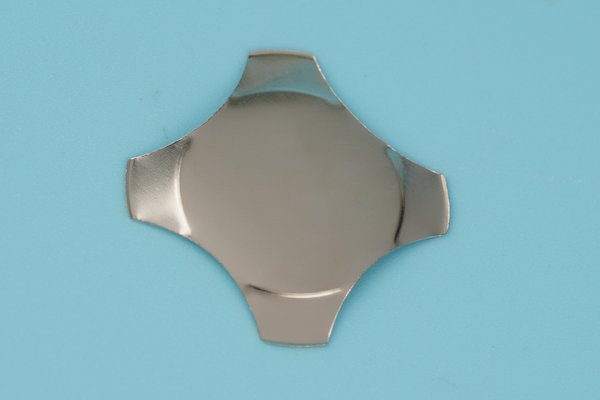
An anti-nesting geometry has to maintain some separation between adjacent domes while they are stored and fed. A feature that prevents full surface-to-surface seating can make two parts easier to separate, but its effect depends on the particular shell profile, orientation and packaging. It also must preserve the intended actuation force, travel, return and electrical contact.
A controlled gap between neighboring shells is one possible design approach, but its geometry must be assessed on the actual part. Place two samples in the orientation in which they meet in the package, then lift the upper part with the intended tool or nozzle. Does the second dome follow it? Repeat after normal package handling and check that the candidate still meets its specified force, travel, return and contact behavior. A profile description alone cannot answer these questions.
Can Packaging Prevent Nested Pickup Without a New Dome Design?
Yes. Packaging can isolate each otherwise standard dome before the pickup operation. Our tape-and-reel format holds individual domes in carrier pockets for pick-and-place equipment. A single-key dome array places one dome on a kiss-cut adhesive unit, while a custom dome array prepositions several specified domes on one carrier.
Packaging changes the error opportunity, but it does not excuse an unchecked setup. The operator or machine still needs to confirm the correct part, one occupied pocket or unit per expected position, release behavior and placement orientation. A reel-compatible dome is not automatically solderable; our standard metal dome packing page specifically separates automated placement from soldering suitability.
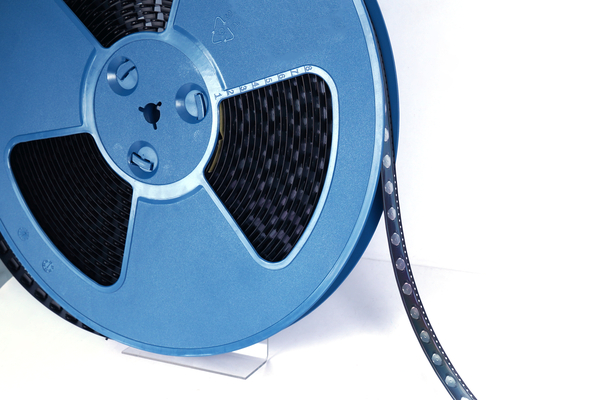
Bulk Domes vs Tape-and-Reel vs Dome Arrays
| Supply method | Single-part presentation | What still needs verification |
|---|---|---|
| Loose bulk domes | Not controlled by the package | Separate parts at pickup; inspect the edge and count |
| Tape-and-reel | One intended dome per carrier pocket | Pocket fill, pickup release, orientation and feeder setup |
| Single-key adhesive unit | One dome already positioned on one unit | Correct unit, liner release and alignment to the pad |
| Custom dome array | Specified domes pre-positioned on one carrier | Array revision, key count, registration and laminate condition |
Choose by actual assembly route, not by a blanket ranking of formats. Bulk handling can be adequate for a controlled prototype. Repeated automated pickup favors a package that exposes each pickup position. An array is most useful when several switch locations must be registered together. Trial the chosen format on the real equipment before assuming it removes every defect mode.
How Can You Detect Two Domes Before Placement?
Check the edge or profile at the point where a dome leaves its package, not only after it has been covered. Under side lighting, two shell rims may be visible even when the crown looks normal from above. For automated equipment, a validated camera view, height measurement or pickup-response check may separate a single dome from a nested pair. Which method works depends on the particular dome and tool; a nominal sensor resolution alone does not prove detection.
Use known single-dome samples and intentionally prepared nested samples during setup, then confirm that the control rejects the pair without rejecting acceptable singles. Do not press an unsupported dome flat merely to inspect it. The acceptance method should be documented before routine production.
What Should a Feeder Trial Prove?
A feeder trial should demonstrate that the chosen part and package remain separable through the actual speed, orientation and refill sequence. Observe the first pickup after loading, steady running, reel or tube changeover, and restart after a stoppage. Record the number of intended pickups, successful single pickups, double pickups, empty pickups and damaged parts. A short demonstration with a few perfect cycles is not enough to establish a production control.
| Trial event | Observation to retain | Disposition question |
|---|---|---|
| Pickup from package | Single rim, correct orientation, no second part attached | Can the inspection distinguish a prepared nested pair? |
| Transfer and release | One dome at the nozzle and one dome released | Does another dome stay attached or fall later? |
| Placement on circuit | One part at the correct key ID, seated on the intended support | Is there a missing or extra dome elsewhere? |
| Stop and restart | Part count and pocket position remain reconciled | Can a repeat pickup occur at the same location? |
Set the trial sample size, acceptance limits and requalification triggers against the actual defect risk and production plan. Keep the observed pickup counts and rejected samples with the trial record so the proposed supply method can be compared with the approved requirement.
Which Dome Details Must the Drawing Control?
The drawing should identify the exact dome part, outer profile, height, material or plating where specified, leg or dimple orientation, target force range and intended supply format. The circuit drawing must identify the pad pattern and key ID. For an array, include carrier outline, tooling datum and the dome position at each key. For a reel, specify the pickup face and pocket orientation used by the machine.
These details distinguish a change in dome geometry from a change only in packaging. A replacement part with the same nominal diameter can have a different crown or leg profile and behave differently in a bulk feeder. Check the drawing and the feeder together before approving a substitution.

How Do You Verify One Dome Reaches Each Contact Pad?
Verify at two boundaries: after the dome leaves the package, and after it reaches its circuit location. The first check establishes single-part pickup; the second establishes one part at the correct pad with the intended orientation. Reconcile the issued quantity with placed, rejected and remaining parts when loose domes are used. For an array, compare the carrier revision and visible key count with the approved drawing before lamination.
Keep the observations tied to a key ID, package or lot, and build stage. If an extra dome is found at one position, inspect the same unit for a missing position before releasing it. This is a local containment action; the earlier double-doming prevention article covers the wider placement-defect control plan.
What Should Be Tested on the Assembled Switch?
Compare each assembled key with the approved switch stack for trip force, travel, return behavior and electrical closure. A nested pair can change the mechanical signature, but force testing is a detection aid, not proof of exactly which defect occurred. A reversed dome, incorrect actuator or unsupported perimeter can also change the curve. Inspect the physical stack when a key fails its acceptance window.
The limits must come from the selected dome, PCB or membrane circuit, overlay and actuator arrangement. A loose-dome force value is not automatically the same as the installed-key force. We review these requirements against the customer’s drawing and agreed test method rather than promising one universal anti-nesting force threshold.
Are Intentional Stacked Metal Domes a Placement Defect?
No. Stacked metal domes can be a deliberate, separately engineered switch structure when the drawing specifies the complete stack and its measured response. That is different from metal dome nesting in a bulk package or an accidental second shell transferred during pickup. The acceptance test must follow the approved construction: one dome for a single-dome design, or the specified stack for an intentional multi-dome design.
What Do We Need to Review an Anti-Nesting Application?
For anti stacking metal domes, send us the dome drawing or current part number, circuit-pad layout, key count, target force and travel, existing package, placement equipment and a photo or video of the pickup failure. State whether the goal is a revised dome geometry, a different supply format, or both. Include the prototype and annual quantities and any required inspection records.
At EBest Circuit(Best Technology), we can compare our available loose-dome, tape-and-reel, single-key adhesive and custom-array options with that assembly route. The selected part and package can then be evaluated by a sample feeder trial and an installed-key test against the agreed requirements. Contact sales@metal-domes.com with the drawing and failure evidence for a review.
Anti-Stacking Metal Dome FAQs
Does a four-leg shape automatically prevent nesting?
No. Four legs describe a support shape, not a tested anti-sticking property. Compare the exact part and package under the intended feeding conditions.
Can tape-and-reel eliminate double dome placement?
It isolates intended single domes in pockets and removes bulk separation at the pickup point. Pocket fill, pickup and placement still require validation; no format makes inspection unnecessary.
Is a double dome always a defective switch?
Only when the approved design calls for one dome and a second is installed unintentionally. A specified multi-dome structure must be evaluated against its own drawing and tests.