
A tactile keypad for medical handheld devices is not just a group of buttons. It is part of the user interface, sealing structure, electrical circuit, and product reliability system. In medical environments, the keypad may be used by nurses, doctors, technicians, patients, or field operators. It must respond clearly, resist frequent cleaning, support stable electrical contact, and fit into a compact device enclosure.
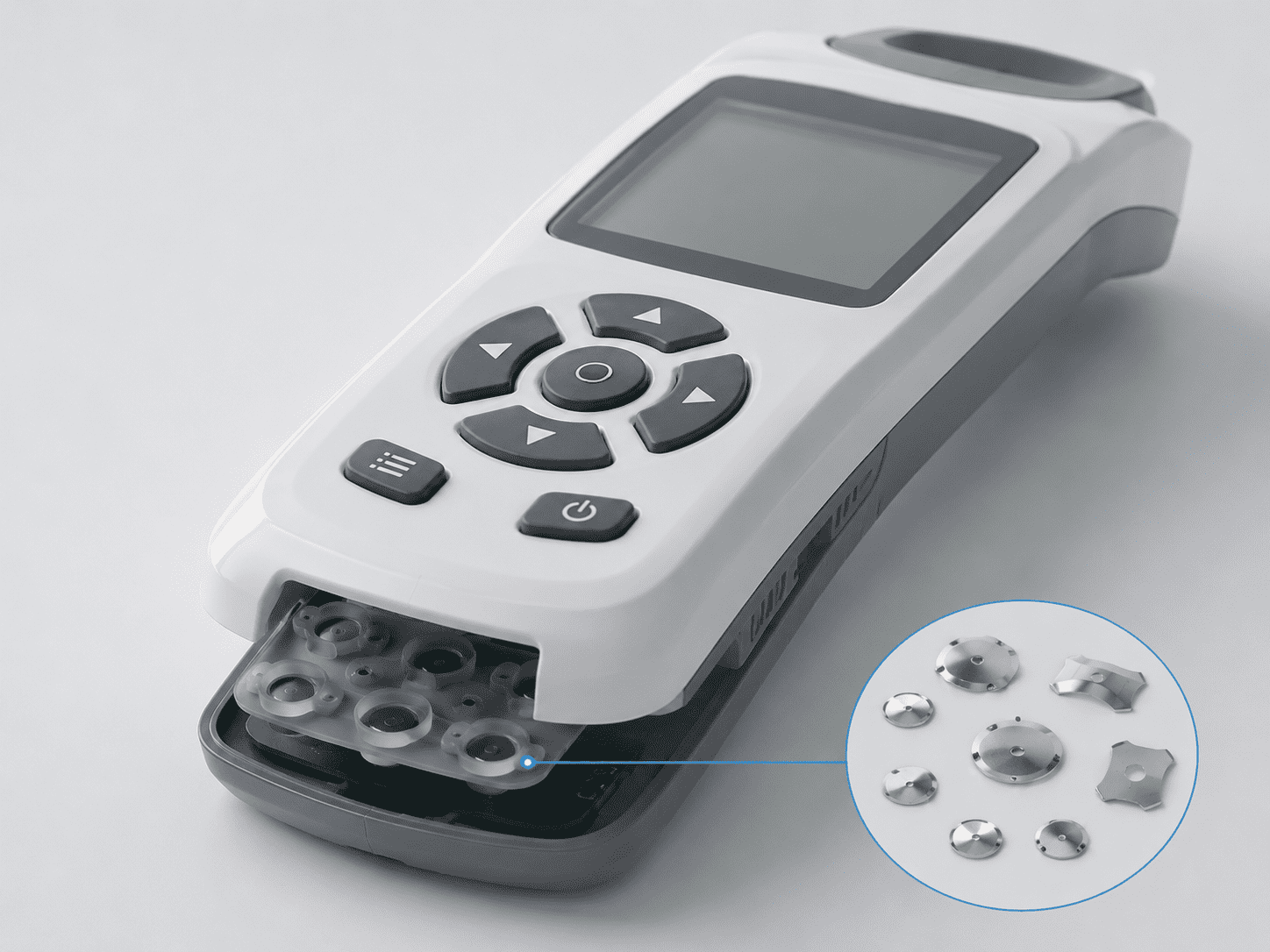
For engineers and buyers, the main question is not simply “Which keypad feels better?” A better question is: Which keypad structure gives the right click feel, sealing level, durability, cost, and manufacturability for the device? This guide explains the key options, materials, design factors, and quotation details needed when selecting medical keypads for handheld equipment.
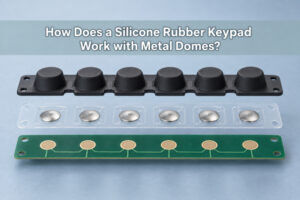
What Is a Tactile Keypad for Medical Handheld Devices?
A tactile keypad for medical handheld devices is a button interface that gives the user a clear physical response when a key is pressed. The feedback usually comes from a metal dome, rubber dome, snap dome structure, or mechanical switch beneath the surface layer.
In a handheld medical device, the keypad may control power, menu navigation, dosage settings, measurement modes, alarms, calibration steps, or data entry. Unlike ordinary consumer keypads, medical keypads often need better sealing, cleaner surface design, chemical resistance, stable actuation force, and consistent tactile response over repeated use.
A typical tactile keypad may include:
- Graphic overlay or silicone surface
- Adhesive layer
- Spacer layer
- Metal dome or rubber actuator
- Printed circuit, FPC, or PCB
- Rear adhesive or mounting structure
- Optional shielding, backlighting, embossing, or sealing gasket
For a tactile medical device, the keypad should be designed together with the enclosure, PCB layout, display position, cleaning method, and user workflow. If the keypad is treated as a simple decorative part, problems can appear later, such as weak click feel, poor sealing, dome misalignment, button sticking, unstable contact, or overlay cracking around the key area.
Why Do Medical Handheld Devices Need Tactile Keypads?
Medical handheld devices are often used in fast, repetitive, and sometimes high-pressure situations. A clear tactile response helps users confirm that a button has been pressed without needing to look at the screen every time.
This matters in devices such as portable monitors, diagnostic tools, infusion-related controllers, glucose meters, therapy devices, emergency instruments, and handheld test equipment. In these products, a missed input or accidental double press can affect workflow and user confidence.
Tactile keypads are useful when the device needs:
- Clear operation feedback: The user feels the press immediately.
- Low-profile construction: Metal dome keypads can be thin and compact.
- Glove-friendly operation: Key shape, force, and spacing can be adjusted for gloved hands.
- Stable electrical performance: Proper dome and PCB design reduce contact inconsistency.
- Easy cleaning: Flat overlays or sealed silicone surfaces help reduce dirt traps.
- Controlled actuation force: Different dome forces can be selected for different user needs.
- Long service life: Keypads can be designed for repeated daily operation.
A touchscreen can work well for many medical products, but it is not always enough. Physical tactile keypads are still preferred when users need blind operation, reliable input confirmation, emergency buttons, power keys, or operation in wet, gloved, or mobile conditions.
What Are the Main Types of Medical Keypads?
Medical keypads can be built in several ways. The best choice depends on the device size, sealing requirement, target click feel, cleaning chemicals, user environment, and production volume.
| Keypad Type | Typical Structure | Main Advantage | Best Used For | Limitation |
|---|---|---|---|---|
| Metal dome keypad | Graphic overlay + spacer + metal dome + PCB/FPC | Crisp click, thin profile, stable feedback | Compact handheld devices, menu keys, function keys | Needs accurate alignment and clean assembly |
| Rubber keypad | Silicone rubber keys + carbon pill or conductive contact | Good sealing, soft touch, 3D key shape | Devices needing molded keys or strong sealing | Thicker than metal dome designs |
| Membrane keypad | Printed layers + spacer + contact circuit | Flat surface, easy cleaning, custom graphics | Basic control panels and sealed interfaces | Tactile feel may be weaker without domes |
| Snap dome keypad | Metal snap dome mounted on PCB/FPC | Strong tactile feedback and long cycle life | Medical control buttons needing clear response | Dome force must be selected carefully |
| Mechanical switch keypad | Individual switches under caps or overlay | Very defined actuation | Larger devices or special control buttons | Higher profile and more assembly complexity |
| Hybrid keypad | Silicone, metal dome, FPC, backlight, or shielding combined | Balances sealing, feel, and structure | Customized medical handheld projects | Needs stronger design coordination |
For many handheld medical products, a metal dome keypad or snap dome keypad offers a good balance between thickness, tactile feel, and cost. Rubber keypads are better when the design needs raised keys, molded sealing lips, or a softer press.
How Does a Metal Dome Keypad Work?
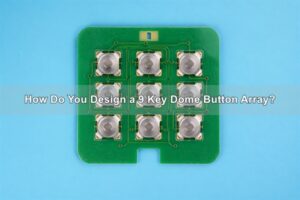
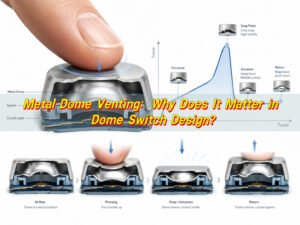
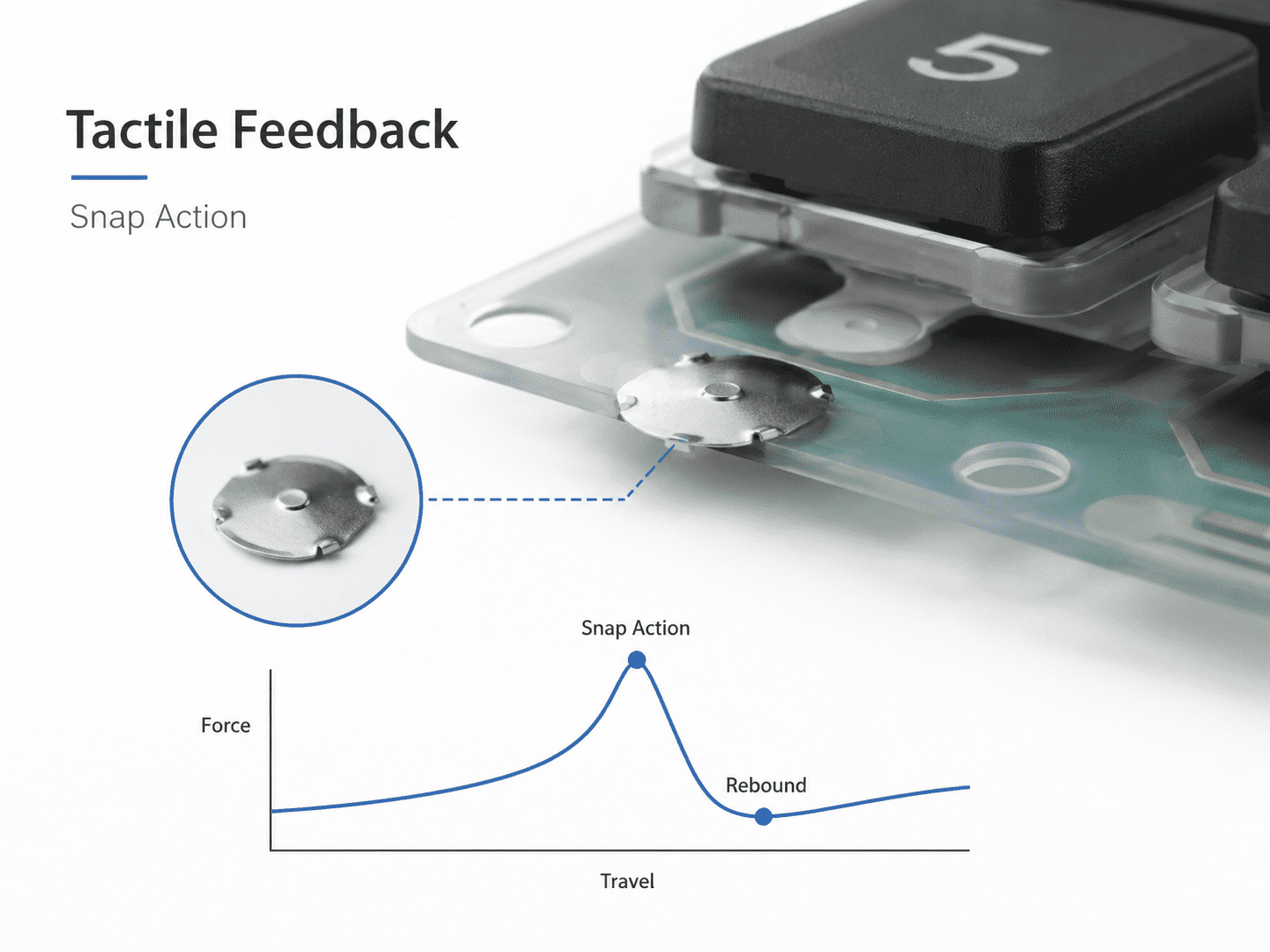
A metal dome keypad uses a thin stainless steel dome as both the tactile element and the electrical switching component. When the user presses the key, the dome collapses with a snap action. This creates the click feel. At the same time, the center of the dome touches the contact pads on the PCB or flexible circuit, closing the circuit.
When the finger is released, the dome returns to its original shape. This gives the key its rebound force and prepares it for the next press.
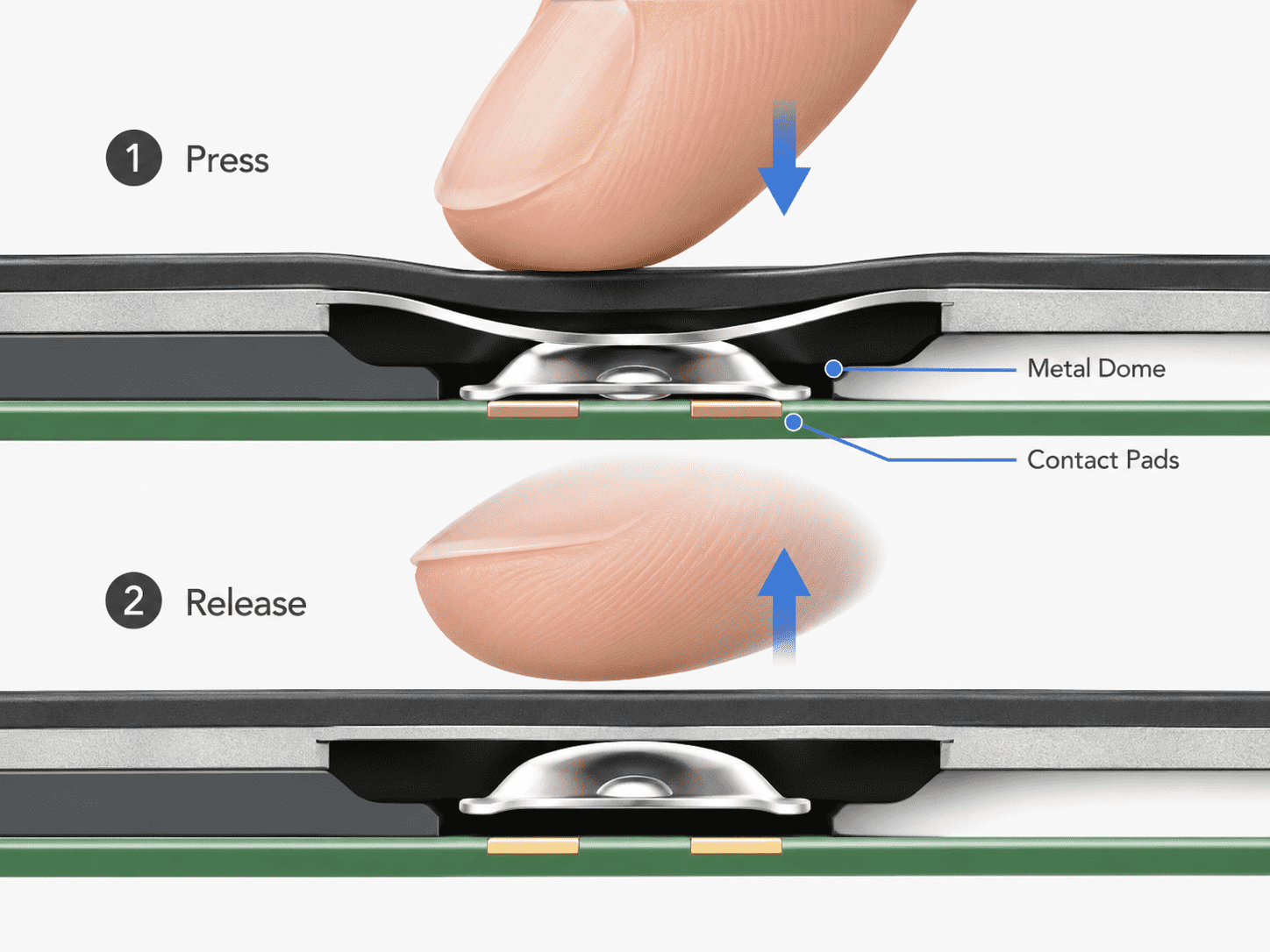
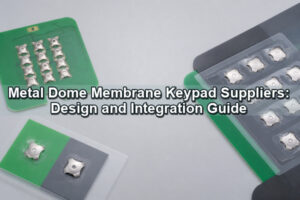
A basic metal dome keypad structure usually includes:
- Overlay: Printed PET, PC, or silicone surface that shows icons and protects the keypad.
- Adhesive: Bonds the keypad to the device or circuit layer.
- Spacer: Creates the correct gap for dome movement.
- Metal dome: Provides tactile feedback and electrical contact.
- PCB or FPC: Carries the switch contacts and connects to the main electronics.
- Vent path: Allows air to move during pressing, improving feel and preventing trapped air.
Typical metal domes are made from stainless steel, often SUS301 or similar spring-grade material. Common dome shapes include four-leg domes, triangle domes, round domes, and oblong domes. Each shape affects force, travel, positioning, and click ratio.
For medical handheld devices, metal dome keypads are attractive because they can be thin, responsive, and easy to integrate with PCB or FPC circuits. However, they require careful design. Poor dome positioning, weak adhesive, incorrect spacer thickness, or dirty contact pads can cause unstable key response.
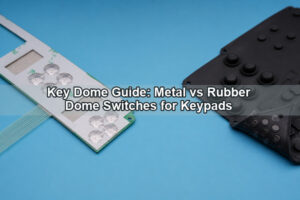
Metal Dome Keypad vs Rubber Keypad: Which Is Better for Medical Devices?
The decision usually comes down to click feel, sealing method, product thickness, key shape, and cleaning conditions. A metal dome keypad is often better for thin handheld devices that need a sharp tactile response. A rubber keypad is often better when the product needs molded key shapes, soft touch, or a more integrated sealing structure.
| Factor | Metal Dome Keypad | Rubber Keypad |
| Tactile feel | Crisp and clear snap | Softer, more cushioned feel |
| Thickness | Very thin structure possible | Usually thicker due to molded rubber |
| Key shape | Flat or slightly embossed overlay | Raised 3D key shapes possible |
| Sealing | Depends on overlay, adhesive, and enclosure design | Silicone can provide stronger molded sealing |
| Cleaning surface | Flat overlay is easy to wipe | Raised keys need more attention around edges |
| Actuation force | Controlled by dome type and size | Controlled by rubber geometry and hardness |
| Contact method | Metal dome closes PCB/FPC pads | Carbon pill, conductive rubber, or internal contact |
| Tooling cost | Lower for many flat keypad designs | Silicone tooling may increase upfront cost |
| Best fit | Compact medical handhelds, thin devices, precise buttons | Devices needing soft keys, thick buttons, or molded waterproof structure |
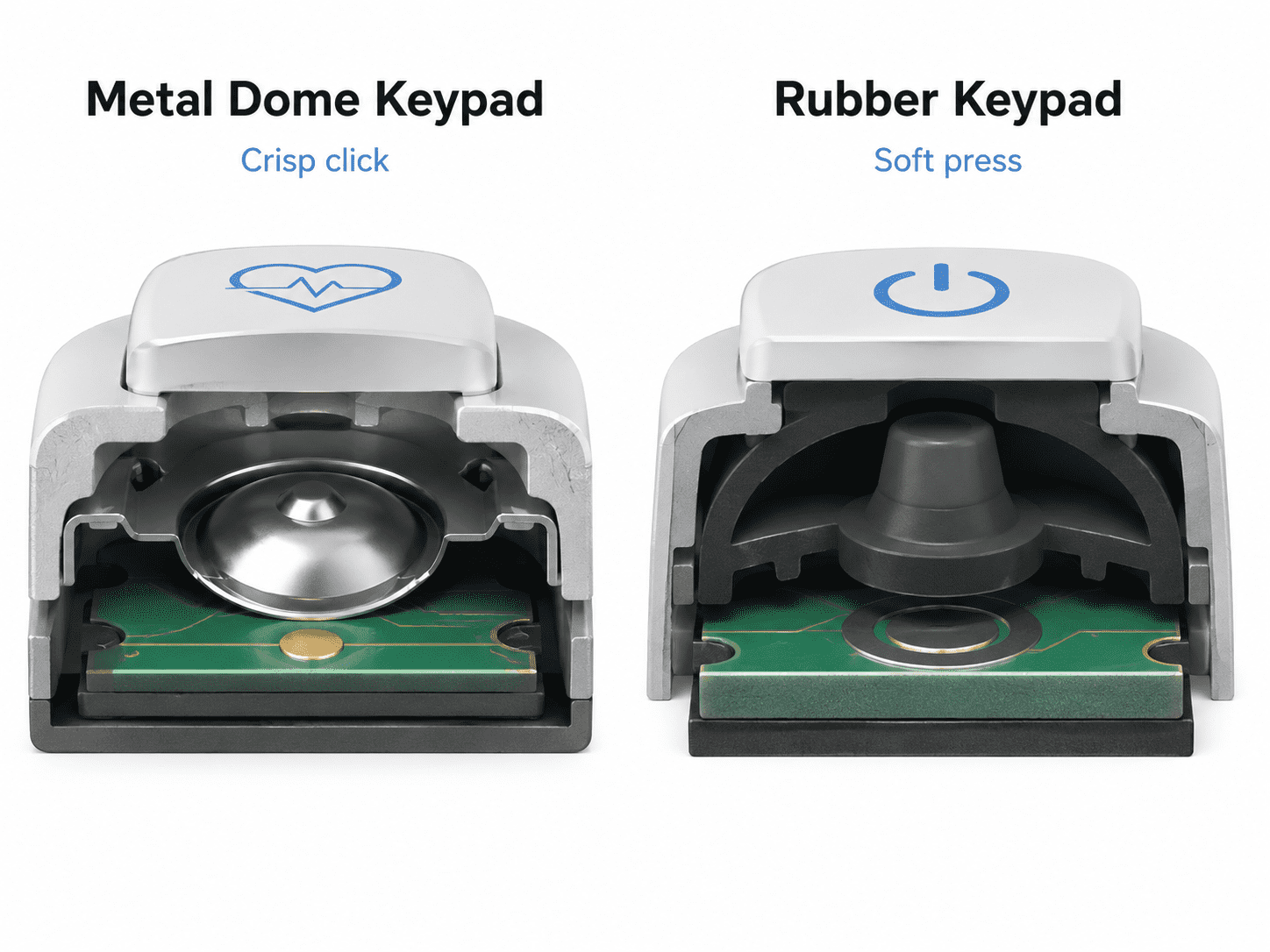
A metal dome keypad is not automatically better. If the device must survive frequent fluid exposure and needs raised sealed buttons, rubber may be more suitable. A rubber keypad is also not always necessary. If the product needs a thin control panel with a clean flat surface, metal dome construction can reduce thickness and simplify the front interface.
What Materials Are Used in Medical Keypads?
Material selection affects cleaning resistance, tactile feel, printing life, sealing, appearance, and assembly stability. Medical keypads often face alcohol wipes, disinfectants, skin oils, sweat, moisture, temperature changes, and repeated finger pressure.
| Material | Common Use | Practical Notes |
| PET overlay | Graphic surface for membrane and metal dome keypads | Good flexibility, stable printing, suitable for many flat keypads |
| Polycarbonate overlay | Graphic surface with higher formability | Good appearance, but chemical resistance must be checked for cleaning agents |
| Silicone rubber | Molded keypad surface or sealing layer | Good for soft touch, raised buttons, and sealing designs |
| Stainless steel dome | Tactile and conductive switch element | Common for metal dome keypad and snap dome keypad designs |
| Acrylic adhesive | Bonding overlay, spacer, or keypad to housing | Must match temperature, cleaning, and surface energy conditions |
| Spacer film | Controls dome travel and cavity height | Thickness affects key feel and dome operation |
| PCB | Rigid circuit carrier | Good for stable assembly and direct connection to main electronics |
| FPC | Flexible circuit carrier | Useful when the keypad bends or connects in tight spaces |
| Carbon or silver ink | Printed contacts in some membrane circuits | Must be protected from wear and contamination |
| EMI shielding layer | Optional shielding | Used when the keypad is close to sensitive electronics |
For medical handheld devices, PET is often used for flat overlays because it provides good flexibility and wear resistance. Polycarbonate may be selected for appearance or forming needs, but engineers should verify compatibility with disinfectants. Silicone rubber is useful when a soft molded surface or sealing lip is needed.
For metal domes, stainless steel is preferred because it offers spring performance and stable tactile response. The dome surface can also be plated in some designs to improve contact behavior, although this adds cost and should be used only when the electrical or environmental requirement justifies it.
How Does a Snap Dome Keypad Improve Tactile Feedback?
A snap dome keypad improves tactile feedback by using the mechanical collapse of a metal dome to create a clear click. The user feels a sudden drop in force after the dome actuates. This force drop is what makes the key feel responsive and intentional.
The most important tactile parameters include:
- Actuation force: The force required to trigger the key.
- Travel distance: How far the key moves before contact.
- Click ratio: The difference between peak force and return force.
- Dome diameter: Larger domes often provide different feel and stability.
- Dome shape: Four-leg, triangle, round, and oblong domes behave differently.
- Overlay thickness: A thick overlay can soften or reduce the click.
- Actuator design: The pressing point must align with the dome center.
For medical keypads, the force should match the use case. A power button or alarm acknowledge key may need a firmer force to reduce accidental activation. Menu keys may need a lighter, faster response for frequent use. For gloved operation, key spacing, key size, emboss height, and force should be tested with the actual glove type used in the target environment.
A snap dome keypad is especially useful when the device needs a thin structure but still requires a defined button feel. It can make a flat keypad feel more precise than a simple membrane contact.
What Should Engineers Consider When Designing a Tactile Medical Device Keypad?
The keypad should be designed as part of the full product interface, not as a separate decoration. Small dimensional errors can change the click feel, sealing, or electrical response.
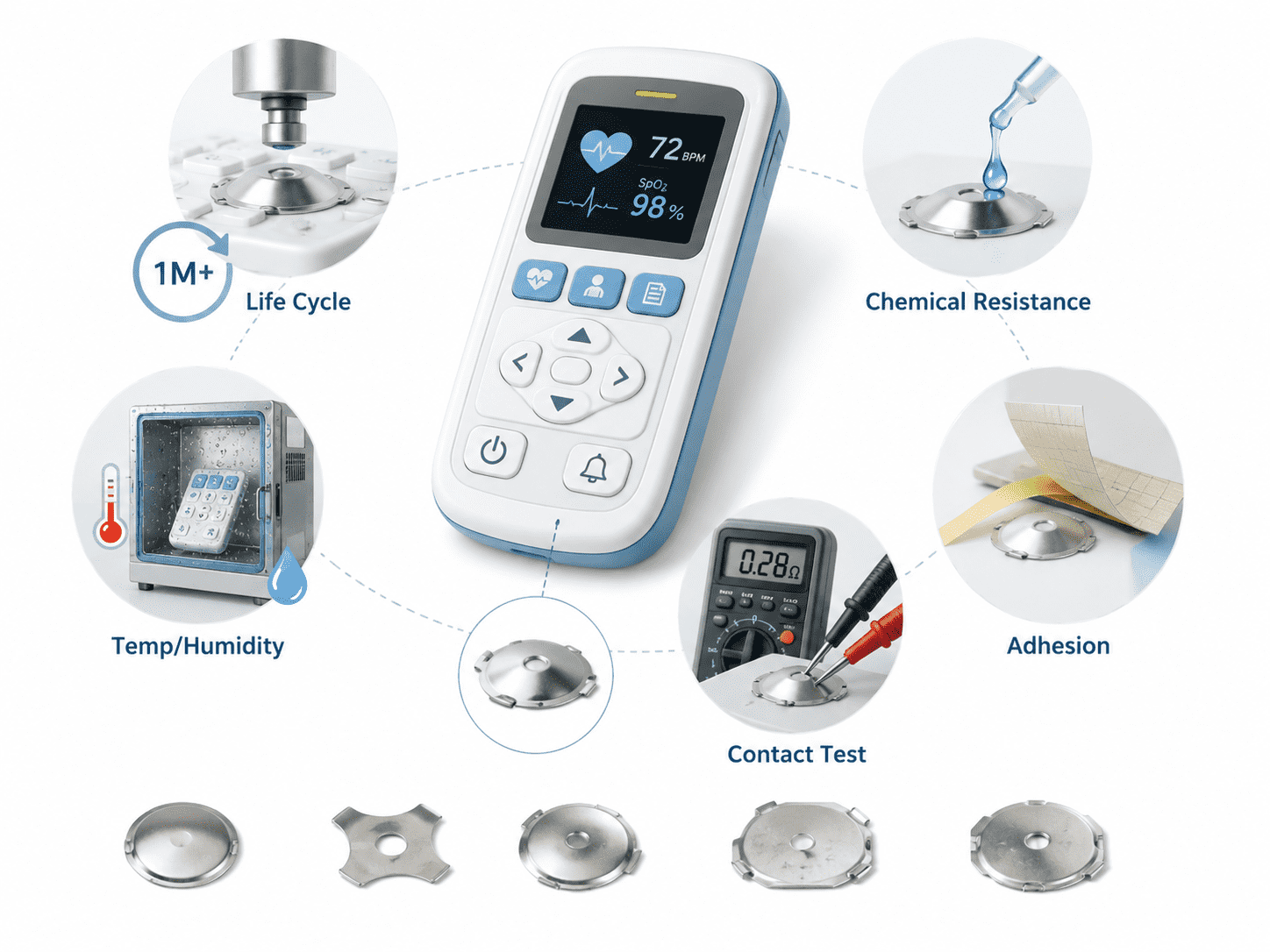
Engineers should review these areas early:
- User environment: Hospital, home care, ambulance, field service, laboratory, or wearable use.
- Cleaning method: Alcohol wipes, disinfectant wipes, mild detergent, or other approved chemicals.
- Glove use: Key size and force should be tested with medical gloves.
- Actuation force: Choose different forces for high-risk keys and frequent-use keys.
- Key spacing: Avoid accidental double pressing, especially on small handheld devices.
- Overlay material: Match printing, chemical resistance, flexibility, and surface texture.
- Dome alignment: The actuator must press the center of the dome.
- Spacer thickness: Incorrect cavity height can make the key feel dull or unstable.
- Vent design: Poor venting can create inconsistent feel between keys.
- Sealing path: Check overlay edge, cable exit, housing step, and screw areas.
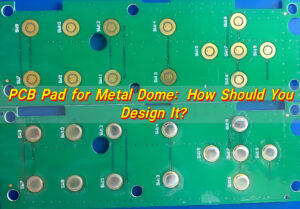
- Circuit layout: Contact pads should be clean, symmetrical, and suitable for dome contact.
- Backlighting: If needed, confirm light guide, LED position, legends, and light leakage.
- Regulatory documentation: Medical device projects often need controlled drawings, material traceability, and stable revision management.
A common mistake is choosing the dome first and adjusting the mechanical structure later. The better approach is to review the enclosure height, overlay stack-up, actuator geometry, and circuit contacts together. This reduces prototype rework and helps the supplier recommend a dome force that will still feel correct after the overlay and adhesive are added.
For customers working with EBest Circuit, early engineering communication can include keypad stack-up review, PCB or FPC contact design, dome array structure, adhesive selection, and prototype feedback. This is useful when the project needs both keypad performance and circuit manufacturing support.
What Reliability Tests Are Important for Medical Keypads?
Reliability testing should reflect the actual operating environment. A keypad used in a home-care device does not face the same stress as a handheld device used in emergency transport or clinical cleaning cycles.
| Test Item | What It Checks | Why It Matters |
| Life cycle test | Repeated pressing of keys | Confirms long-term tactile and electrical stability |
| Actuation force test | Force required to trigger the key | Verifies consistent user feel across production |
| Contact resistance test | Electrical resistance after pressing | Detects unstable contact or contamination risk |
| Adhesion test | Bonding strength of overlay and layers | Prevents peeling, lifting, or edge failure |
| Chemical resistance test | Response to cleaning agents | Protects printing, surface texture, and adhesive layers |
| Temperature and humidity test | Performance under environmental stress | Checks material expansion, adhesive stability, and contact behavior |
| Abrasion test | Surface and legend wear | Helps confirm long-term readability |
| Sealing test | Resistance to moisture or liquid ingress | Important for wipe-clean and fluid-exposure devices |
| Drop or vibration test | Mechanical stability after impact | Useful for portable and field-use products |
| Visual inspection | Printing, alignment, bubbles, scratches | Ensures acceptable cosmetic and functional quality |
Typical metal dome keypads may be designed for hundreds of thousands to more than one million actuations, depending on dome type, force, structure, and test conditions. The exact target should be defined by the medical device usage model. A rarely used setup key does not need the same cycle target as a frequently pressed navigation key.
Reliability testing should also include the full keypad assembly, not only the dome. The overlay, adhesive, spacer, circuit, connector, cable bend area, and housing interface can all become failure points if they are not included in the validation plan.
How to Choose the Right Tactile Keypad for a Medical Handheld Project?
The right tactile keypad is the one that fits the device function, environment, enclosure, and production plan. Start with the user interface requirements, then narrow the structure and materials.
For a practical quotation and design review, customers should prepare:
- Device application and operating environment
- Key quantity, key size, and keypad dimensions
- Required tactile force or preferred click feel
- Expected product life and key cycle target
- Cleaning chemicals or wipe procedure
- Sealing requirement, such as splash resistance or higher protection level
- Overlay color, texture, printing, embossing, or backlighting needs
- PCB, FPC, connector, tail length, or pinout requirements
- Enclosure drawing or keypad mounting area
- Prototype quantity and mass production forecast
- Any medical documentation, traceability, or inspection requirements
For thin medical handheld devices, a metal dome keypad or snap dome keypad is often a strong option because it provides clear tactile response in a compact stack-up. For devices needing soft raised keys, molded sealing, or a more cushioned feel, a rubber keypad may be more suitable. For simple sealed control panels, a membrane keypad with or without domes may be enough.
Avoid over-specifying the keypad. For example, gold-plated domes, complex backlighting, high sealing levels, or expensive overlays may not be necessary for every product. At the same time, avoid choosing the lowest-cost structure if the device will be cleaned frequently, used with gloves, or operated in a safety-related workflow.
A good supplier should help review both function and manufacturability. EBest Circuit can support customers by reviewing keypad stack-up, metal dome selection, PCB/FPC interface, prototype build requirements, and quotation details before production. Clear drawings and complete requirements reduce sampling delays and make the final keypad easier to validate.
Conclusion
A tactile keypad for medical handheld devices should provide clear feedback, stable electrical contact, suitable sealing, and reliable performance under real use conditions. Metal dome keypads, rubber keypads, membrane keypads, and snap dome keypad structures all have useful roles, but each one fits different mechanical, environmental, and user-interface needs.
For the best result, engineers should define the keypad function, cleaning method, tactile force, material stack-up, circuit interface, and reliability target before requesting a quotation. If you are developing a medical handheld project and need help selecting or prototyping tactile keypads, contact EBest Circuit at sales@metal-domes.com.