
A tactile switch for medical device applications must provide stable feedback, reliable contact, and a clean user experience. In medical equipment, a button is not only a small input part. It affects operation accuracy, product usability, cleaning design, and long-term device performance.
Medical devices are used by clinicians, technicians, caregivers, and patients. Each user expects the button to respond clearly and consistently. A well-designed switch helps users confirm input by touch, especially when they wear gloves, operate equipment quickly, or need to focus on the patient or test process.
For medical keypads, metal dome switches, membrane switches, and customized tactile structures are commonly used. The right solution depends on button force, tactile feel, noise level, sealing design, material selection, and production requirements. EBest Circuit supports custom metal dome, dome array, and tactile keypad solutions for medical-related electronic products.
What Is a Tactile Switch for Medical Device?
A tactile switch for medical device products is a button structure that gives physical feedback when pressed. The feedback can come from a metal dome, membrane switch, silicone keypad, PCB contact, or a combined structure. When the user presses the button, the switch provides a clear response to confirm the action.
This type of switch is used in medical control panels, handheld diagnostic tools, patient monitors, lab equipment, therapy devices, home-care products, and hospital equipment keypads. The button may control power, menu selection, alarm silence, mode switching, test start, or parameter adjustment.
A medical tactile switch must match the device structure and use environment. A compact handheld device may need a low-profile switch. A hospital control panel may need a sealed membrane surface. A bedside product may need a quiet tactile dome to reduce clicking noise. A diagnostic instrument may need a crisp and repeatable press for frequent operation.
The switch should be selected early in product development. Its design affects PCB layout, housing height, overlay thickness, waterproof structure, and assembly process. If the switch is treated only as a final accessory, the final button feel may not match the product requirements.
Why Are Tactile Switches Used in Medical Devices?
Tactile switches are used in medical devices because they provide clear input confirmation. Touchscreens are common, but many medical products still need physical buttons for important or frequent functions. A physical button can be easier to operate with gloves, under time pressure, or when the user does not want to look away from the device.
A tactile switch for medical device interfaces also supports simple and efficient operation. Important functions can be separated from the screen, making the interface easier to understand. For example, alarm silence, power, start, stop, and emergency-related buttons often benefit from a dedicated tactile control.
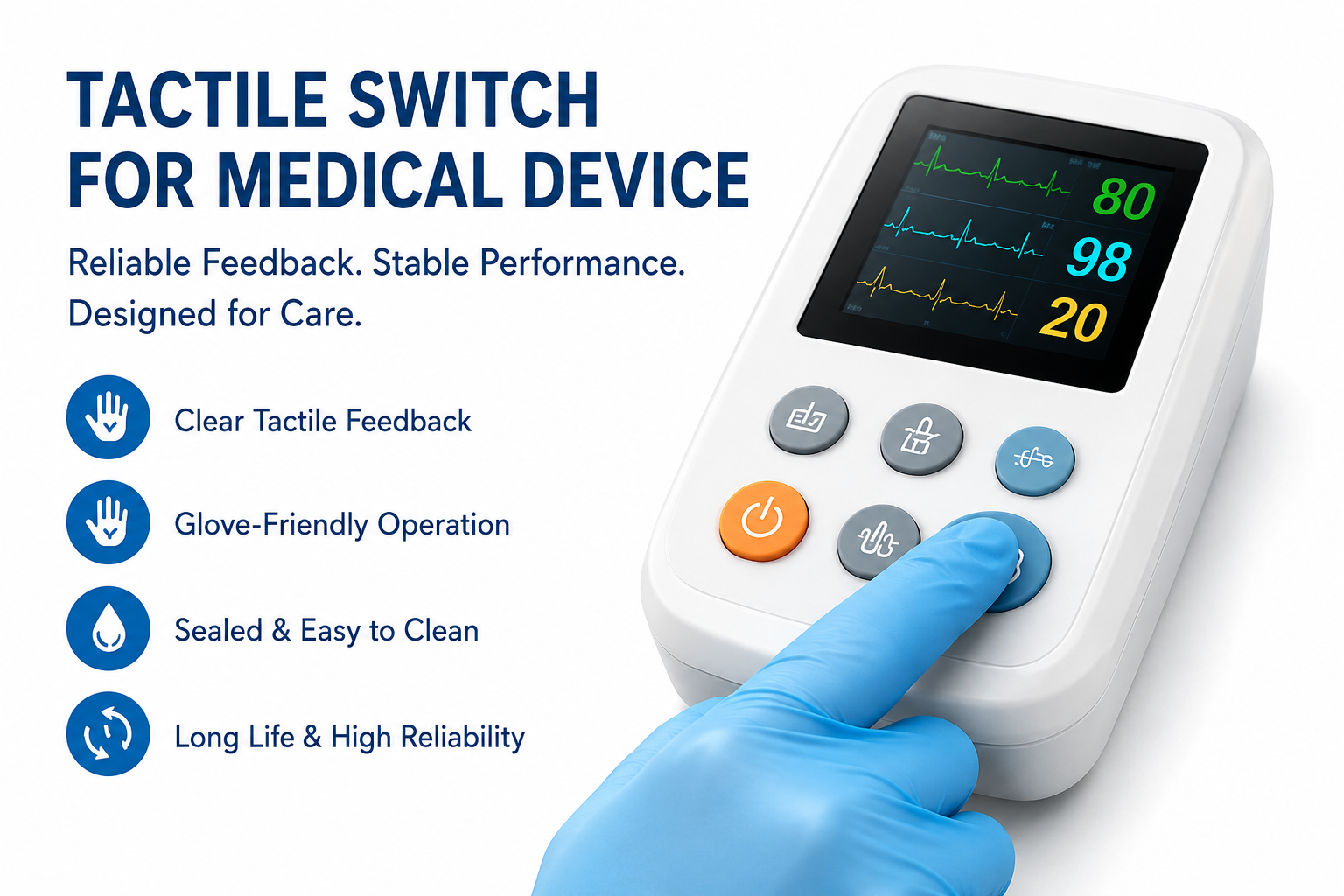
Medical environments also require clean surfaces, stable operation, and long service life. A well-designed tactile switch can be integrated into sealed keypads, membrane panels, or compact PCB assemblies. This helps the product support daily cleaning, repeated use, and consistent operation.
Common reasons for using tactile switches in medical products include:
- Clear press confirmation for users.
- Better operation with gloves.
- Compact structure for portable equipment.
- Sealed keypad options for cleaning and moisture protection.
- Custom button force for different functions.
- Stable tactile feedback across the full keypad.
The value of a tactile switch is not only electrical contact. It improves how the user controls the device. A button with the right force, travel, and feedback can make the whole medical interface easier to operate.
What Is a Medical Metal Dome?
A medical metal dome is a formed stainless steel dome used to create tactile feedback and electrical contact in a medical button structure. When pressed, the dome collapses and touches the circuit contact below. When released, it returns to its original shape. This movement creates the familiar snap feel.
Medical metal domes are often used in thin keypads, membrane switches, dome arrays, and PCB-based button designs. They are suitable for products that need a clear tactile response in a compact space. The dome can be placed directly on a PCB, FPC, or printed circuit layer.
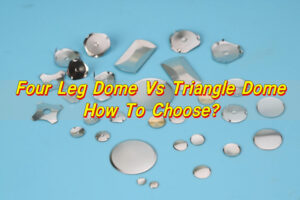
Metal domes are available in different sizes, shapes, actuation forces, and tactile ratios. Dome selection affects button feel, sound, travel, and service life. A small dome may fit compact products, while a larger dome may provide a broader press area and stronger feedback.
A medical metal dome is usually not selected alone. It must match the full switch stack, including overlay material, spacer thickness, adhesive layer, contact pad, and housing support. The same dome may feel different when used under PET, polycarbonate, silicone, or a plastic keycap.
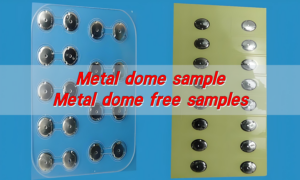
EBest Circuit can provide custom metal domes and dome arrays based on the required force, button size, keypad layout, and assembly method. This helps engineers test the actual button feel before confirming mass production.
How Does a Medical Metal Dome Improve Button Feedback?
A medical metal dome improves button feedback by creating a defined actuation point. The user can feel the moment when the dome collapses and the switch is activated. This tactile response helps reduce uncertainty during operation.
Button feedback is affected by dome force, dome size, dome height, snap ratio, overlay thickness, spacer design, and PCB support. If the overlay is thick or soft, the button may feel less sharp. If the support under the dome is weak, the feedback may become uneven. For this reason, the dome should always be tested inside the complete keypad structure.
A well-designed medical metal dome can provide consistent feel across multiple buttons. This is important for hospital equipment keypads and medical control panels, where users expect each key to respond in a predictable way. Consistent feedback also helps improve production quality and user confidence.
| Design Factor | Effect on Button Feedback | Practical Note |
|---|---|---|
| Actuation force | Controls how hard the button feels | Common medical keypad ranges are often about 120 gf to 350 gf |
| Snap ratio | Controls crispness of feedback | Higher snap ratio gives a sharper feel |
| Dome diameter | Affects press area and stability | Larger domes may feel more stable |
| Overlay thickness | Changes final tactile feel | Thick overlays can soften the response |
| Spacer height | Controls dome movement space | Incorrect spacing affects press feel |
| Contact pad design | Affects electrical contact | Clean and stable pad design is required |
For patient-facing equipment, a quiet tactile dome may be preferred. It keeps touch feedback while reducing sharp click noise. This is useful for bedside equipment, ward devices, home-care products, and monitoring systems.
How Are Tactile Switches Used in Hospital Equipment Keypads?
Tactile switches are used in hospital equipment keypads for power control, menu navigation, alarm silence, test start, parameter setting, mode selection, and confirmation functions. These keypads are found in monitors, diagnostic instruments, therapy systems, nurse call panels, lab devices, and portable medical equipment.
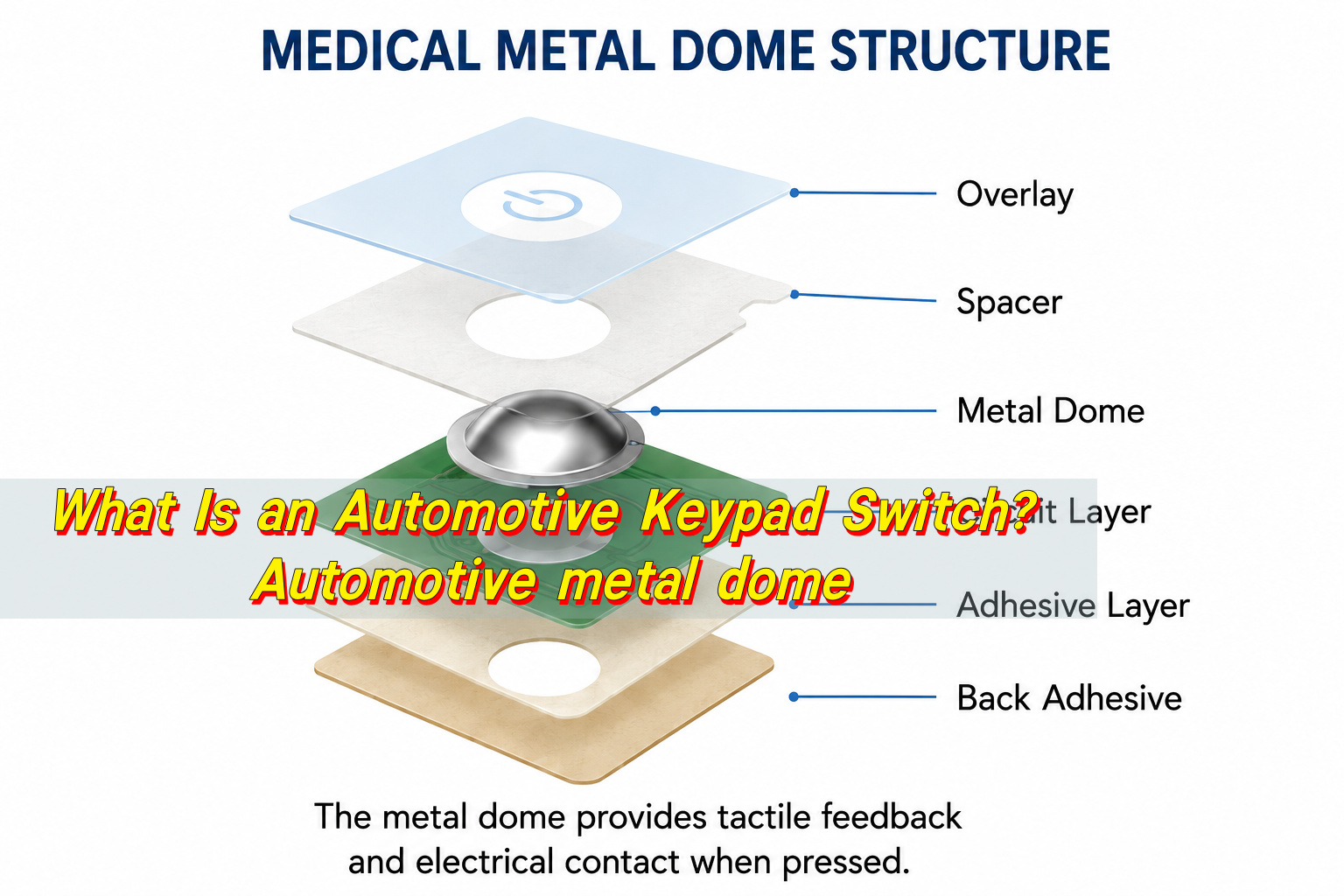
A hospital equipment keypad usually combines a printed overlay, adhesive spacer, metal dome layer, circuit layer, and connector. The front surface may be flat and easy to clean, while the inner switch structure provides tactile feedback. This design supports both usability and surface protection.
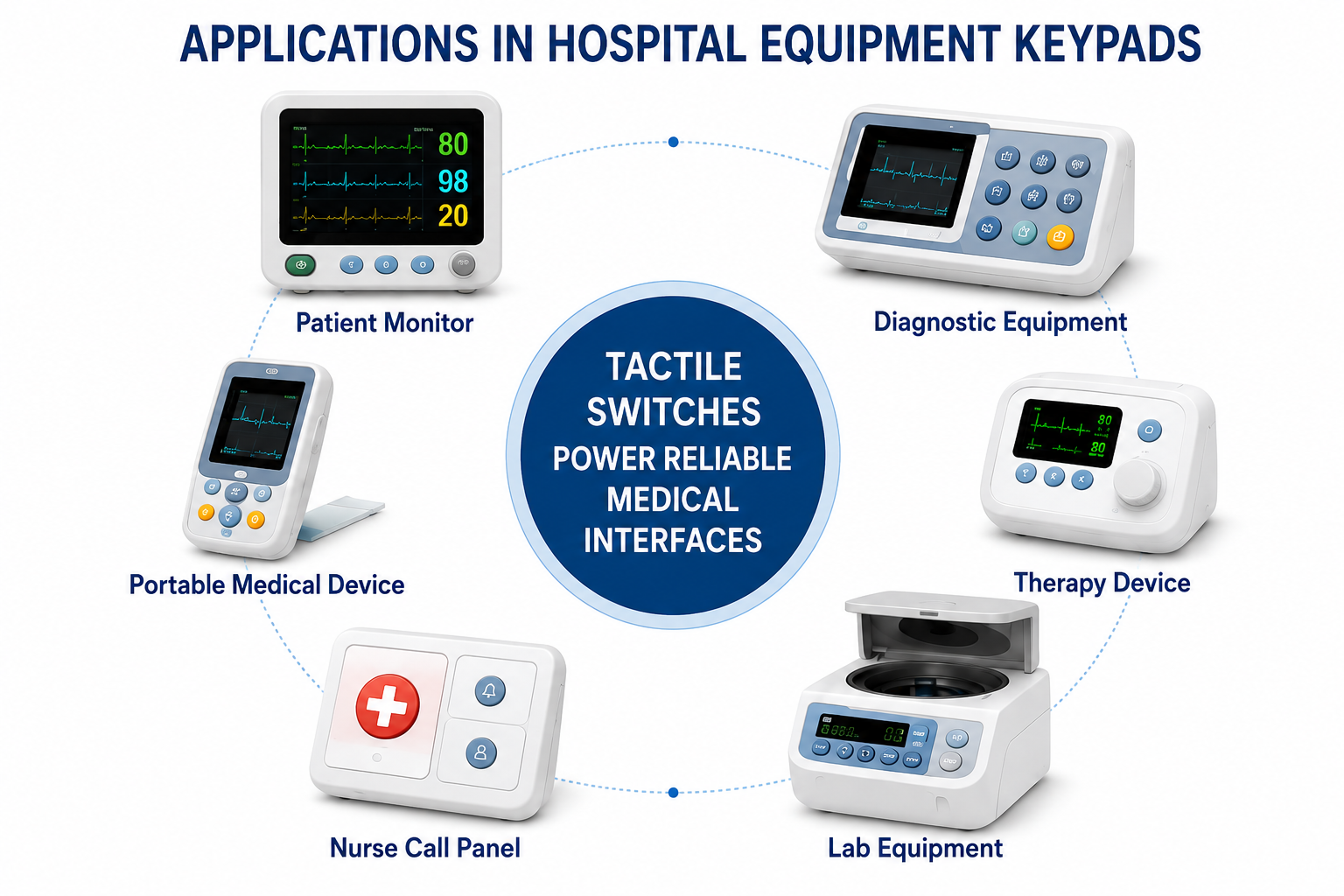
Button layout should match the way the device is used. Frequently used buttons should be easy to locate and comfortable to press. Critical buttons may need stronger force, larger size, or clearer spacing. Navigation keys may use lighter force to reduce fatigue during repeated operation.
Glove operation is also important. A button that feels clear with bare fingers may feel weak through medical gloves. To solve this, engineers may adjust dome force, button size, embossing height, or overlay material.
A medical membrane switch with metal dome feedback is often used for hospital equipment keypads because it combines a clean front surface with tactile confirmation. It can support printed icons, logos, transparent windows, backlighting, embossing, and sealed edges.
What Is the Difference Between a Medical Membrane Switch and a Tactile Switch?
A medical membrane switch is a complete keypad or control panel made from multiple thin layers. A tactile switch is the input mechanism that creates the press response and electrical contact. In many medical products, the two are used together.
A membrane switch may include a graphic overlay, adhesive spacer, printed circuit, metal dome, shielding layer, and connector tail. The tactile response may come from a metal dome or embossed structure. A tactile switch can also be used separately on a PCB or under a molded keycap.
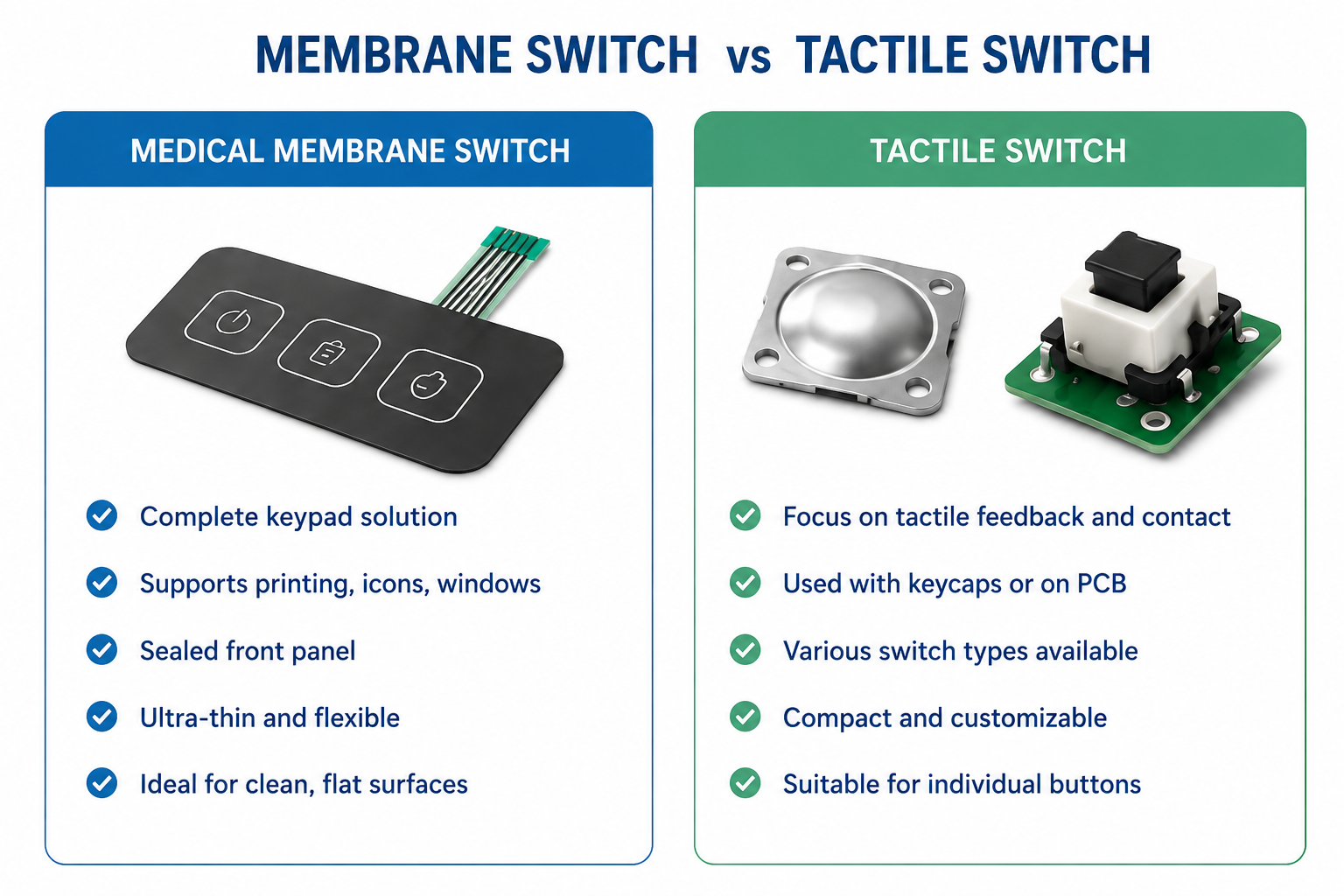
The choice depends on the device design. If the product needs a flat, printed, sealed, and cleanable control surface, a medical membrane switch is often suitable. If the device already has plastic buttons or a molded housing, a separate tactile switch or metal dome on PCB may be enough.
| Item | Medical Membrane Switch | Tactile Switch |
| Main function | Complete keypad or front control panel | Button feedback and electrical contact |
| Structure | Overlay, spacer, circuit, dome, connector | Metal dome, PCB switch, or mechanical switch |
| Surface design | Supports printing, icons, windows, and branding | Usually hidden under overlay or keycap |
| Sealing | Suitable for sealed front panels | Depends on housing and assembly design |
| Thickness | Thin and flexible | Varies by switch type |
| Common use | Medical panels and hospital equipment keypads | Individual buttons and compact input modules |
A tactile switch for medical device products may be part of a membrane panel or a standalone button solution. The correct choice should be based on user operation, sealing needs, mechanical design, and production method.
What Tactile Feel Is Suitable for Medical Devices?
The suitable tactile feel depends on the device function, user group, operating frequency, and noise requirement. A frequently used button should feel comfortable and easy to press. A power or safety-related button may need a firmer response. A bedside device may need quieter feedback.
Medical buttons should usually feel stable, clear, and controlled. A very soft button may suit home-care products or frequent menu operation. A crisp dome may suit diagnostic instruments and professional control panels. A quiet tactile dome may suit patient rooms and monitoring equipment.
Common tactile feel options include:
- Crisp feel for clear input confirmation.
- Soft feel for frequent use and user comfort.
- Quiet feel for patient-facing environments.
- Firm feel for deliberate operation.
- Low-profile feel for compact handheld devices.
The final feel depends on the complete structure, not only the dome. Overlay material, key shape, spacer thickness, and PCB support all change the button response. For this reason, sample testing should use the real or near-final stack-up.
Consistency is also important. In a hospital equipment keypad, one key should not feel weak while another feels too firm. Controlled dome tolerance, accurate placement, and stable adhesive structure help keep the keypad feel uniform.
How Do You Choose the Right Actuation Force?
The right actuation force should match the button function and user operation. Actuation force is usually measured in grams-force, or gf. A lower force is easier to press. A higher force feels more deliberate.
For many medical keypads, a practical force range is about 120 gf to 350 gf. This range can support comfortable operation while keeping clear feedback. The final choice should be confirmed through sample testing because overlay thickness and housing design can change the actual feel.
| Button Function | Suggested Force Direction | Typical Use |
| Menu navigation | Light to medium | Up, down, select, return |
| Start or confirm | Medium | Test start, enter, confirm |
| Power button | Medium to firm | Power on/off |
| Alarm silence | Medium | Monitor or bedside control |
| Lock function | Firm | Mode lock or key lock |
| Home-care button | Light to medium | Daily patient operation |
A frequent-use button should not require excessive force. A function that must be pressed intentionally can use a firmer dome. If the user may wear gloves, the button should still provide enough feedback through the glove material.
The best approach is to test several dome force samples in the actual product structure. Engineers can compare comfort, sound, travel, and feedback before confirming the design. EBest Circuit can support this stage with metal dome samples, dome arrays, and custom keypad evaluation.
Can Medical Tactile Switches Support Waterproof Design?
Medical tactile switches can support waterproof or water-resistant design when the full structure is designed correctly. The switch, overlay, adhesive, housing, connector exit, and edge seal must work together.
A medical membrane switch is often used when a sealed front surface is required. The top overlay can protect the circuit layer from moisture, cleaning wipes, and daily handling. PET and polycarbonate are common overlay materials, depending on appearance, flexibility, and durability needs.
Waterproof design should consider the following points:
- Overlay material and thickness.
- Adhesive bonding strength.
- Edge sealing method.
- Tail exit position.
- Housing compression.
- Dome venting design.
- Connector protection.
- Cleaning environment.
Dome venting is important because the dome needs air movement to press and recover smoothly. If the structure is sealed without proper venting, the button feel can become heavy or slow. A controlled vent path helps maintain tactile performance while supporting surface protection.
The required protection level depends on the product. A lab device may need resistance to cleaning and light liquid contact. A portable device may need better protection around the housing seam. A bedside keypad may need a smooth surface for routine wiping.
What Materials Are Used in Medical Tactile Switches?
Medical tactile switches may use stainless steel domes, PET overlays, polycarbonate overlays, silicone rubber, printed circuit layers, FPC, PCB contacts, adhesives, spacers, conductive ink, and connectors. The final material set depends on tactile feel, sealing design, cleaning exposure, electrical structure, and production volume.
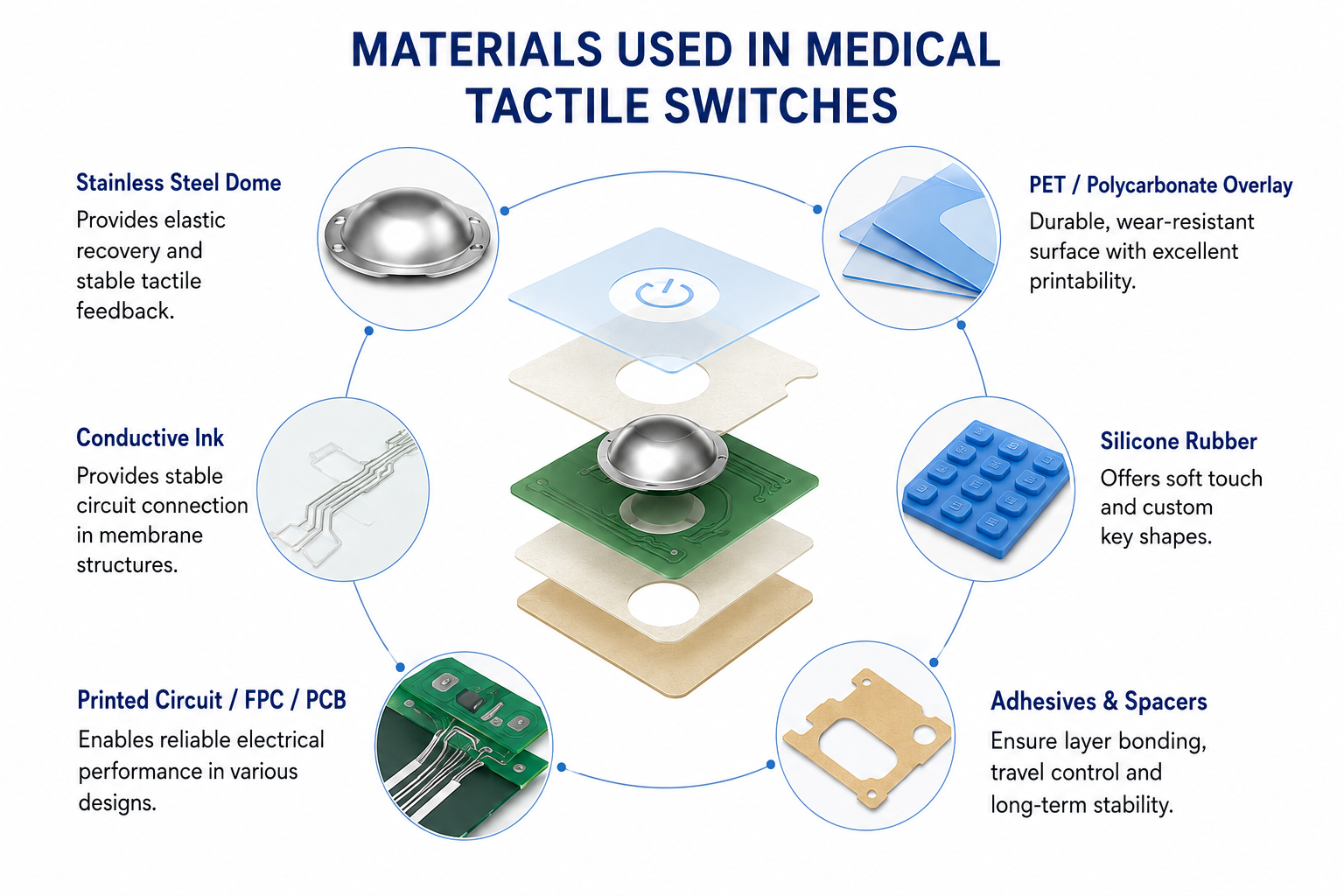
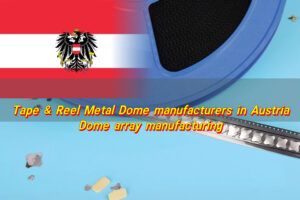
Stainless steel is commonly used for metal domes because it provides elastic recovery and stable tactile feedback. Dome size, thickness, and forming accuracy affect force and feel. Dome arrays use adhesive carriers to keep each dome aligned during assembly.
PET is widely used for membrane switch overlays because it offers good flexibility and wear performance. Polycarbonate can provide clear printing and a strong visual finish. Silicone rubber is often used when the design needs raised buttons, a softer touch, or molded key shapes.
The circuit layer may be a printed silver circuit, FPC, or PCB. Printed silver circuits are common in thin membrane keypads. FPC is useful when flexible routing is needed. PCB contacts are suitable for metal dome on PCB structures and compact electronic assemblies.
Adhesives and spacers affect sealing, layer bonding, button travel, and long-term stability. The adhesive should match the overlay, circuit layer, housing surface, and use environment. For medical-related products, material stability and process control should be reviewed before mass production.
A reliable tactile switch for medical device applications should combine clear feedback, suitable force, clean material selection, and stable manufacturing control. Medical metal dome structures, quiet tactile dome designs, hospital equipment keypads, and medical membrane switches can all support dependable medical interfaces when selected according to the real use case.
EBest Circuit provides custom metal dome, dome array, tactile keypad, and membrane switch support for medical-related electronic products. For design review, sample discussion, or project quotation, contact sales@metal-domes.com.