
Metal dome switches are deceptively simple components, yet their placement determines whether a product feels crisp, responsive, and reliable—or inconsistent and frustrating. In applications ranging from industrial control panels to compact consumer electronics, precision in metal dome placement directly influences electrical contact stability, tactile response, and long-term durability. While many engineers focus heavily on dome material or actuation force, placement accuracy is often the silent factor that defines overall performance.

Why is correct metal dome placement so important?
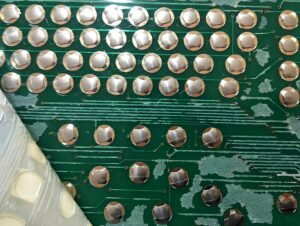
Correct placement ensures that the metal dome interacts precisely with the PCB contact pads beneath it. When alignment is accurate, the dome collapses symmetrically, making clean electrical contact and delivering a sharp tactile response. This creates a predictable user experience across every actuation cycle.
In contrast, even slight deviation from the intended position can disrupt this balance. The dome may tilt during compression, leading to uneven force distribution. Over time, this can accelerate wear, reduce contact reliability, and create variations in tactile feedback that users immediately notice.
From a manufacturing perspective, proper placement also improves assembly efficiency. Automated processes such as pick-and-place rely on tight positional accuracy. When placement guidelines are followed, rejection rates drop, throughput increases, and production becomes more scalable.
For companies like EBest Circuit (Best Technology), which specialize in high-precision metal dome arrays, placement accuracy is engineered into both the design and manufacturing process. Their ability to control alignment within extremely tight tolerances contributes to consistent actuation performance across large production volumes.
How does wrong metal dome placement affect switch performance?
Incorrect placement introduces subtle but critical performance issues. These issues may not always appear during initial testing, but they often emerge during long-term use or under varying environmental conditions.
Common effects include:
- Unstable electrical contact: Misalignment can prevent the dome from fully bridging the contact pads, leading to intermittent signals.
- Inconsistent tactile feel: The dome may collapse unevenly, resulting in a softer or distorted click.
- Increased actuation force variation: Users may experience different resistance levels across buttons in the same device.
- Accelerated fatigue: Uneven stress distribution shortens the dome’s lifecycle.
To better understand the impact, consider the comparison below:
| Aspect | Correct Placement | Incorrect Placement |
|---|---|---|
| Contact reliability | Stable and repeatable | Intermittent or incomplete |
| Tactile feedback | Crisp and consistent | Soft or irregular |
| Lifespan | Optimized for millions of cycles | Reduced due to uneven stress |
| User experience | Predictable and satisfying | Noticeably inconsistent |
| Assembly yield | High | Increased rework or rejection |
What are the standard tolerances for metal dome placement?
Placement tolerance defines the allowable deviation from the intended position without compromising performance. In high-quality designs, tolerances are typically controlled within a narrow range to maintain consistency.
For most applications, standard placement tolerances fall within:
- ±0.05 mm to ±0.10 mm for high-precision devices
- ±0.10 mm to ±0.15 mm for general consumer electronics
The tighter the tolerance, the more reliable the switch performance. However, achieving tighter tolerances requires advanced manufacturing capabilities, including precise tooling and automated inspection systems.
EBest Circuit (Best Technology), for example, maintains placement accuracy within ±0.05 mm for metal dome arrays. This level of precision ensures that each dome aligns perfectly with its corresponding contact pad, even in dense layouts.
Tolerance requirements also depend on dome size and shape. Smaller domes demand stricter control because even minor misalignment can significantly affect their collapse behavior. Larger domes offer slightly more flexibility but still benefit from precise positioning.
How to avoid misalignment during metal dome placement?
Preventing misalignment begins at the design stage and continues through manufacturing. A combination of smart layout decisions and controlled assembly processes can dramatically improve placement accuracy.
Key practices include:
- Use alignment markers: Fiducials on the PCB help automated equipment position domes accurately.
- Optimize adhesive layers: Proper adhesive design keeps domes securely in place without shifting.
- Implement SMT-compatible packaging: Tape & reel packaging ensures consistent orientation during automated placement.
- Control environmental factors: Temperature and humidity can affect adhesive behavior and placement stability.
Another important factor is equipment calibration. High-speed placement machines must be regularly calibrated to maintain accuracy, especially when handling small components like metal domes.
EBest Circuit (Best Technology) integrates tape & reel packaging into its solutions, allowing domes to be placed at speeds of up to tens of thousands per hour while maintaining precise alignment. This not only reduces labor costs but also minimizes human-induced variation.
Can metal dome placement affect tactile feedback and click feeling?
Tactile feedback is one of the most noticeable characteristics of a metal dome switch, and placement plays a central role in shaping this experience. When a dome is perfectly aligned, it collapses uniformly, producing a sharp and satisfying click that users associate with quality.
Misalignment disrupts this behavior. The dome may deform unevenly, causing:
- A muted or less distinct click
- Delayed actuation response
- Variations in force across different buttons
These inconsistencies can make a device feel unreliable, even if the underlying electronics function correctly.
Placement also influences the interaction between the dome and the overlay or keypad structure. If the dome is not centered, the force applied by the user may not translate efficiently into dome collapse, reducing responsiveness.
In high-end applications, engineers often fine-tune placement alongside dome force specifications to achieve a specific tactile profile. This level of optimization is especially important in medical devices, automotive controls, and premium consumer electronics.
What is the recommended spacing between multiple metal domes?
Spacing between domes is another critical design consideration, particularly in dense layouts such as keypads or control panels. Proper spacing prevents mechanical interference and ensures consistent performance across all buttons.
Typical spacing guidelines include:
- Minimum center-to-center distance: 1.5 to 2 times the dome diameter
- Edge clearance: At least 0.3 mm between adjacent domes
- Uniform layout: Consistent spacing improves tactile uniformity
Adequate spacing ensures that pressing one dome does not affect neighboring domes. It also allows sufficient room for adhesive layers and protective films.
In metal dome arrays, spacing is pre-defined during manufacturing, which simplifies assembly and guarantees consistency. EBest Circuit (Best Technology) offers custom array designs that optimize spacing based on specific application requirements, helping designers avoid common layout pitfalls.
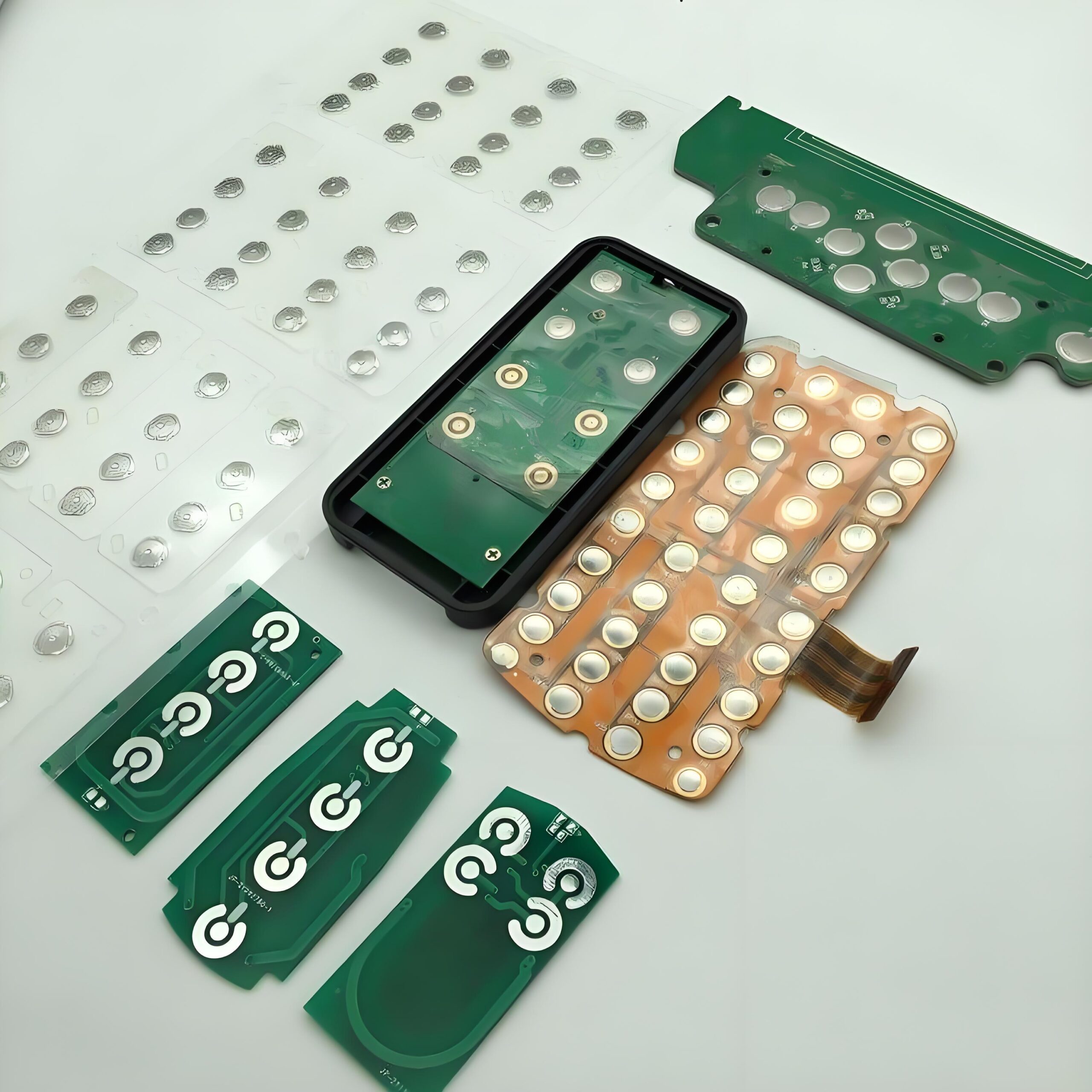
How does PCB design influence metal dome placement?
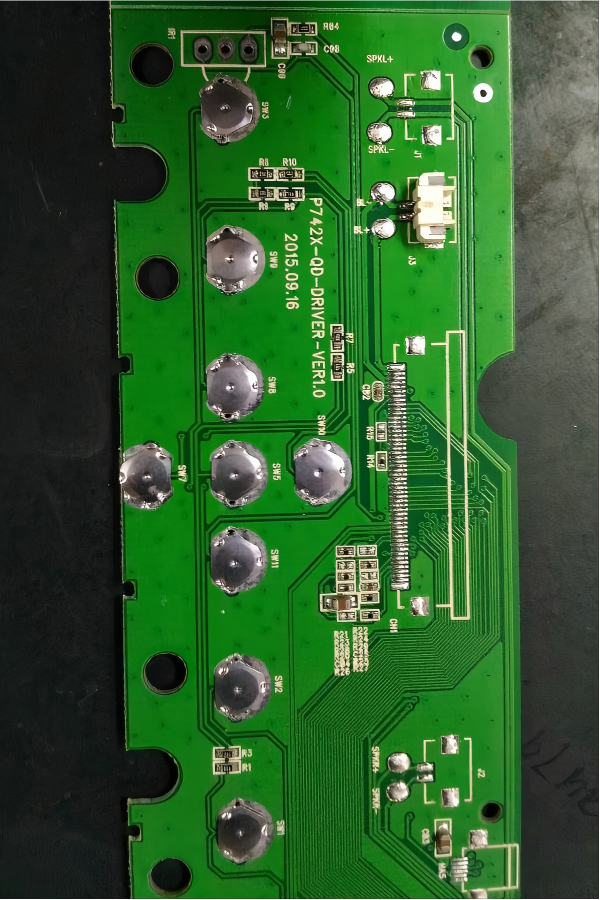
PCB design provides the foundation for accurate dome placement. The geometry of contact pads, surface finish, and overall layout all contribute to performance.
Important PCB design factors include:
- Pad geometry: Symmetrical pad design ensures even contact during dome collapse.
- Surface finish: Smooth finishes improve electrical conductivity and reduce wear.
- Trace routing: Proper routing prevents interference with dome movement.
- Layer stack-up: Structural stability supports consistent placement.
A well-designed PCB works in harmony with the dome, allowing it to perform as intended. Poor design, on the other hand, can introduce alignment challenges even if placement is technically accurate. Collaboration between PCB designers and component manufacturers is essential. By aligning design specifications with manufacturing capabilities, it becomes easier to achieve optimal placement and performance.
Does placement direction matter for metal dome performance?
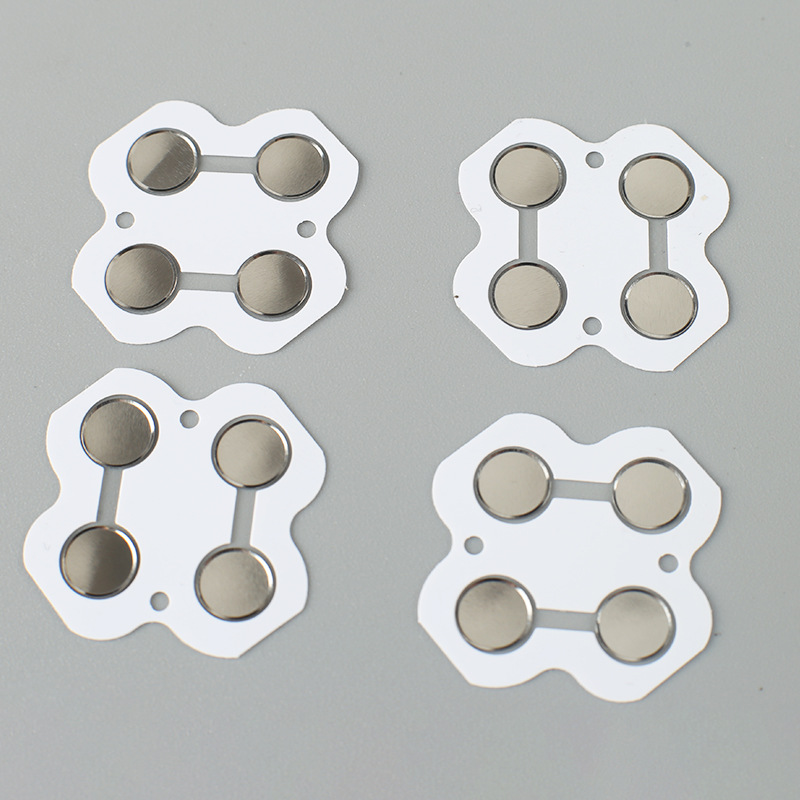
Placement direction is often overlooked, but it can influence performance, especially for asymmetrical dome shapes such as four-leg or triangle domes. These designs rely on specific orientation to distribute force evenly.
Correct orientation ensures:
- Balanced collapse behavior
- Uniform tactile response
- Stable electrical contact
If the dome is rotated incorrectly, its legs or support points may not align with the intended contact areas. This can lead to uneven stress distribution and inconsistent actuation. For round domes, orientation is less critical because of their symmetrical structure. However, consistent placement direction still helps maintain uniformity across large arrays.
Tape & reel packaging plays a key role here, as it allows domes to be pre-oriented for automated placement. This eliminates guesswork and ensures consistent results during high-speed assembly.
What mistakes are common in metal dome placement?
Even experienced designers can encounter challenges when working with metal domes. Recognizing common mistakes can help prevent costly revisions and performance issues.
Frequent errors include:
- Ignoring tolerance requirements: Overlooking placement accuracy leads to inconsistent performance.
- Insufficient spacing: Crowded layouts increase the risk of mechanical interference.
- Improper adhesive selection: Weak or uneven adhesion allows domes to shift over time.
- Lack of alignment features: Missing fiducials or guides complicates automated placement.
- Incorrect orientation: Misaligned domes fail to deliver expected tactile feedback.
Addressing these issues early in the design phase saves time and resources during production. It also ensures that the final product meets user expectations.
Conclusion:
Metal dome placement is more than a mechanical detail—it is a defining factor in switch performance. Precise positioning ensures stable electrical contact, consistent tactile feedback, and long-term reliability. From tolerance control to PCB design and spacing optimization, every aspect of placement contributes to the overall quality of the final product.
By following proven design practices and leveraging advanced manufacturing solutions, engineers can achieve exceptional results. Companies like EBest Circuit (Best Technology) bring added value through precision engineering, fast delivery, and integrated solutions such as tape & reel packaging, making high-performance metal dome implementation more accessible and efficient. If you are looking to optimize your design or need expert support, feel free to reach out: sales@metal-domes.com