
What is a metal dome for instrument panel?
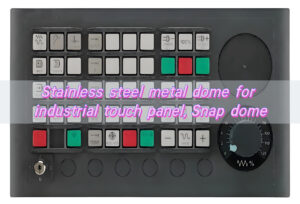
Modern instrument panels rely on clear feedback, dependable switching, and stable performance over long operating cycles. One of the most reliable ways to achieve these goals is by integrating a metal dome switching structure into the control interface. A metal dome for instrument panel applications is a small, precision-formed stainless steel component used inside membrane switches, dome arrays, or keypad structures to create tactile feedback when a button is pressed.

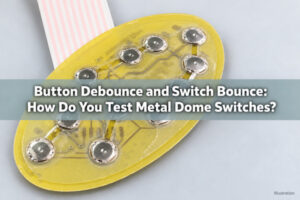
When the operator presses the panel surface, the metal dome collapses and connects two circuit traces on the printed circuit board. This contact completes the electrical circuit and triggers the intended function of the device. After the pressure is released, the dome returns to its original shape and the circuit opens again. This snap action provides both a mechanical and electrical response that users can clearly feel.
In many industrial environments, operators work with machines while wearing gloves or under conditions where visual confirmation is limited. Tactile response becomes critical in these situations. The metal dome structure delivers a crisp snap feeling that confirms the command has been activated without requiring the user to look at the interface.
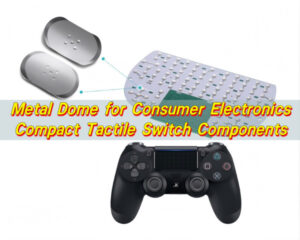
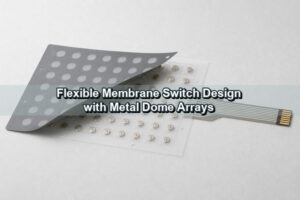
Metal domes are commonly installed in membrane switch assemblies or integrated with PET dome arrays. These assemblies are placed above a PCB or flexible circuit. The dome itself is designed with precise geometry so that it collapses at a predictable force level. This ensures consistent switch behavior across thousands or millions of cycles.
Instrument panels that often use metal dome structures include:
- Industrial machine control panels
- Medical device interfaces
- Laboratory instruments
- Automotive dashboards
- Testing and measurement equipment
- Communication control systems
Because these applications require accurate input and long service life, the dome design must be carefully engineered. The diameter, thickness, and leg structure of the dome all affect the tactile feel and electrical stability.
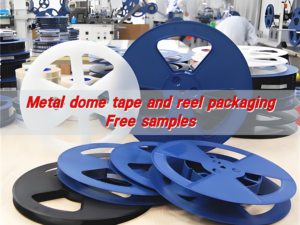
Another important factor is dome packaging. Metal domes may be supplied individually, but many manufacturers prefer adhesive dome arrays or tape-and-reel packaging for automated assembly. These options simplify installation and improve alignment accuracy.
Manufacturers like EBest Circuit (Best Technology), a professional metal dome producer since 2006, specialize in designing dome structures tailored for industrial control interfaces. Our solutions are widely used in instrument panels that require reliable tactile performance and stable electrical contact.
Why use metal domes in instrument panel design?
Instrument panels are designed to deliver precise control. Each button press must trigger the correct function while providing clear confirmation to the operator. Without tactile feedback, users may press a button multiple times or hesitate before activating a command.
Metal domes solve this problem by adding a distinct snap sensation during actuation. The tactile response comes from the dome’s elastic deformation. When the applied force reaches the dome’s snap point, the metal structure collapses quickly and returns to its original shape after release.
This snap mechanism offers several practical advantages for instrument panel design.
First, it improves usability. Operators can feel the button response immediately, which reduces uncertainty during operation. This is especially valuable for industrial machines where fast and accurate inputs are required.
Second, metal domes increase switching accuracy. The dome ensures the electrical contact occurs only when the correct force is applied. This prevents accidental triggering caused by light touches or vibrations.
Third, the dome structure supports compact interface designs. Because the dome itself acts as the spring mechanism, fewer mechanical components are required compared with traditional mechanical switches.
Design engineers also prefer metal domes because they integrate easily into membrane switch structures. The dome can be mounted directly over PCB contacts or placed inside a dome array sheet.
| Feature | Metal Dome Switch | Rubber Dome Switch |
|---|---|---|
| Tactile feedback | Sharp and crisp snap | Soft tactile feeling |
| Actuation accuracy | Very precise | Moderate |
| Cycle life | Often over 1 million cycles | Lower in heavy use |
| Structure thickness | Thin profile | Slightly thicker |
| Assembly options | Dome array or SMT packaging | Usually molded keypad |
| Industrial reliability | High | Medium |
While rubber dome switches are common in consumer electronics, metal domes are widely chosen for professional equipment due to their stronger tactile feedback and long-term stability.
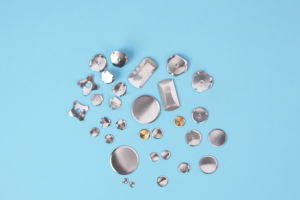
Instrument panel designers also appreciate the flexibility of dome geometry. Engineers can select different dome shapes depending on the required tactile characteristics. Popular dome types include:
- Four-leg metal domes
- Triangle domes
- Round domes
Each shape offers unique snap characteristics and electrical contact behavior. For example, four-leg domes provide balanced force distribution and strong tactile feedback. Round domes create smoother actuation curves and are often used in compact keypad layouts. These design options allow instrument panel engineers to tailor the interface experience to the specific equipment and user environment.

What are the benefits of metal dome for instrument panels?
A well-designed instrument panel must balance performance, durability, and user comfort. Metal dome technology helps achieve these goals through a combination of mechanical precision and simple structural design.
One of the strongest advantages is tactile clarity. The snap action produced by the dome provides a clean feedback point during operation. This feedback reduces input errors and gives users confidence that the command has been executed.
Another major benefit is durability. Metal domes are usually made from stainless steel materials such as SUS301 or SUS304. These alloys offer excellent elasticity and fatigue resistance. As a result, the dome can withstand a very high number of actuation cycles without losing its shape.
Metal dome switches also support ultra-thin control panel structures. Because the dome acts as both the spring and contact element, the switch assembly remains compact. This feature is valuable in devices where space is limited.
Additional benefits include:
- Reliable electrical contact performance
- Stable tactile feedback across repeated use
- Wide actuation force options
- Compatibility with membrane switches and PCBs
- Low power consumption in signal circuits
These advantages make metal domes a preferred choice for professional equipment interfaces.
Another benefit is the possibility of automated assembly. Some dome packaging formats allow high-speed installation using pick-and-place machines. Tape and reel dome packaging is particularly useful for this purpose.
Tape and reel packaging places each dome inside a sealed pocket on a continuous carrier tape. The domes are arranged in precise orientation so they can be picked and placed like standard electronic components. Compared with manual placement, automated installation improves both speed and accuracy. Production lines can reach placement rates of tens of thousands of domes per hour depending on the SMT equipment.
EBest Circuit (Best Technology) offers tape and reel packaging designed specifically for automated assembly. Our dome packaging solutions help manufacturers improve efficiency while maintaining precise dome alignment on the circuit board.
How to choose metal dome for industrial instrument panels?
Selecting the right dome structure for an instrument panel requires careful consideration of both mechanical and electrical factors. Different applications require different tactile characteristics, and the dome design must match the expected operating conditions.
Several parameters play an important role in dome selection.
The first factor is dome diameter. The diameter determines the size of the switch contact area and influences the tactile response. Larger domes generally provide stronger tactile feedback, while smaller domes are suitable for compact keypad layouts.
Another key factor is actuation force. The dome must collapse at a force level that feels comfortable for the user but still prevents accidental activation. Industrial control panels often use medium-to-high actuation force domes to ensure deliberate operation.
Engineers should also consider the dome material and thickness. Thicker metal domes usually provide stronger tactile feedback and higher durability. However, the thickness must be balanced with the required switch sensitivity.
Other design considerations include:
- Dome shape and leg configuration
- Contact plating material
- Circuit pad design
- Panel overlay thickness
- Environmental exposure conditions
When selecting a dome, engineers often test several prototypes before finalizing the design. This helps determine the best tactile response for the specific equipment interface.
| Parameter | Typical Range |
|---|---|
| Dome diameter | 4 mm – 12 mm |
| Actuation force | 160 gf – 400 gf |
| Dome thickness | 0.05 mm – 0.08 mm |
| Tactile ratio | 40% – 60% |
| Cycle life | Up to 1 million cycles or more |
Another important factor is the dome array configuration. Instead of placing domes individually, manufacturers often use adhesive dome arrays that hold multiple domes in a precise layout. These arrays simplify assembly and ensure consistent dome alignment across the keypad structure.
EBest Circuit (Best Technology) supports custom dome array production with precise positioning accuracy. Their manufacturing process can maintain contact alignment within ±0.05 mm, which helps maintain reliable switching performance in complex instrument panel layouts.

What is the cycle life of metal dome for instrument panels?
Cycle life is one of the most important indicators of switch reliability. It represents the number of times a dome can be pressed and released while maintaining stable tactile response and electrical performance.
For most industrial instrument panels, the expected lifetime of the interface must match the operational life of the equipment itself. This often requires hundreds of thousands or even millions of actuations.
High-quality metal domes are designed specifically to meet these requirements. The stainless steel material used in dome manufacturing provides excellent elasticity and fatigue resistance. As long as the dome operates within its design force range, it can maintain stable performance for a very long period.
Many industrial domes reach a cycle life of over one million actuations. Some optimized dome designs can even exceed this level when used in well-controlled environments. Several factors influence dome cycle life.
The most important factor is material quality. Precision stainless steel alloys help maintain structural elasticity over repeated use.
Another factor is dome geometry. The shape and leg design affect how the force is distributed across the dome during actuation.
Environmental conditions also play a role. Extreme temperature changes or heavy contamination may influence the mechanical behavior of the dome over time.
Manufacturers typically perform durability testing to verify cycle life performance. These tests simulate repeated button presses under controlled conditions.
A typical cycle life test includes:
- Repeated actuation using a mechanical press system
- Constant force application at the designed actuation level
- Monitoring electrical contact stability
- Inspecting tactile response after extended cycling
Reliable manufacturers document these tests and provide technical reports for customers.
EBest Circuit (Best Technology) conducts strict lifecycle testing to ensure stable dome performance for demanding applications. Their metal dome products are widely used in industrial control equipment where long service life is essential.
Are metal domes for instrument panels dust and moisture resistant?
Industrial equipment often operates in environments where dust, moisture, or chemical exposure may affect electronic components. For this reason, instrument panel interfaces must include protective design elements.
Metal domes themselves are made from corrosion-resistant stainless steel, which offers good durability in typical operating conditions. However, environmental protection is usually achieved through the overall membrane switch structure rather than the dome alone. A complete instrument panel keypad normally includes several protective layers.
These layers may include:
- Polyester or polycarbonate graphic overlay
- Spacer adhesive layers
- Dome array sheet
- Printed circuit contacts
- Sealing gaskets or adhesives
Together, these layers create a sealed structure that protects the dome and circuit contacts from contaminants. Many industrial membrane switch panels can reach IP-rated protection levels when properly sealed. This prevents dust particles or moisture from entering the switch cavity.
Adhesive dome arrays also play an important role in environmental protection. The adhesive film holds the domes securely in position and helps prevent particles from entering the switch contact area. In applications that require higher environmental resistance, designers may also use protective coatings on the circuit board or add sealing frames around the switch assembly.
What is the best actuation force for instrument panel metal domes?
Actuation force is one of the most important parameters affecting the user experience of an instrument panel. It determines how much pressure the user must apply to activate the switch.
Choosing the right force level helps balance comfort, accuracy, and reliability. If the force is too low, accidental activation may occur when the panel is touched lightly. If the force is too high, users may feel fatigue after repeated operation.
Most industrial control panels use medium to high actuation forces. These levels help ensure that commands are triggered only when intentional pressure is applied.
Typical actuation forces for instrument panel domes include:
- 160 gf – 200 gf: light tactile response for sensitive interfaces
- 200 gf – 280 gf: balanced feedback for most equipment panels
- 280 gf – 400 gf: strong tactile confirmation for industrial controls
The ideal force level also depends on the overlay thickness and keypad design. A thicker panel overlay may require slightly higher dome force to maintain a crisp tactile sensation. Engineers usually test different dome samples during prototype development. This testing helps identify the force level that provides the best user experience for the device.
EBest Circuit (Best Technology) offers customized dome force options to support different instrument panel requirements. Our engineering team can adjust dome diameter, thickness, and geometry to achieve the desired tactile response.

Do you provide adhesive metal dome arrays for instrument panels?
Adhesive dome arrays are one of the most convenient solutions for assembling metal dome switches in instrument panels. Instead of placing domes individually, multiple domes are mounted onto a transparent adhesive carrier sheet in a predefined layout. This layout matches the keypad circuit pattern, allowing the entire array to be installed in a single step.
The adhesive layer secures each dome in the correct position and ensures accurate alignment with the circuit contacts. This method significantly simplifies assembly and reduces the risk of misplacement during production.
Adhesive dome arrays provide several advantages for instrument panel manufacturing:
- Faster installation during assembly
- Accurate dome positioning
- Reduced risk of dome movement
- Simplified production process
- Improved consistency across large keypad layouts
EBest Circuit (Best Technology) specializes in custom adhesive dome arrays designed for industrial equipment interfaces. Their production process uses high-precision positioning technology to maintain excellent alignment accuracy. The company also offers flexible order quantities, including small prototype batches and large-scale production orders. This flexibility allows design teams to test prototypes quickly before entering mass production.
In addition, EBest Circuit (Best Technology) provides technical documentation and engineering support to help customers select the right dome structure for their instrument panel design. By combining custom dome design with precise array manufacturing, we help equipment manufacturers build reliable and responsive control interfaces.
Summary
A metal dome for instrument panel applications plays a crucial role in creating responsive and reliable control interfaces. The dome structure delivers crisp tactile feedback, stable electrical contact, and long service life, making it ideal for industrial equipment, medical devices, and testing instruments.
Metal dome switches offer several advantages, including compact structure, strong tactile response, and excellent durability. When combined with membrane switch assemblies or adhesive dome arrays, they provide dependable operation even in demanding environments.
Manufacturers like EBest Circuit (Best Technology) bring extensive experience in dome design and production. Their custom dome arrays and advanced packaging solutions help equipment makers achieve high assembly efficiency and reliable switching performance.
If you are designing an instrument panel or need high-quality metal dome solutions, professional technical support can make the process much easier. For product inquiries or technical consultation, please contact: sales@metal-domes.com