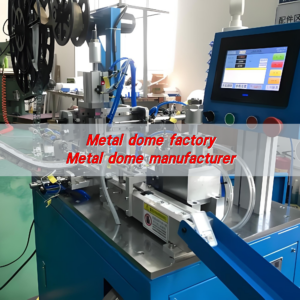

We are a tape and reel metal dome manufacturer serving Europe and America from China. EBest Circuit(Best Technology) supplies metal domes in carrier tape for suitable automated placement processes and helps OEM, EMS and interface manufacturers match dome geometry, force, orientation and packaging to the actual product. This page treats Europe and America as one target market and focuses on the specialty packaging—not another general regional supplier list.

When do tape-and-reel domes improve automated placement?
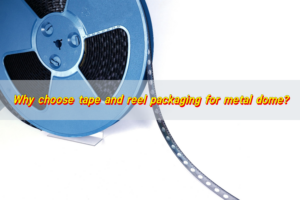
Tape-and-reel packaging places each metal dome in a defined carrier pocket and winds the continuous tape onto a reel. It is useful when the assembler has a compatible feeder and pick-and-place method for individual domes. Compared with handling loose domes, controlled pockets can improve orientation and reduce manual sorting at the line.

Our tape-and-reel metal dome packaging is configured for the selected dome and placement route. Packaging alone does not make a conventional snap dome solderable; the dome must be retained by the intended adhesive, film or mechanical construction after placement.

Choose a dome shape that can be oriented reliably
Round, triangle and four-leg domes can be supplied for different footprint and tactile requirements. A rotationally symmetric round dome is less sensitive to orientation, while triangle and four-leg parts require the pocket and placement program to preserve their intended alignment. The correct option is determined by the contact pad, actuator and available space—not by packaging preference alone.
Our C-Series round metal domes, F-Series four-leg metal domes and T-Series triangle metal domes provide product families for this engineering discussion. The exact dome and reel combination must still be confirmed for the required force, footprint and equipment.
Define the carrier tape, reel and feeder interface
A usable reel specification includes more than the reel diameter. The carrier width, pocket geometry, pitch, cover-tape behavior, winding direction, leader/trailer arrangement and component orientation all affect whether the reel feeds correctly. The assembler should also identify feeder type and pickup method before production packaging is fixed.
Our site shows model-specific examples such as 16 mm tape for an 8.4 mm dome and 24 mm tape for a 12.2 mm dome. These are examples, not universal rules. We confirm the packaging around the selected part instead of applying one tape width to every dome.

Match an alternative dome without changing the key feel
A replacement request often begins with an old part number or a physical sample. To avoid changing the finished interface, compare dome envelope, height, operating force, travel, contact-pad geometry and actuator shape. A dome that fits the pocket can still be unsuitable if it requires a different pad or feels different through the keypad.
We translate the accepted replacement into a controlled drawing and packaging orientation. For European and American production programs, this also gives the OEM and contract manufacturer the same revision reference when the dome, reel and placement program are approved at different sites.
Communication, security and medical interface applications
Potential applications include communication terminals, alarm and access-control panels, handheld instruments, diagnostic equipment controls and compact consumer-electronics keys. These examples describe suitable interface categories; they are not claims about specific customer products.
Tape-and-reel delivery is most relevant when individual dome placement is already part of the assembly plan. The metal dome supplies tactile snap and electrical contact, while the PCB, FPC, overlay, rubber keypad and enclosure determine support, sealing and the user-visible interface.
Decide between individual reels and a prepositioned dome array
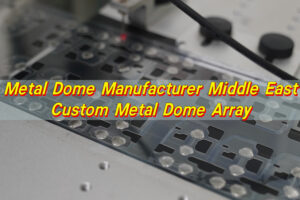
Choose individual reels when the production line places domes one by one and has suitable equipment. Choose a prepositioned array when several domes should arrive aligned on one adhesive carrier and be transferred as a group. The right route depends on layout density, available automation, changeover cost and the level of alignment control needed at the assembler.
Our custom dome arrays provide the grouped-placement alternative. This distinction should be made before tooling and line programming, because changing from individual domes to an array affects materials, handling and assembly sequence.
Add rubber adhesive or LGF only when the stack requires it
If the tactile layer must interface closely with a silicone keypad, a rubber-glue dome array may be more appropriate than individual reels. If the keypad needs distributed backlighting, an LGF dome array can combine light-guide film with the tactile layout. Neither feature belongs in every product.
This product-family choice is part of matching the component to the assembly process. A reel may simplify individual placement, but it does not solve keypad adhesion or optical distribution; those functions require the relevant array construction and application-specific validation.
Validate incoming reels and the placement process
Before a production release, run the reel through the intended feeder and confirm consistent pocket presentation, cover-tape peel behavior, pickup, orientation and placement. After placement, check dome position relative to the contact pad and verify that the dome snaps and returns under the intended actuator.
Incoming inspection should also watch for damaged pockets, shifted parts and reel identification errors. A short, controlled line trial is more informative than confirming only that the reel fits on the machine.

Direct manufacturing support across Europe and America
We manufacture metal domes and dome arrays in China and support European and American OEM, EMS and interface-manufacturing teams with specification review, samples and controlled production. The agreed project scope can cover the dome alone or coordinate related PCB, FPC and membrane-switch work when those items are required.
Price is affected by dome type, force, carrier-tape configuration, reel quantity, tooling and validation requirements. Our first task is to confirm a part and packaging method that works with the existing product and line; a low-cost reel that requires manual correction does not deliver a lower assembly cost.
Send the available dome drawing, existing part information or assembly constraints to our tape and reel metal dome manufacturer team at sales@metal-domes.com. We will identify the remaining dome and feeder inputs needed for a manufacturable review.